
Wall Mounted Shelves Without Drilling: Where It Works and Where It Fails
Searches for this run to every room in the house: bedroom, kitchen, bathroom, living room, for books, for clothes. The honest answer changes depending on which of those you mean, and the reason comes down to one piece of physics.
A shelf is a lever
When you hang a bag on a hook, the load pulls straight down, roughly in line with the wall. The fixing mostly has to resist shear.
A shelf does something else entirely. Shelfology puts it precisely: a floating shelf is a lever, and the wall is its fulcrum. Weight on the shelf pushes down at the front and pries outward at the top of the bracket.
That prying force is the problem. Adhesive is reasonably good at resisting a load sliding down its face and very poor at resisting one peeling it off at an edge. A shelf applies exactly the force adhesive is worst at.
This single difference explains why a stick-on hook holds a wet towel for years and a stick-on shelf drops a stack of books in a fortnight.
Depth multiplies the force
The lever arm is the shelf's depth, so every extra centimetre of depth increases the force at the wall for the same weight.
Shelfology's guidance is blunt about it: every additional inch of depth costs capacity, so only float shelves as deep as you actually need. Dogberry make the same point with numbers, noting that a 12 inch deep shelf with weight at its front edge creates considerably more stress at the wall connection than the same weight sitting 4 inches out.
Two practical consequences:
- A narrow shelf is dramatically more achievable than a deep one, for the same load.
- Where the weight sits matters. Pushed to the back, a load is far gentler on the fixing than the same load at the front edge.
The capacity figures, and what actually sets them
Dogberry's summary is the line worth internalising: the weight limit is determined almost entirely by the wall anchoring method, not by the shelf material.
- Adhesive or drywall anchors alone: light decorative items only, generally under about 9 kg, and that assumes a shallow shelf.
- Properly anchored into structure: around 9 to 23 kg.
- Heavy duty hardware with multiple anchor points: 90 kg and beyond.
Note how wide that spread is for an identical-looking shelf. Nothing about the visible product tells you which bracket it is using, which is why Shelfology argue that the bracket is the product and the wood only sets the look.
The stud advice does not apply to most Indian homes
Almost all guidance on this topic assumes timber stud walls with plasterboard, and tells you to find a stud roughly every 16 inches because drywall cannot resist rotational force.
Most Indian homes are solid brick, concrete or RCC. There are no studs to find, and that changes the conclusion in a useful direction: a correctly plugged screw into solid masonry is a stronger fixing than a screw into a timber stud, and you can put it wherever you want rather than where the framing happens to fall.
So the trade-off here is not weak wall versus strong wall. It is that drilling masonry needs a hammer drill and a plug, which is a bigger job than pushing an anchor into plasterboard. The payoff is a better fixing.
What genuinely works without drilling
The honest answer is that the working solutions mostly are not wall-mounted shelves at all. They move the load somewhere other than the wall face.
Leaning and A-frame units. The load goes through the floor, with the wall only providing balance. Typically around 7 to 9 kg per shelf for smaller units.
Freestanding shelving. Entirely floor-supported, and by a wide margin the highest capacity no-drill option.
Floor to ceiling tension poles. Compression between floor and ceiling, common as corner units in bathrooms.
Tension rods in an alcove or window reveal. Braced between two opposing surfaces, suitable for light items.
Over-door racks. Load carried by the door and its hinges.
Existing structure. Window grilles, railings and pipe runs are already anchored, and in Indian homes the grille is the most underused mounting point in the building.
The corner is the one place geometry helps
There is a genuine structural exception worth knowing about, and it is the shape most people overlook.
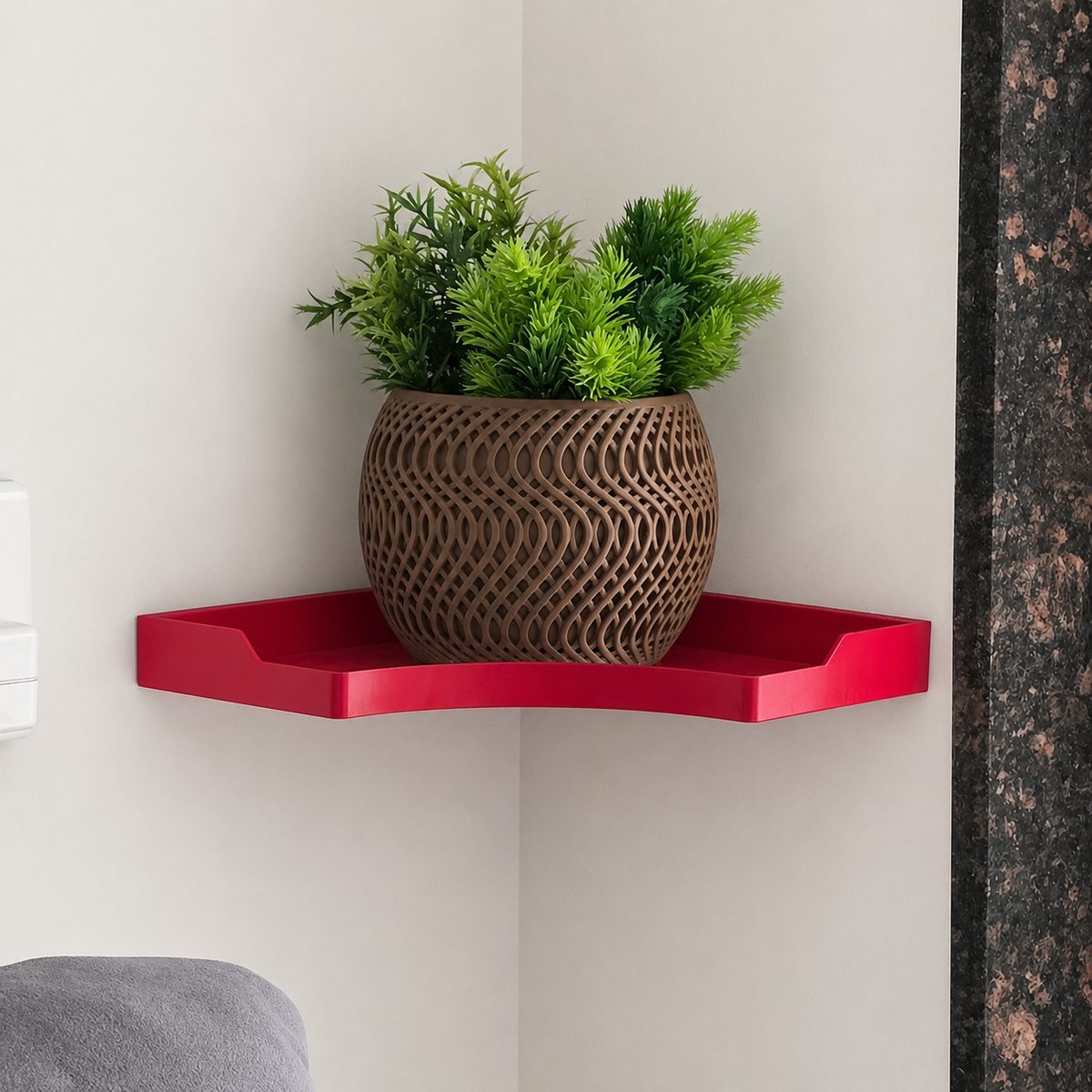
A corner shelf sits where two walls meet, so it can be supported along two surfaces rather than cantilevered off one. The lever arm from each wall is shorter than it would be for a straight shelf of equivalent area, and the load is shared between two planes instead of prying at a single line of fixings.
A floating corner shelf turns an unused corner into usable space without taking floor area, and the raised edge around the top stops small items sliding off, which matters more than it sounds on a shelf holding keys or a small plant.
It is still a shelf and still wants a proper fixing for anything substantial. But for a plant, a frame, a candle or keys, the corner is the easiest shelf in the house to make work.
Brackets and what to look for
If you are building a shelf rather than buying one assembled, the bracket geometry is the specification that matters.
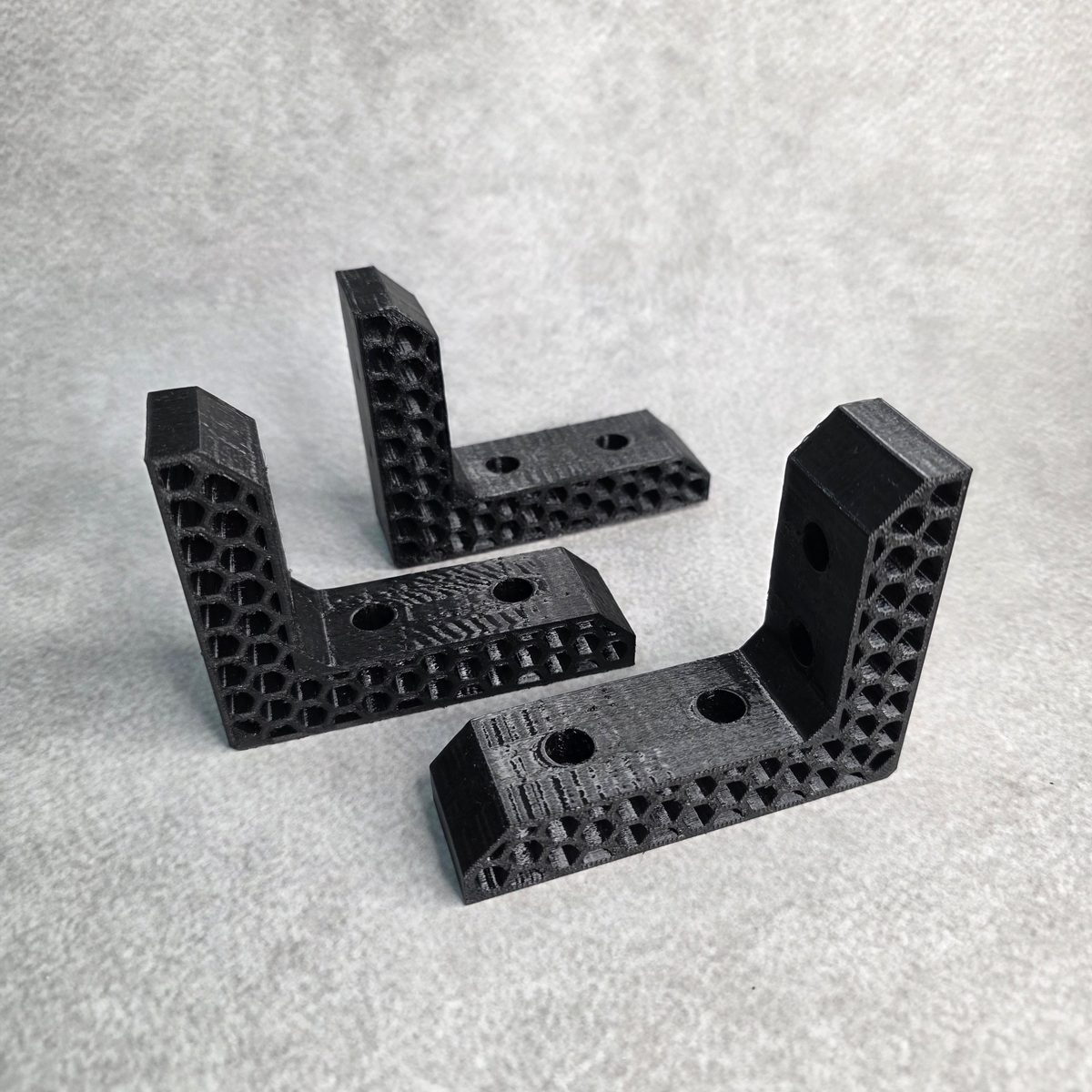
An L-shaped bracket works by fixing one arm against a vertical surface while the other carries the shelf. A honeycomb L bracket with 80 mm and 100 mm arms can be used either way round depending on which surface you want to fix to, and the arm lengths tell you directly how much of the shelf underside is being supported. Longer support under the shelf spreads the bending load rather than concentrating it at the bracket tip.
For frame-built shelving from extruded sections, aluminium channel corner brackets join sections squarely, which matters because a frame that is not square carries load unevenly.
Match the shelf to the room
- Bathroom: shallow, light, tiled surfaces. The best case for adhesive, since tile holds roughly twice what paint does and toiletries are light.
- Kitchen: tile again, but degrease with isopropyl alcohol first, and remember cookware is heavy.
- Bedroom and living room: painted walls and decorative loads. Fine for a frame or a small plant, not for a speaker.
- For books: do not attempt this without a proper fixing. Books are the heaviest thing per centimetre most people put on a shelf, and a modest run of them will exceed any no-drill method.
- For clothes: a hanging rail is a lever too, and a loaded one applies more force than people estimate.
The brackets, pictured
They divide by what they hold and how they attach.
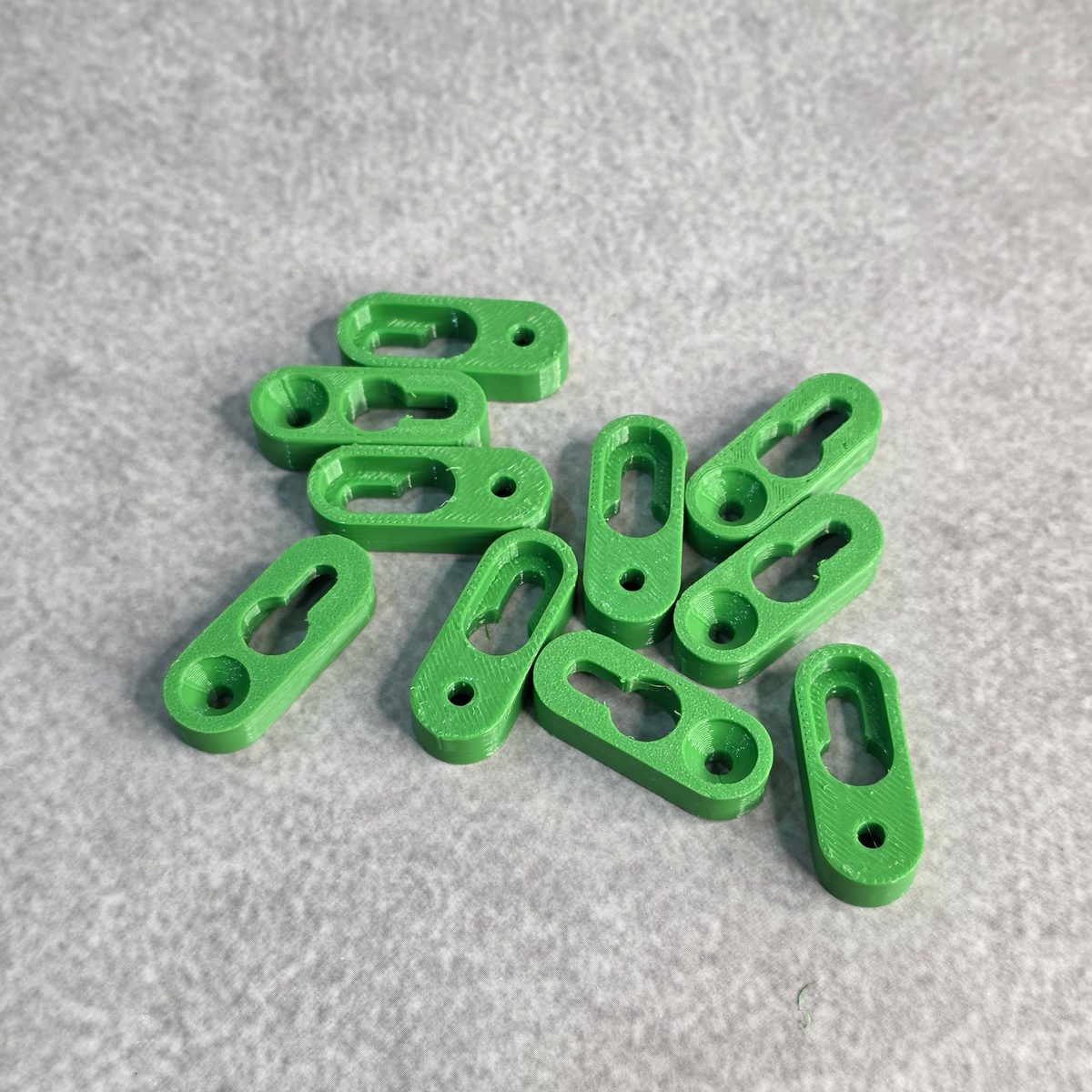
Stick-on mounting bracket. Pack of ten, adhesive, for mounting an object flat to a wall.
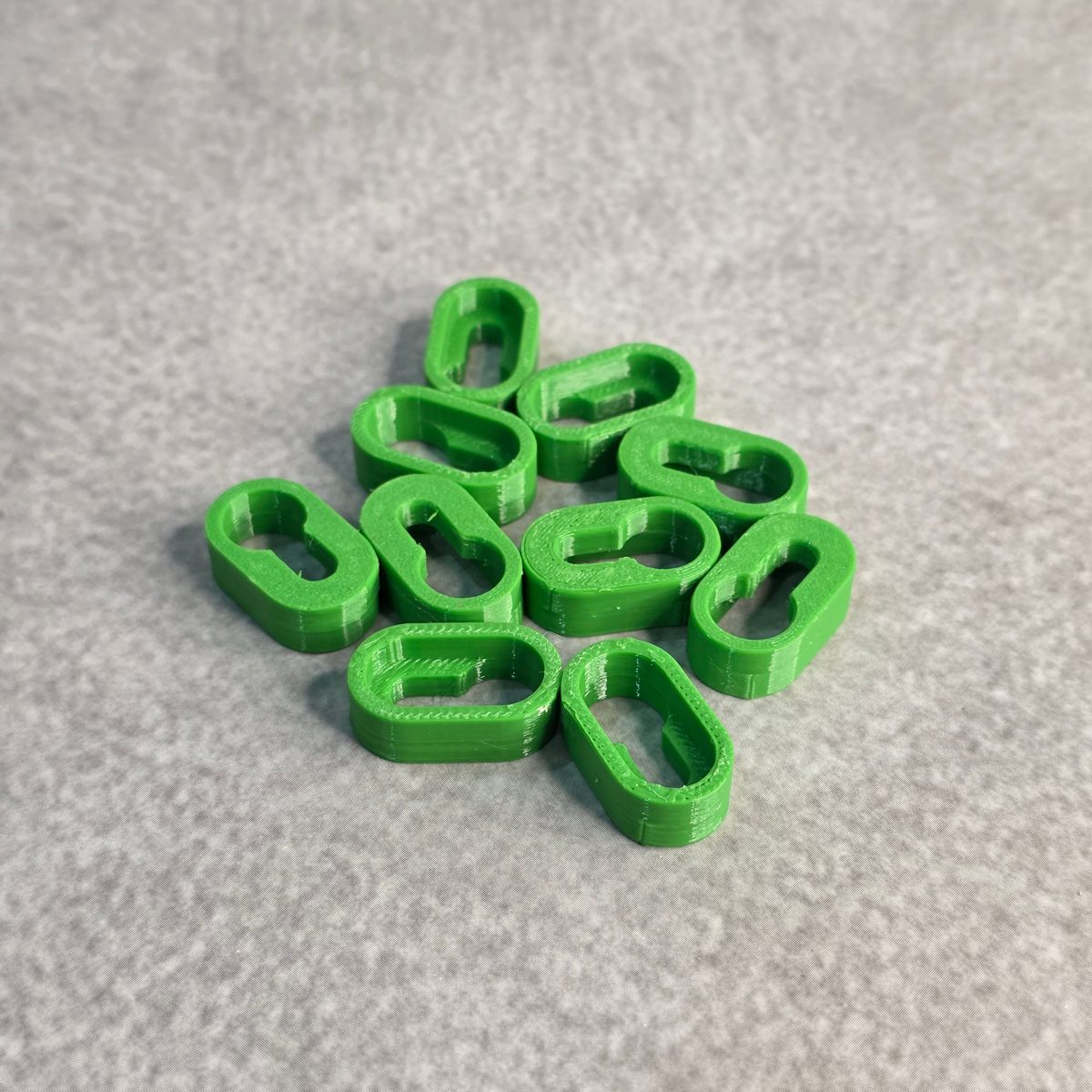
Screw-on mounting bracket. Pack of ten, the version for anything with weight.
Honeycomb L shaped bracket. 80 x 100 mm, supports a shelf, table top or panel from below.
1 inch channel corner bracket. 50 x 50 mm, joins slim sections at right angles.
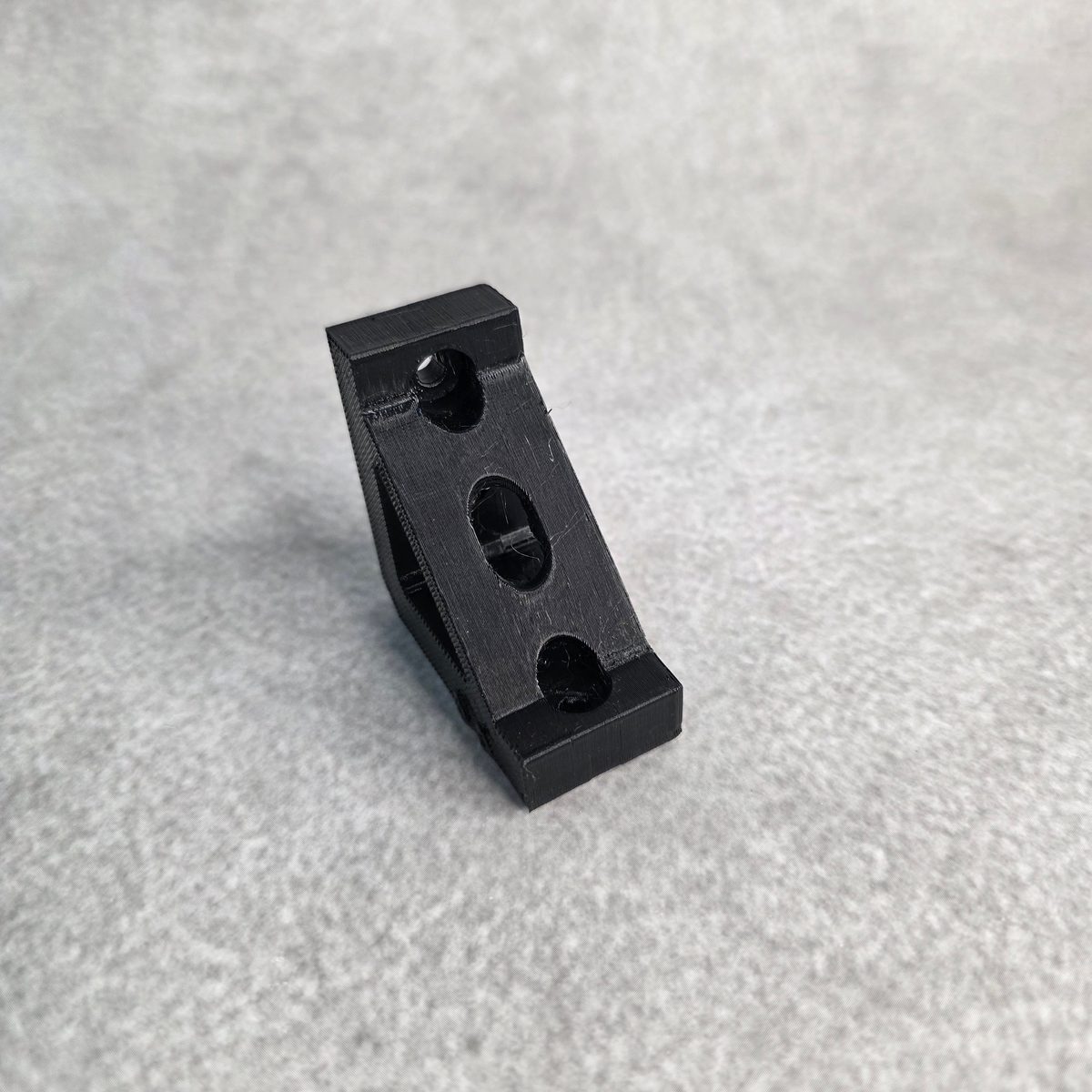
2 inch channel corner bracket. The heavier version, for section frames.
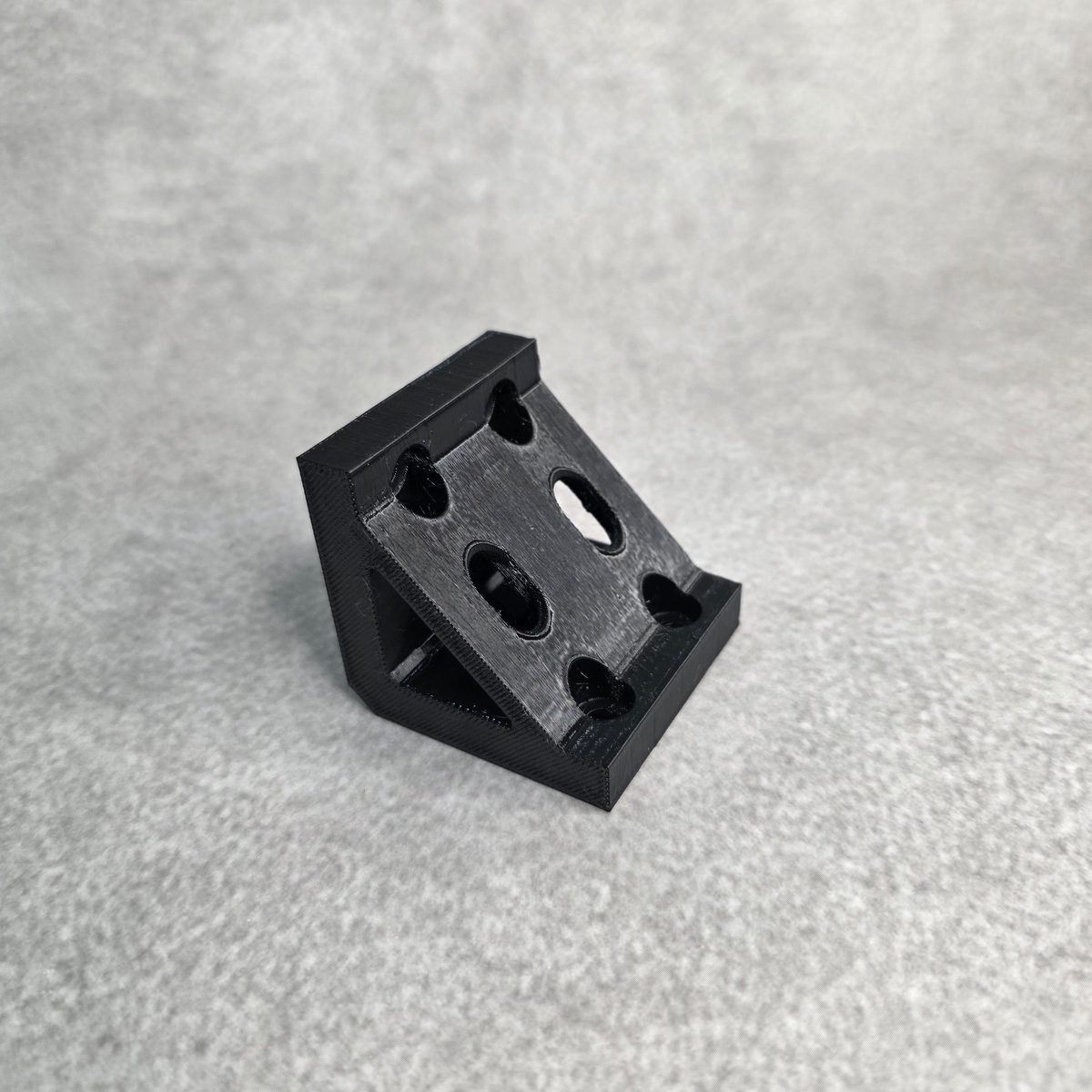
If you need a bracket sized to a specific board, gap or section that nothing standard fits, that is worth having made to the measurement through our 3D printing service page. The related hardware sits under hooks and hangers.
The hooks, and what each is for
The range splits by how it attaches and how much it is meant to take, which is the only sorting that matters.
- Adhesive, light duty, general purpose: set of four wall hooks.
- Screwed, for anything with real weight on it: screw wall hooks, pack of ten.
- For tiled walls, where drilling is the thing you most want to avoid: kitchen tile hooks, pack of eight.
- Heaviest rated in the range: heavy duty U shaped hook.
- Under a surface, using dead space: under table hooks, set of five.
- On a vertical edge rather than a flat face: side mounted hooks, pack of ten.
- Two prongs, upswept so things do not slide off: twin arm wall hook.
Where a hook is not the right answer at all, the stick-on mounting brackets and screw-on mounting brackets mount an object flat against the wall instead of hanging it off a prong.
The short answer
Adhesive shelves work for shallow, light, decorative loads on smooth surfaces, and fail for everything else, because a shelf pries outward at the fixing rather than hanging from it.
Keep it shallow, keep weight to the back, and pick a corner over a flat wall if the layout allows. For books, cookware or anything you would be upset to find on the floor, put the load on the floor deliberately with a freestanding unit, or drill one hole into solid masonry and get a fixing stronger than anything a stud wall could offer.