
Wall Hooks Without Drilling: What Actually Holds on Painted Walls
Adhesive hooks work. They also fall off walls constantly, and the gap between those two facts is where all the frustration lives.
The useful way to think about a stick-on hook is as a chain with four links: the hook, the adhesive, the paint, and the wall. The chain breaks at its weakest link, and on a painted wall that link is usually the paint.
The thing that decides everything
An adhesive hook does not stick to your wall. It sticks to the layer of paint on your wall. If the paint's grip on the plaster underneath is weaker than the adhesive's grip on the paint, then loading the hook peels the paint off, and the hook comes down with a flake of your wall attached.
This is why identical hooks behave completely differently in two rooms of the same house, and why guidance on painted drywall notes that if the paint is thin or poorly applied, the adhesive force combined with the weight can exceed the paint's own bond strength.
No hook, at any price, can hold better than your paint holds. Everything below follows from that.
Test your wall in thirty seconds
Before trusting anything to a stick-on hook, find out what you are sticking to.
- The rub test. Rub a finger firmly on the wall in a hidden spot. If it comes away chalky or powdery, the surface is a distemper or whitewash type finish and adhesive will not hold. The powder itself is the failure layer.
- The tape test. Press a strip of ordinary tape on firmly, leave it an hour, then pull. If it lifts paint, an adhesive hook under load will do the same but worse.
- The texture check. Run a palm across it. Any texture, sand finish or roughness reduces the actual contact area, and less contact means proportionally less holding power.
- The gloss check. Smooth eggshell, satin and semi-gloss finishes are the best surfaces for adhesive. Very high gloss can be too slick, and matte or chalky finishes are the worst.
Surfaces ranked for adhesive hooks
- Glazed ceramic tile: the best surface in the house. Non-porous, perfectly smooth, nothing for the adhesive to pull loose. This is why kitchen and bathroom tiles are the one place stick-on hooks reliably hold real weight.
- Glass and mirror: as good as tile, for the same reasons.
- Finished wood, metal and laminate: reliable if clean and smooth.
- Smooth emulsion paint in satin or semi-gloss: workable, within sensible weight limits.
- Matte or flat emulsion: marginal, and the most common cause of paint damage on removal.
- Distemper, whitewash or any chalky finish: will not work. Not a technique problem.
- Textured, sand-finish or uneven plaster: will not work, because real contact area is a fraction of what it appears to be.
- Unpainted brick, concrete or POP with a powdery surface: will not work.
The prep that actually matters
Most adhesive failures are application failures, and the steps are less obvious than they look.
- Clean with isopropyl alcohol, not a household spray cleaner. Surface cleaners leave a residue designed to repel water, which also repels adhesive. Alcohol evaporates and leaves nothing.
- Let it dry completely before applying.
- Press firmly for a full 30 seconds. Adhesives of this type are pressure sensitive, meaning the bond forms from force, not time. A light press gives a fraction of the strength.
- Wait before loading it. An hour minimum is standard guidance, and longer is better. This single step fixes a large share of failures.
- Apply in the right temperature range. These adhesives need a surface above about 10 C to bond properly.
- Check the age of the strips. Adhesive backing degrades on the shelf, and old stock genuinely sticks less.
The heat problem, which matters more in India
This is the detail that gets left out of most advice written for cooler countries.
Adhesive softens as it warms. Hunker's write-up on adhesive hooks notes that above roughly 40 C the manufacturer recommends taking the load off the hook entirely, because the adhesive can soften and fail.
An interior wall in an Indian summer, particularly one facing west or sharing a surface with direct sun, spends part of the day in exactly that range. An adhesive hook that held all winter can let go in May, which feels random but is not.
Humidity compounds it. For bathrooms and other damp rooms, the usual advice is to derate the weight limit by around 20 percent to allow for moisture affecting adhesion.
Do the weight maths honestly
Adhesive hooks are rated conservatively, and the ratings are worth respecting rather than testing. The practical ceiling for a stick-on hook is low compared with a screw.
Real examples from hooks of each type make the gap obvious:
- Adhesive hooks on a painted wall: a set of four wall hooks with strong adhesive tape and a 1.5 inch metal hook is rated to a maximum load of 1.5 kg each.
- Adhesive hooks on tile: heavy duty tile hooks with dual-sided adhesive tape hold up to 3 kg each, double the painted-wall figure, because the surface is better.
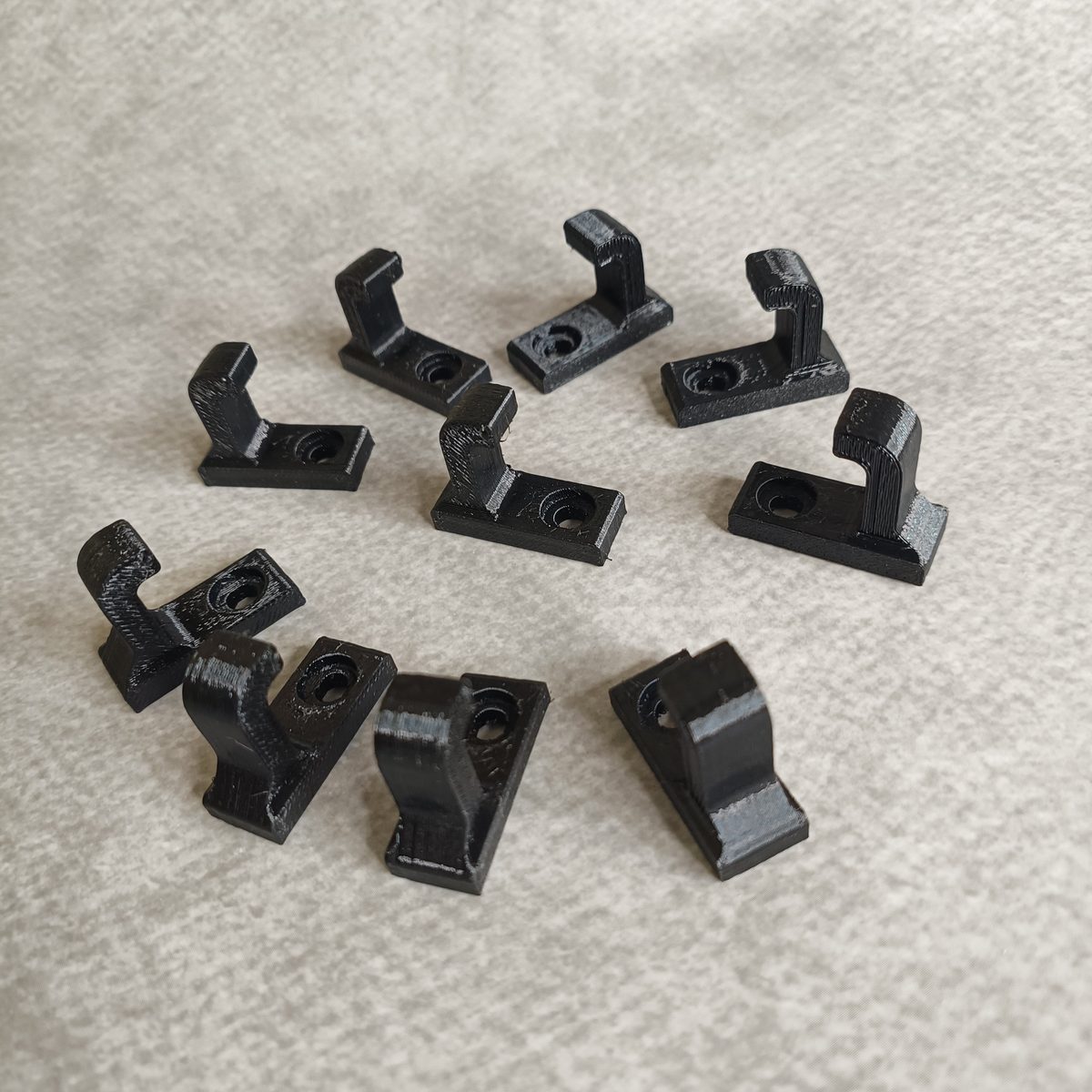
- Screw-mounted hooks: a set of ten screw wall hooks at 25 x 30 x 12 mm is rated to 5 kg each and ships with the drywall screws.
That progression is the whole argument in three numbers. 1.5 kg on paint, 3 kg on tile, 5 kg on a screw. Surface quality roughly doubles what adhesive can do, and a screw roughly doubles it again.
Two further rules. Spread load across several hooks rather than overloading one, and remember that a hook holding a bag someone tugs at is carrying far more than the bag's static weight for that instant.
Where no-drill genuinely wins
It is worth being clear that this is not a consolation prize. Adhesive is the right answer in several situations regardless of whether you own a drill.
Tiled kitchen and bathroom walls are the obvious one, where drilling means cracking a tile and creating a permanent hole in a surface that is expensive to repair. Rented flats are another, where the deposit depends on leaving walls as you found them. Glass, mirrors and metal cabinet sides cannot be drilled at all.
There is also a third option people forget: surfaces that are not walls. Hooks that clamp or stick under a desk or shelf edge, like under table hooks rated to 1.5 kg, sidestep the paint question entirely by attaching to furniture.
When to stop trying
If your wall failed the rub test, no product will fix it. If you need more than about 3 kg, adhesive is the wrong tool. If the hook has already fallen twice from the same spot, the third attempt will fail too, because the variable you cannot change is the wall.
At that point a screw is not a defeat. A single screw hole is a two minute repair with filler and a dab of paint, and it is a far smaller job than repainting a patch where the adhesive tore the finish off.
Every hook, pictured
They differ in how they attach and how much they are meant to take, which is the only sorting that matters.
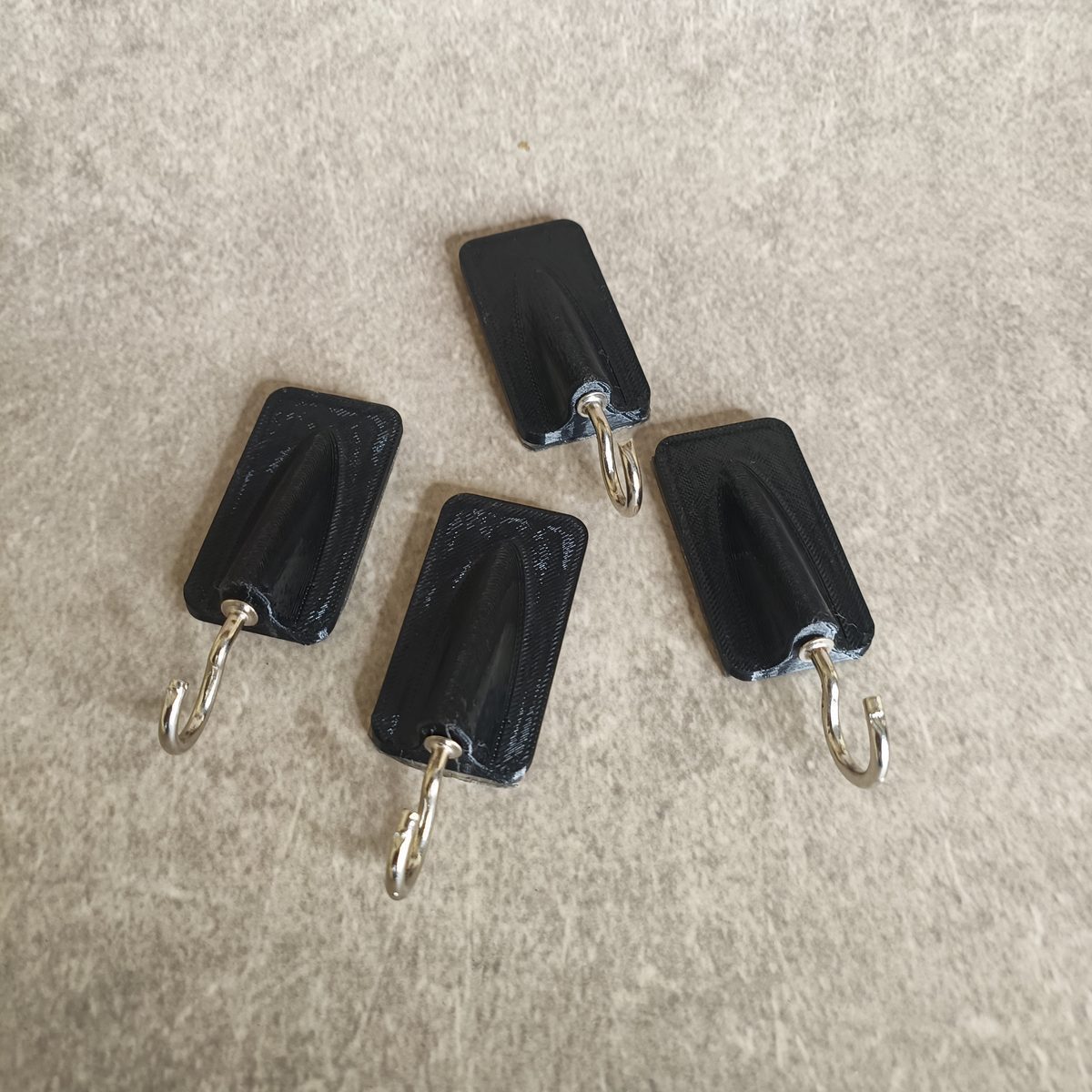
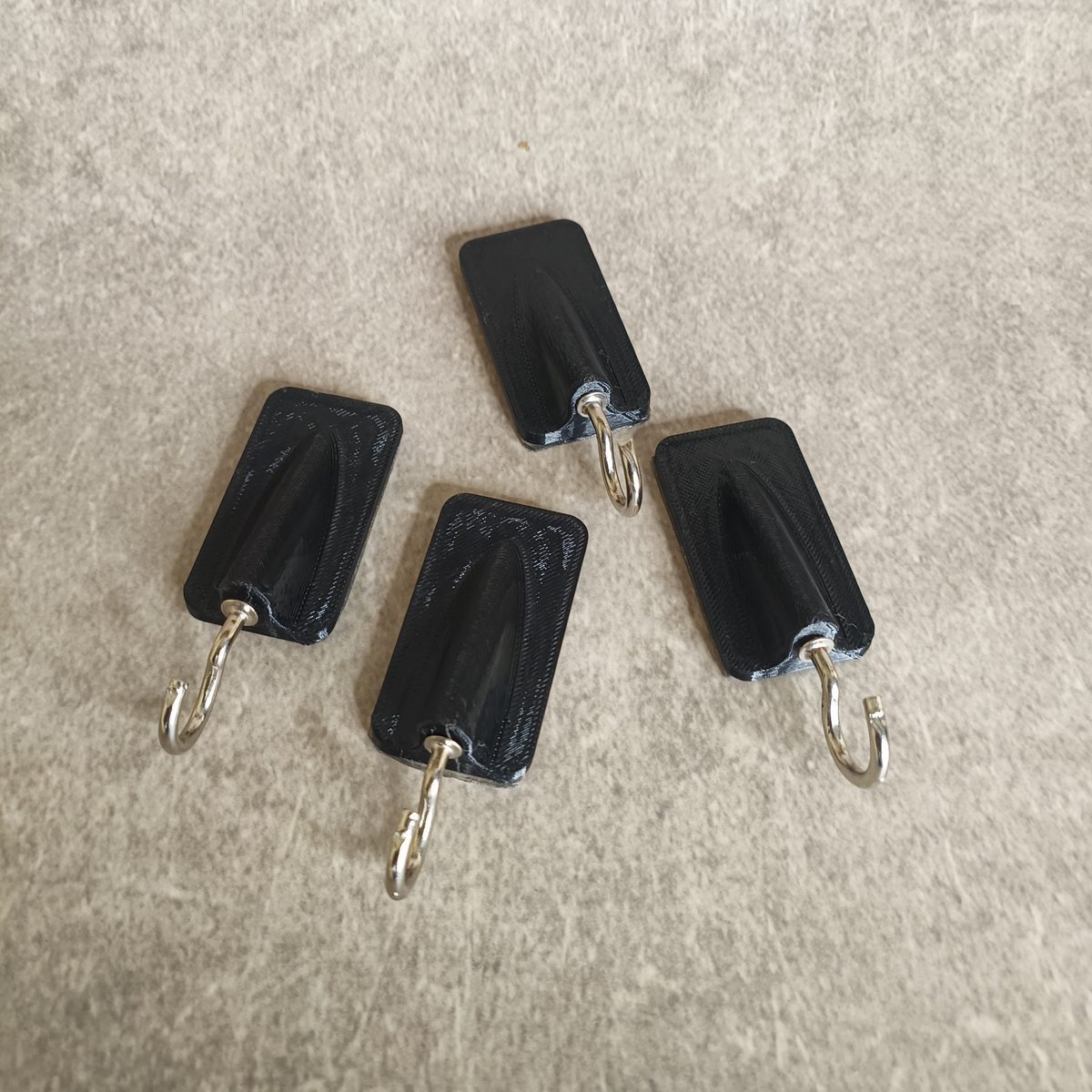
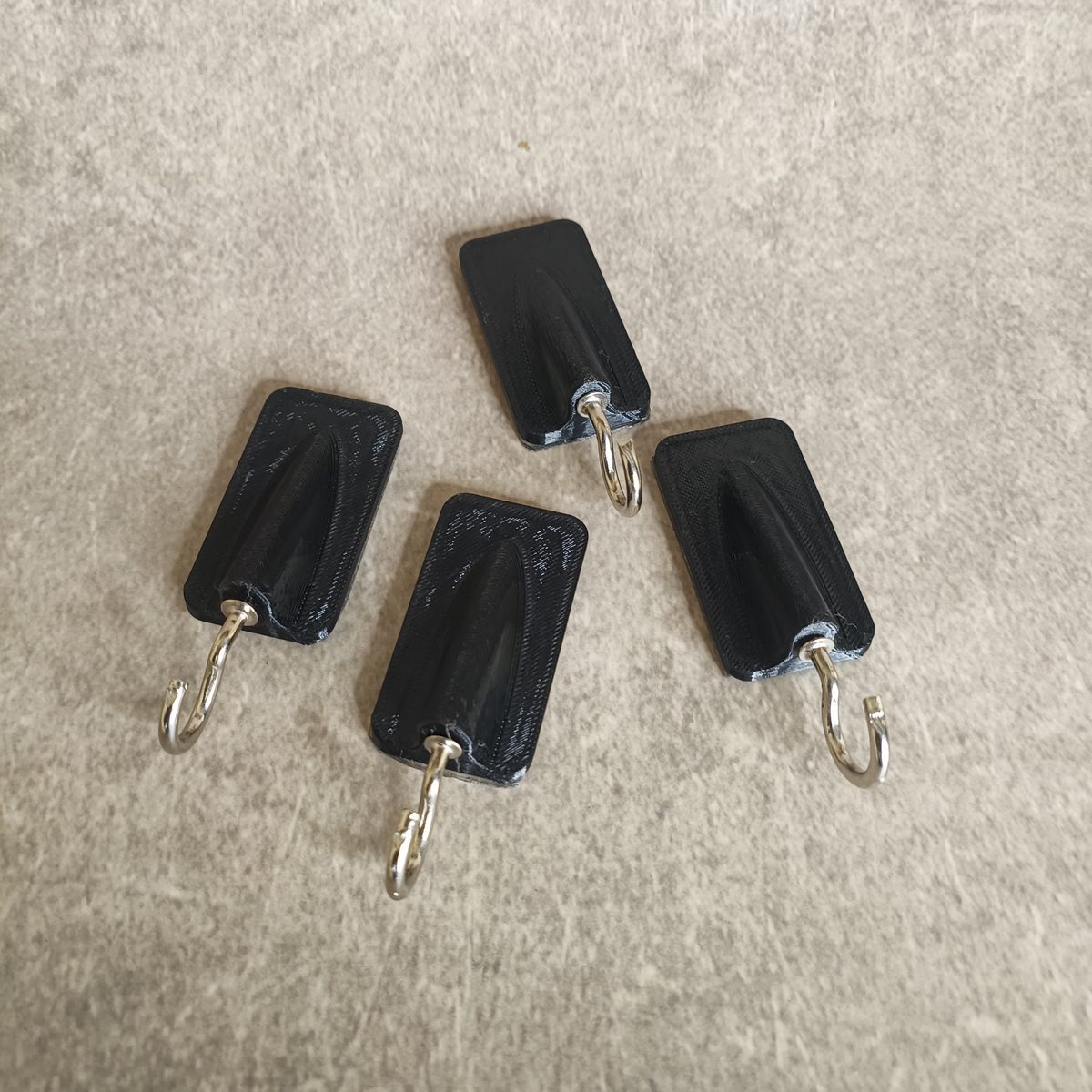
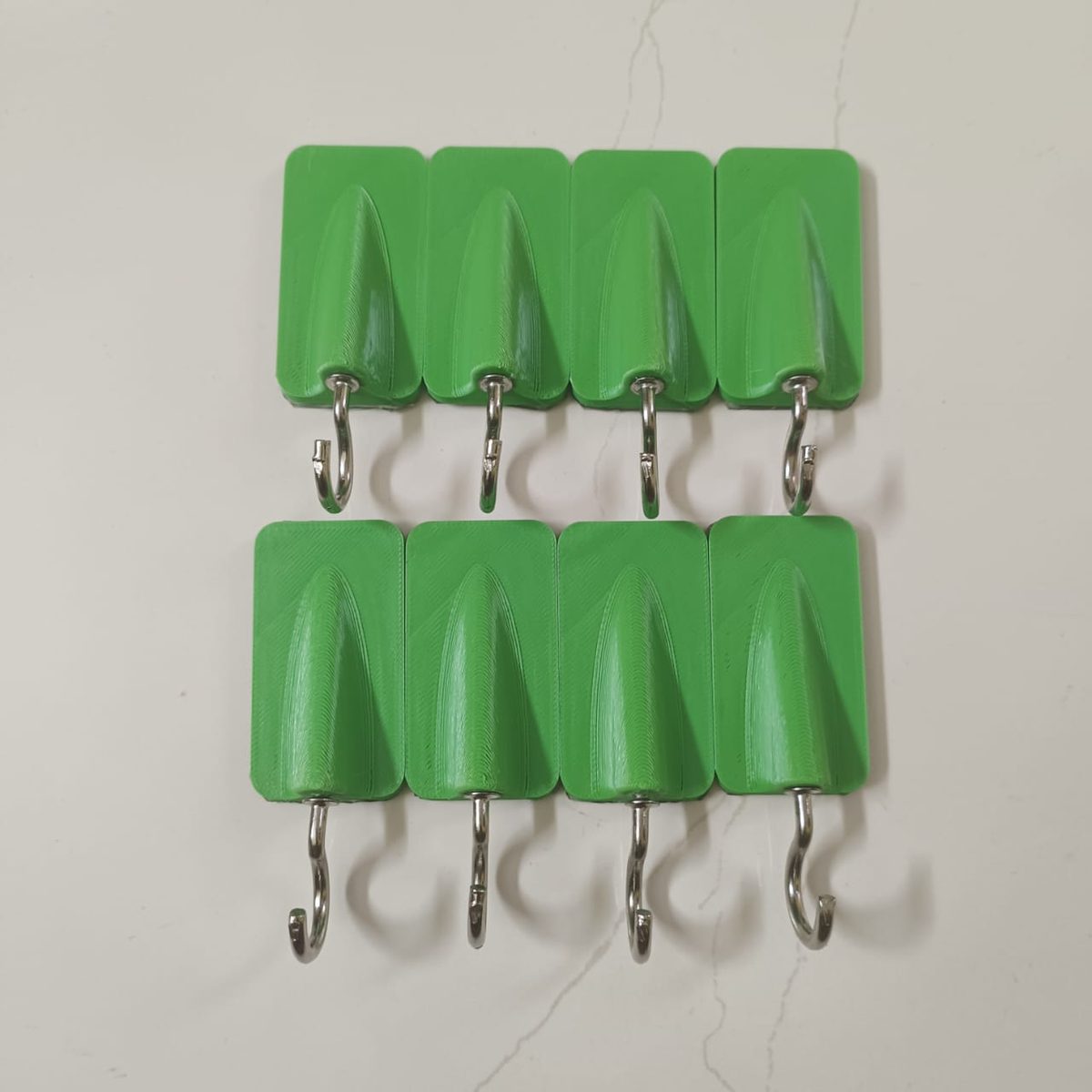
Set of four wall hooks. Adhesive, light duty, the general purpose choice.
Screw wall hooks, pack of ten. Screwed rather than stuck, which is what anything with real weight needs.
Kitchen tile hooks, pack of eight. Made for tiled walls, which is exactly where you least want to drill.
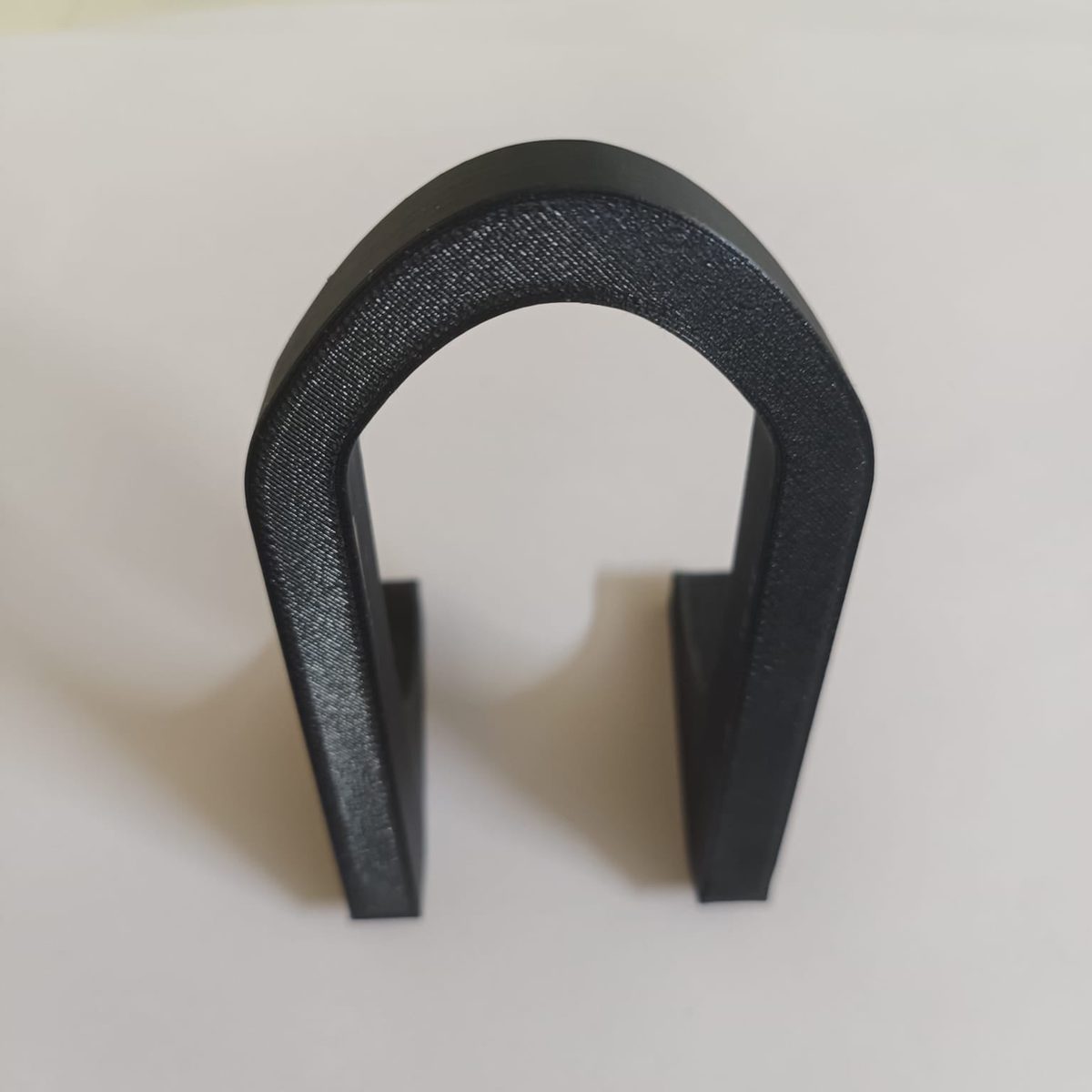
Heavy duty U shaped hook. The highest rated in the range, and the U shape means the load sits in the curve rather than on a prong tip.
Under table hooks, set of five. Uses the dead space beneath a surface, rated to 1.5 kg each.
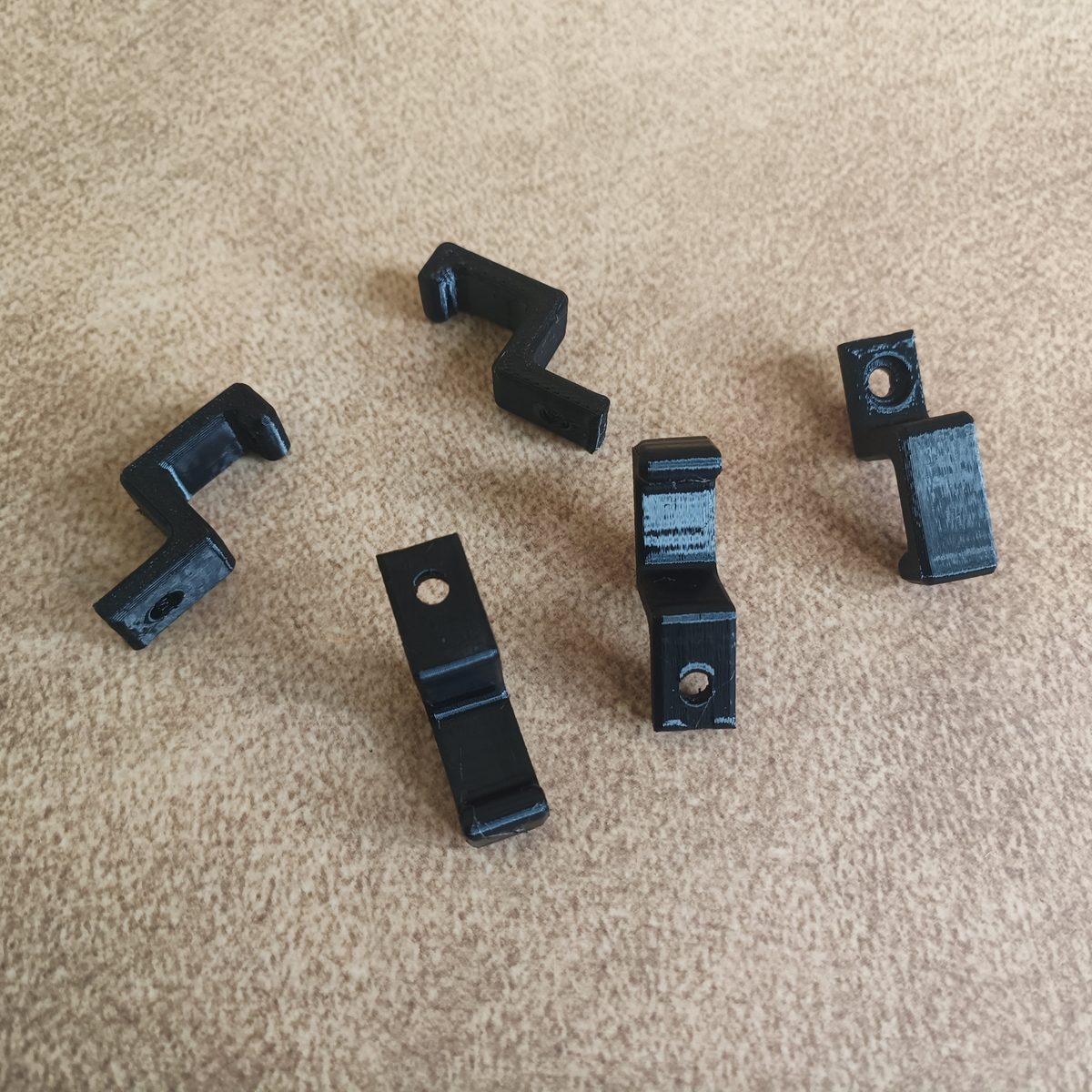
Side mounted hooks, pack of ten. For a vertical edge rather than a flat face.
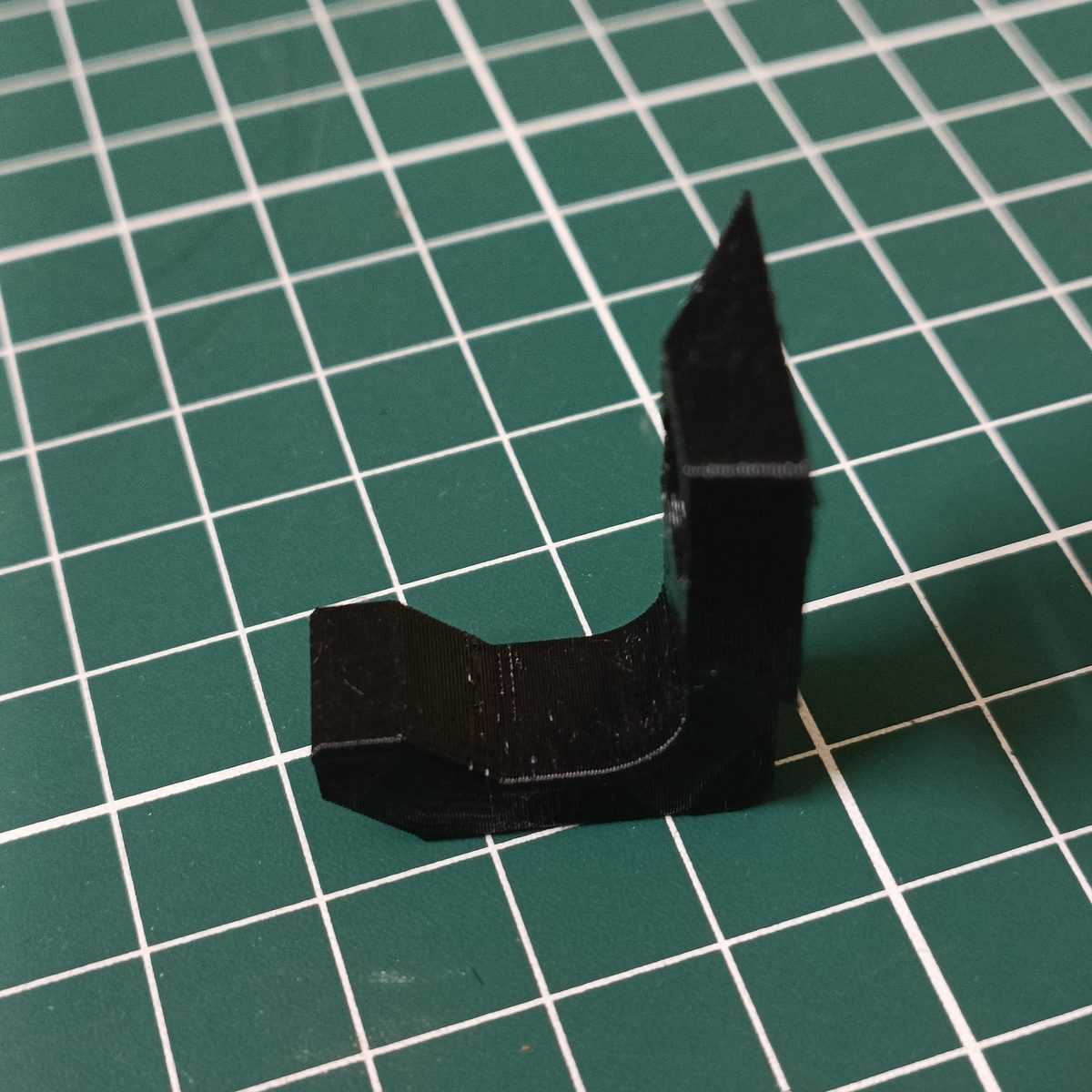
Twin arm wall hook. Two prongs upswept at 15 degrees, so a strap or ring cannot slide off.
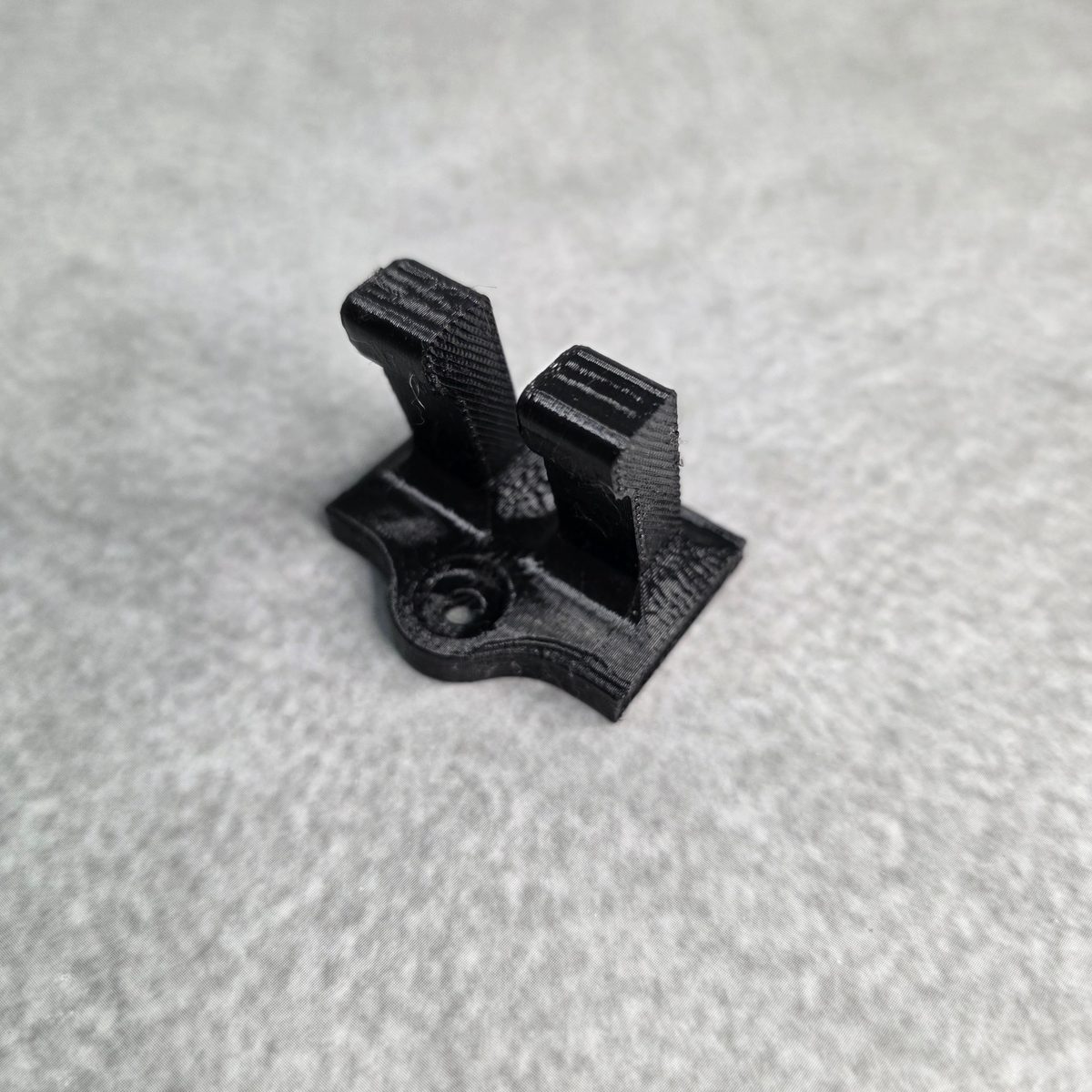
Where a hook is not the right answer at all, the stick-on mounting brackets and screw-on mounting brackets mount an object flat against the wall instead of hanging it off a prong.
The full range of both types sits under hooks and hangers. If you need a hook in a shape or size that nobody stocks, for a specific gap, a particular rail profile, or a load nothing off the shelf is rated for, that is worth having made to the measurement through our 3D printing service page.
The short answer
Adhesive hooks hold well on tile, glass and smooth satin paint, poorly on matte emulsion, and not at all on anything chalky or textured. Clean with alcohol, press for thirty seconds, wait an hour before loading, and stay under the rating.
Then accept the ceiling. Around 1.5 kg on a painted wall and about 3 kg on tile is what this technology does. Above that, the honest answer is a screw, and one small hole is cheaper to fix than a peeled wall.