
Under Table Hooks and the Dead Space Every Desk Wastes
Every desk has a large empty volume beneath it, and the obvious reaction is that it should be holding something. Mostly it should not, because that volume is doing a job already.
The usable part is the perimeter: the underside near the edges, the sides, and the back. Understanding that boundary is the whole trick.
Legroom is a requirement, not spare space
Ergonomic guidance treats clearance under a desk as a specification rather than a leftover. Recommended figures put legroom clearance at roughly 24 to 30 inches, with around 30 inches behind the desk for chair movement and about 24 inches of side clearance.
Anything mounted inside that envelope becomes something you hit. Worse, a hook at knee height with a bag on it turns into a daily obstacle you unconsciously start sitting further back from, which undoes the posture the clearance was protecting.
So the rule is simple: use the edges, leave the middle empty.
The zones, ranked
- Front underside edge, near the corners: the best spot. Within easy reach when seated, outside the knee zone, and invisible from the front of the desk.
- The sides of the desktop: excellent for items you grab often. Side-mounted hooks put things at hand height rather than knee height.
- The back underside: ideal for cables and power bricks, since it is nearest the wall outlet and furthest from your legs.
- Directly under the centre: avoid. This is the knee zone.
- The floor underneath: not a hook problem. Rolling drawers that tuck away work here, but anything permanent eats the legroom.
What actually belongs on an under-desk hook
The items that suit this are the ones that otherwise occupy desk surface while being used only intermittently.
- Headphones, the single most common use. A headset on a hook stops it taking up a corner of the desk and stops the cable getting trapped under a chair wheel.
- A bag, hung rather than resting where feet go.
- Charging cables, looped so the end does not slide off the back of the desk and disappear behind the table.
- A power brick, lifted off the floor and away from sweeping.
- Keys and a lanyard, in a fixed spot near where you sit down.
- Spare masks, a small pouch, a cleaning cloth, the small things with no natural home.
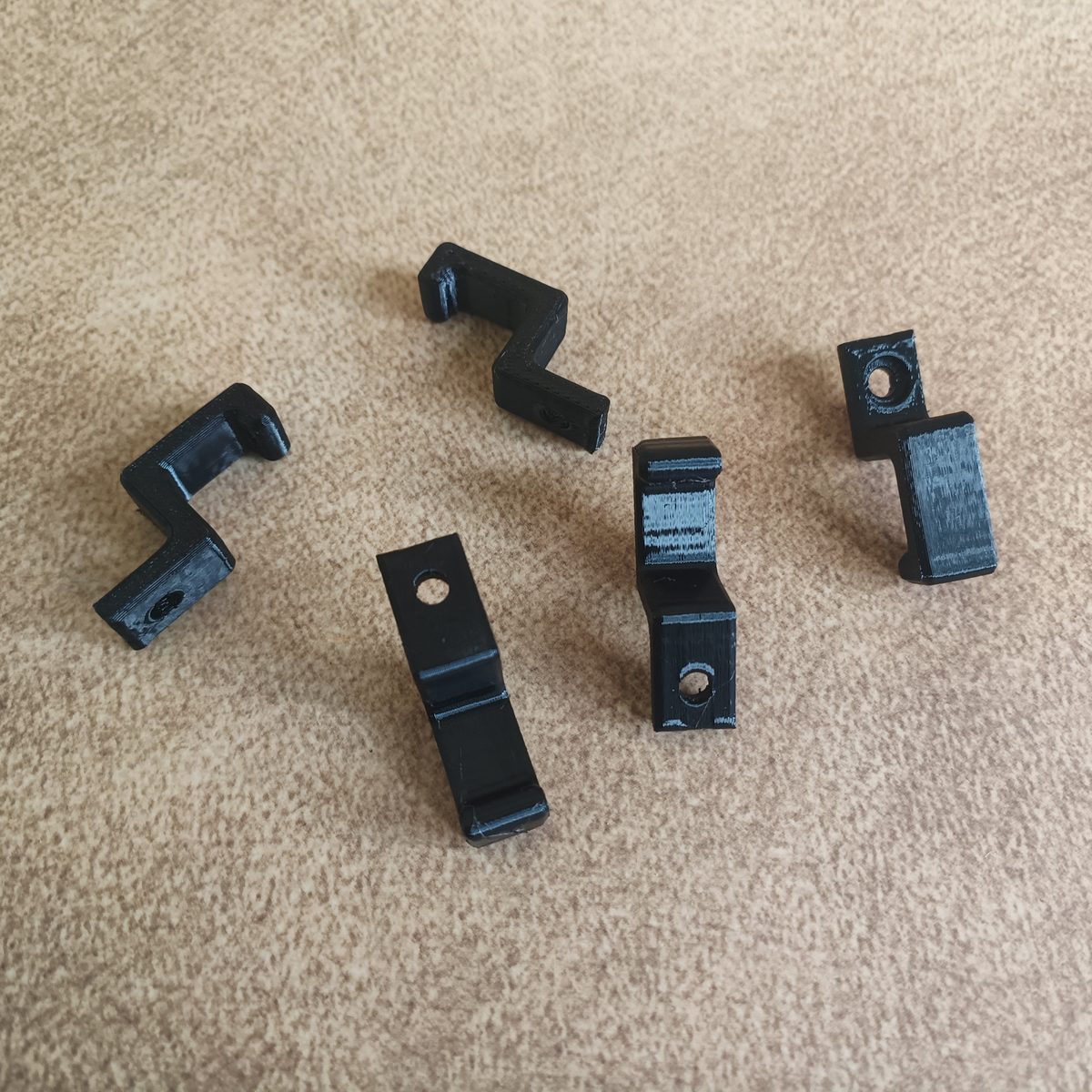
Hooks made for this, such as a set of five under table hooks, handle up to 1.5 kg each and fit snugly beneath most wooden or plywood tables. A set of five is a realistic number, because this only becomes useful when each item has its own designated spot rather than one overloaded hook.
Desk thickness is the spec that decides fit
The compatibility question people skip is how thick the desktop is, because a clamping or slot-fit hook has a range and desks vary more than expected.
- Thin laminate and particle board desks: often around 15 to 18 mm.
- Standard plywood and engineered desktops: typically 18 to 25 mm.
- Solid wood and heavy office desks: 25 to 40 mm and sometimes more.
- Glass tops: a separate problem, since nothing grips them and adhesive is the only route.
Measure the edge before buying anything that clamps. It takes ten seconds and it is the most common reason this kind of product gets returned.
The weight reality
These hooks carry modest loads by design, and the loads involved are genuinely small:
- Over-ear headphones: roughly 250 to 400 g.
- A charging cable and brick: 100 to 300 g.
- Keys: 100 to 200 g.
- A light tote or laptop sleeve: 500 g to 1.5 kg.
- A loaded backpack: 4 to 8 kg, which is well beyond this category and belongs on a floor stand or a wall fixing.
The backpack is the one people get wrong. A bag full of books hanging off a desk edge also applies leverage to the desktop itself, which is a good way to loosen a cheap desk over time.
Sides deserve more attention than they get
The vertical side of a desktop is prime real estate and almost nobody uses it. It is at hand height, permanently visible so you do not forget what is there, and completely out of the leg zone.
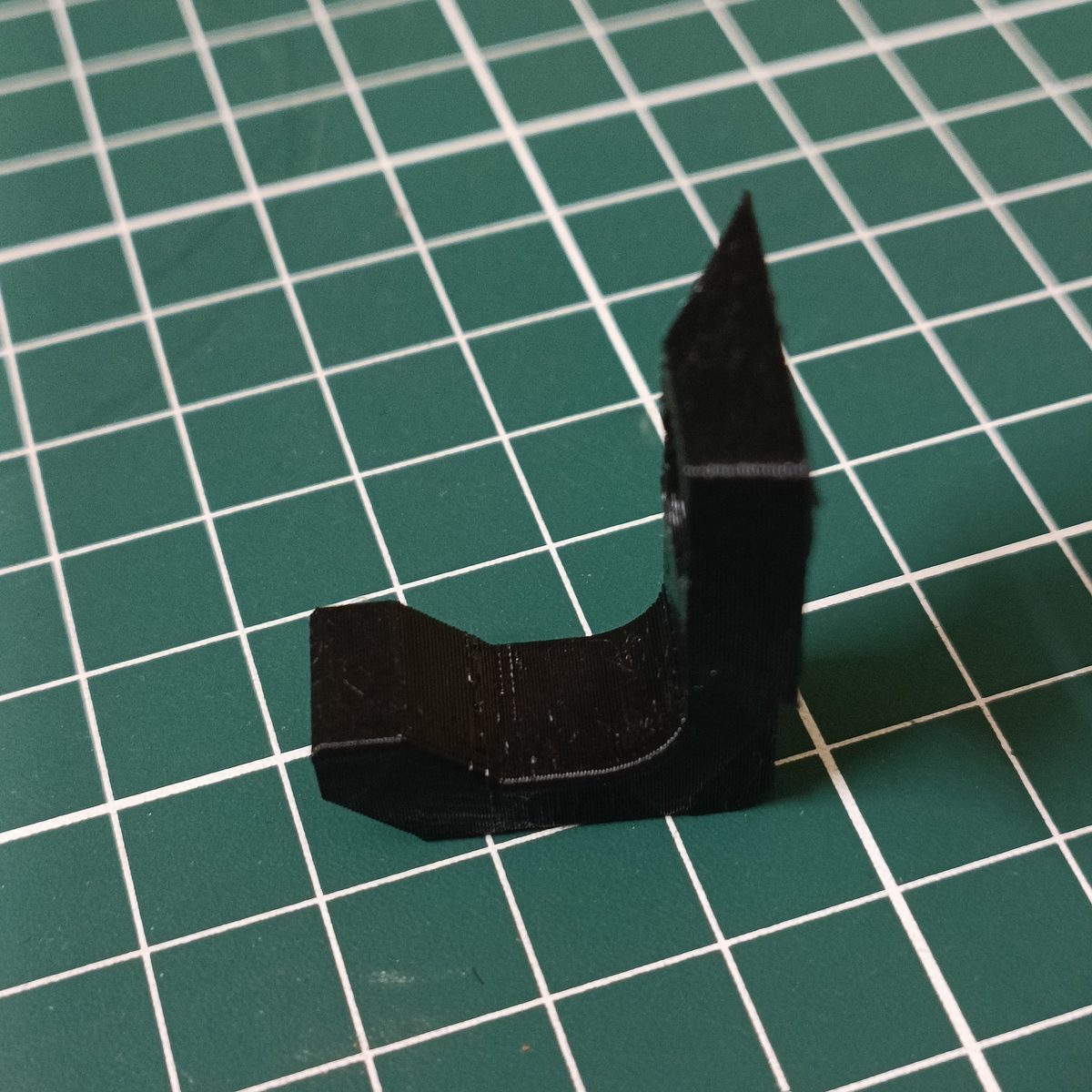
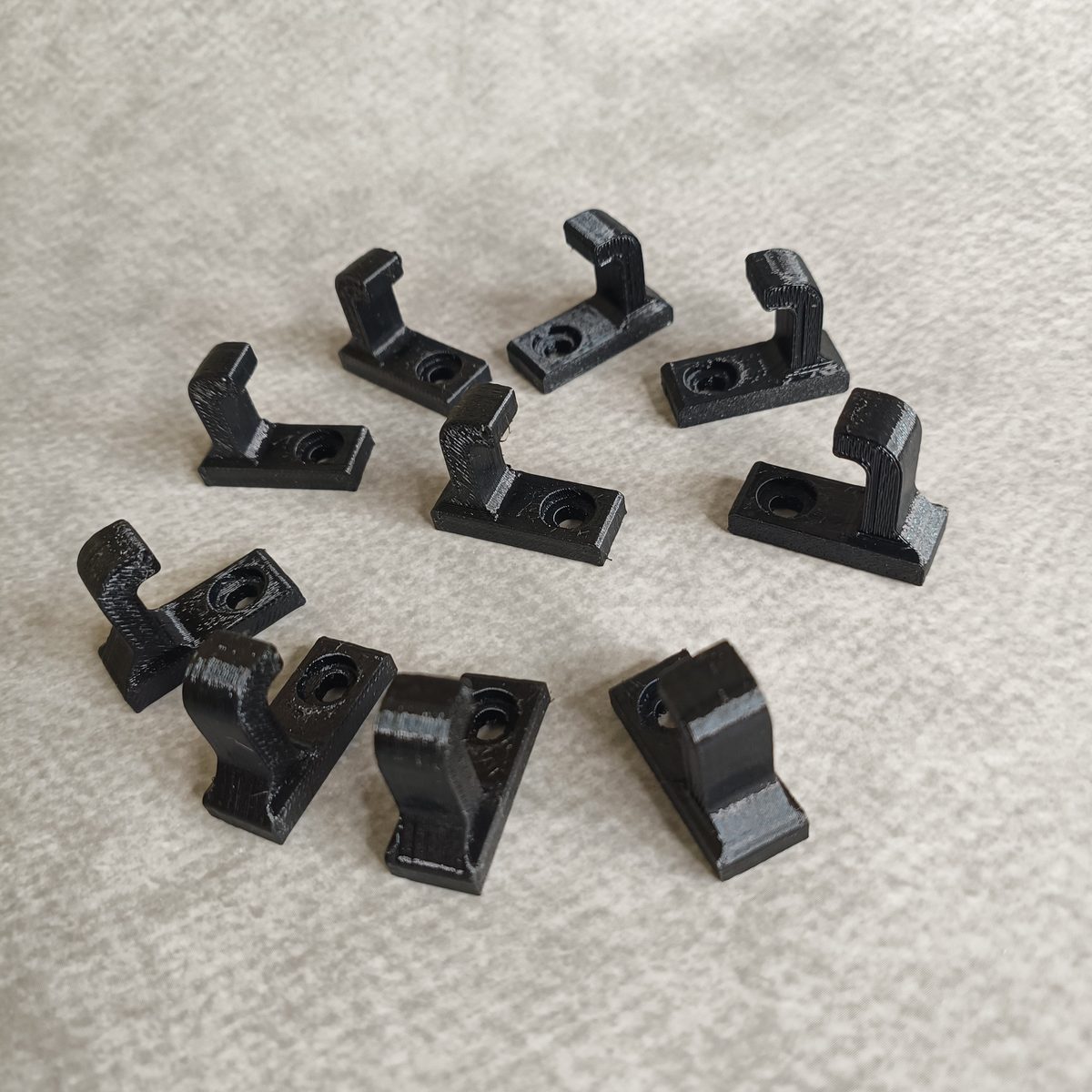
Side mounted hooks attach to the sides of tables, desks or shelves with self-tapping screws, and the same hooks work on walls, so a pack covers both the desk and the wall beside it. For cables, keys and light tools this is often a better answer than the underside, because you can see what you hung there.
This works well beyond the desk
The same logic applies anywhere there is a horizontal surface with an unused underside.
Kitchen counters and shelf undersides can carry light utensils and cloths. A dressing table edge suits jewellery and hair accessories. Bookshelf undersides take charging cables. A study table in a shared room gains storage without taking any more of the room's footprint, which matters most in exactly the homes where space is tight.
Under a bathroom shelf works too, though there the humidity argues for choosing the fixing accordingly.
A layout worth copying
- Front left or right corner underside: headphones, on the side of your dominant hand.
- Opposite front corner: bag or pouch.
- Back underside, near the outlet: cable loop and power brick.
- Desktop side, nearest where you sit down: keys and lanyard.
- Centre underside: nothing, deliberately.
Every hook, pictured
They differ in how they attach and how much they are meant to take, which is the only sorting that matters.
Set of four wall hooks. Adhesive, light duty, the general purpose choice.
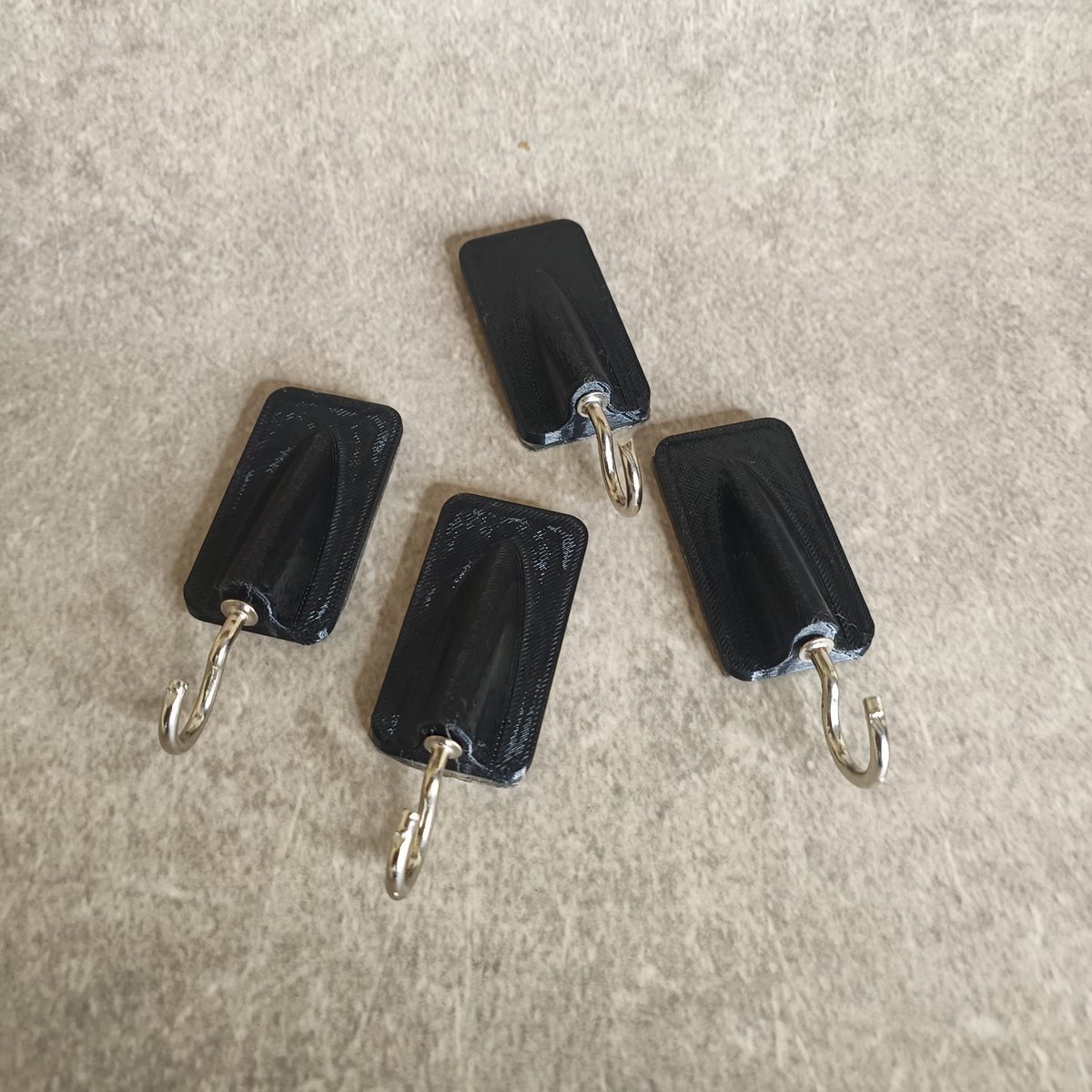
Screw wall hooks, pack of ten. Screwed rather than stuck, which is what anything with real weight needs.
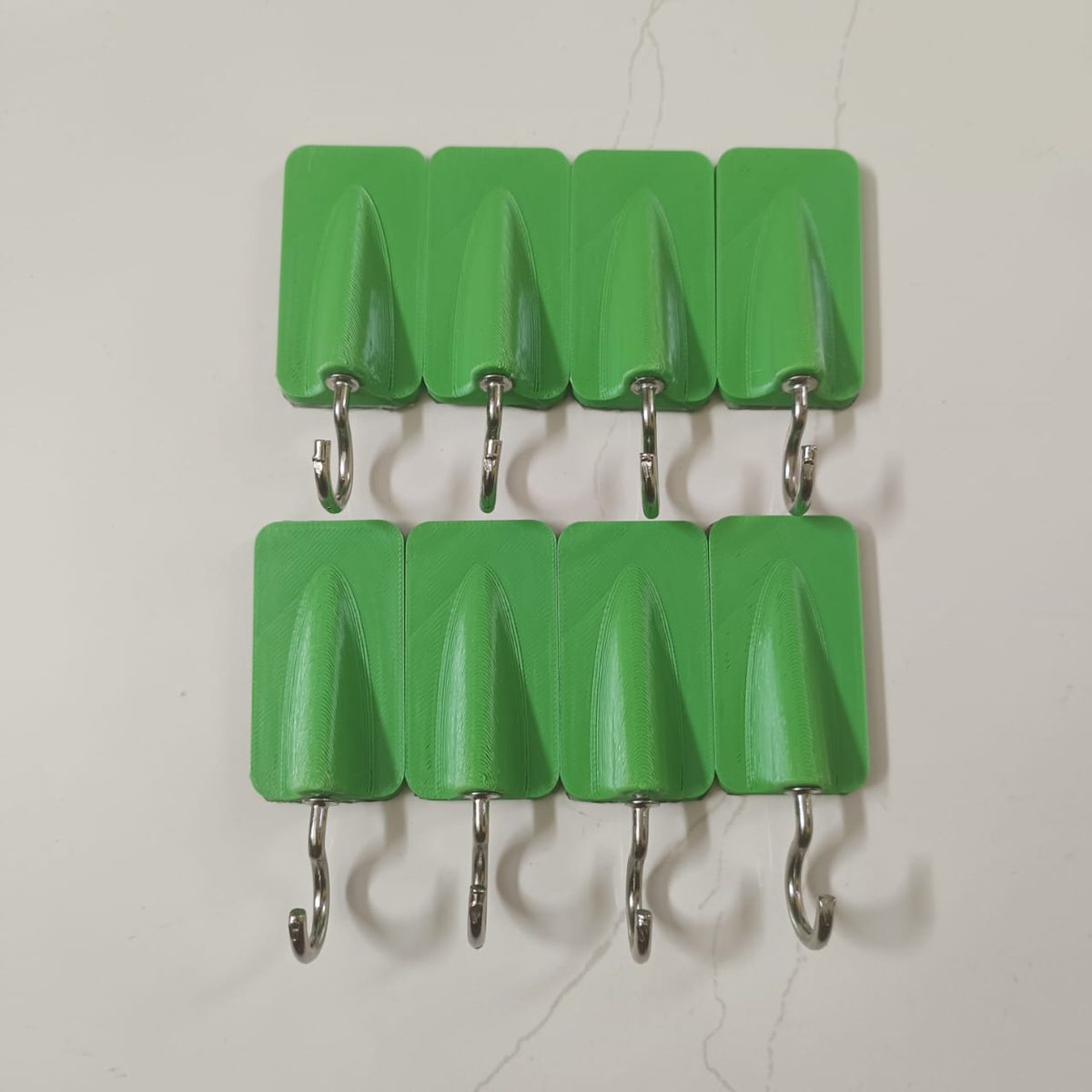
Kitchen tile hooks, pack of eight. Made for tiled walls, which is exactly where you least want to drill.
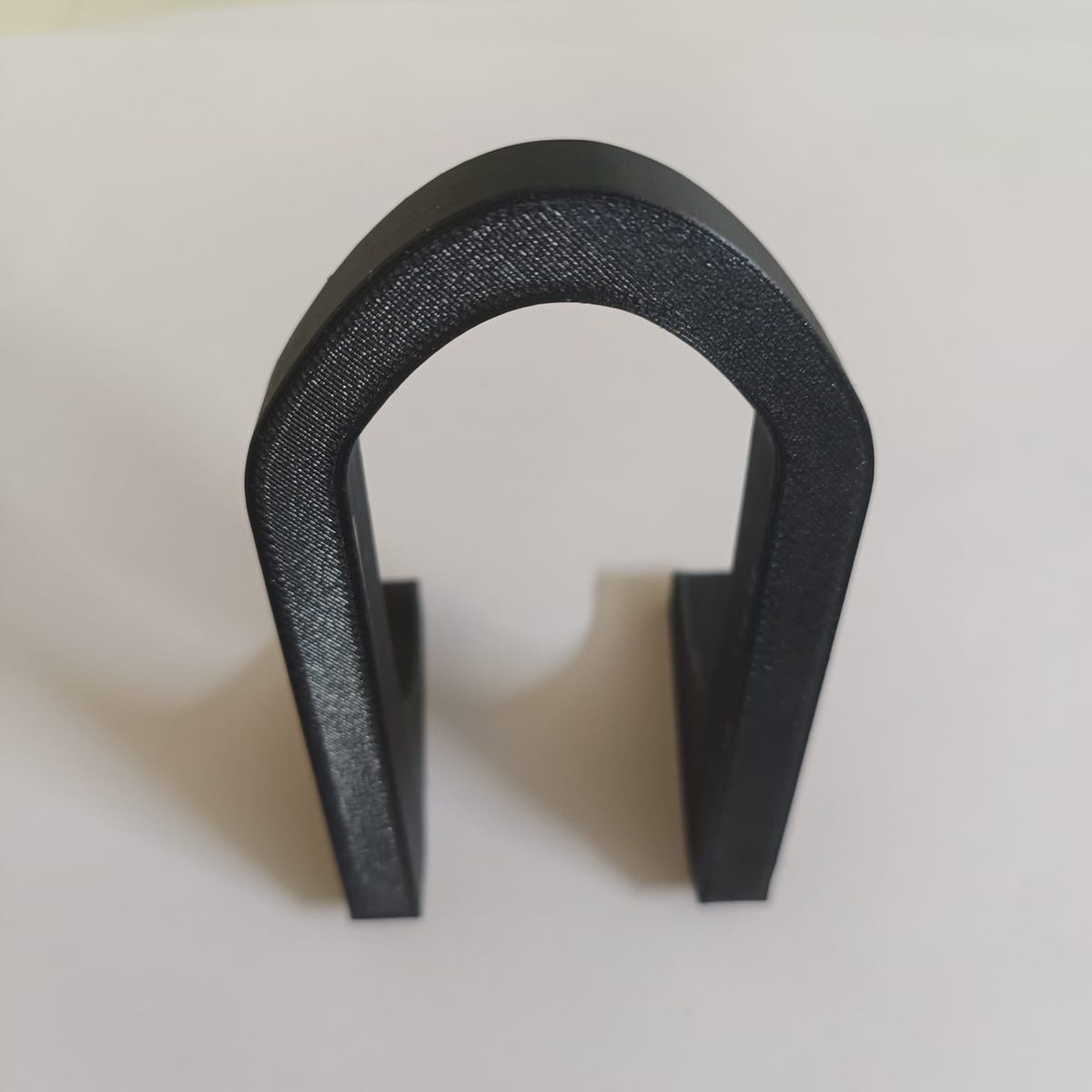
Heavy duty U shaped hook. The highest rated in the range, and the U shape means the load sits in the curve rather than on a prong tip.
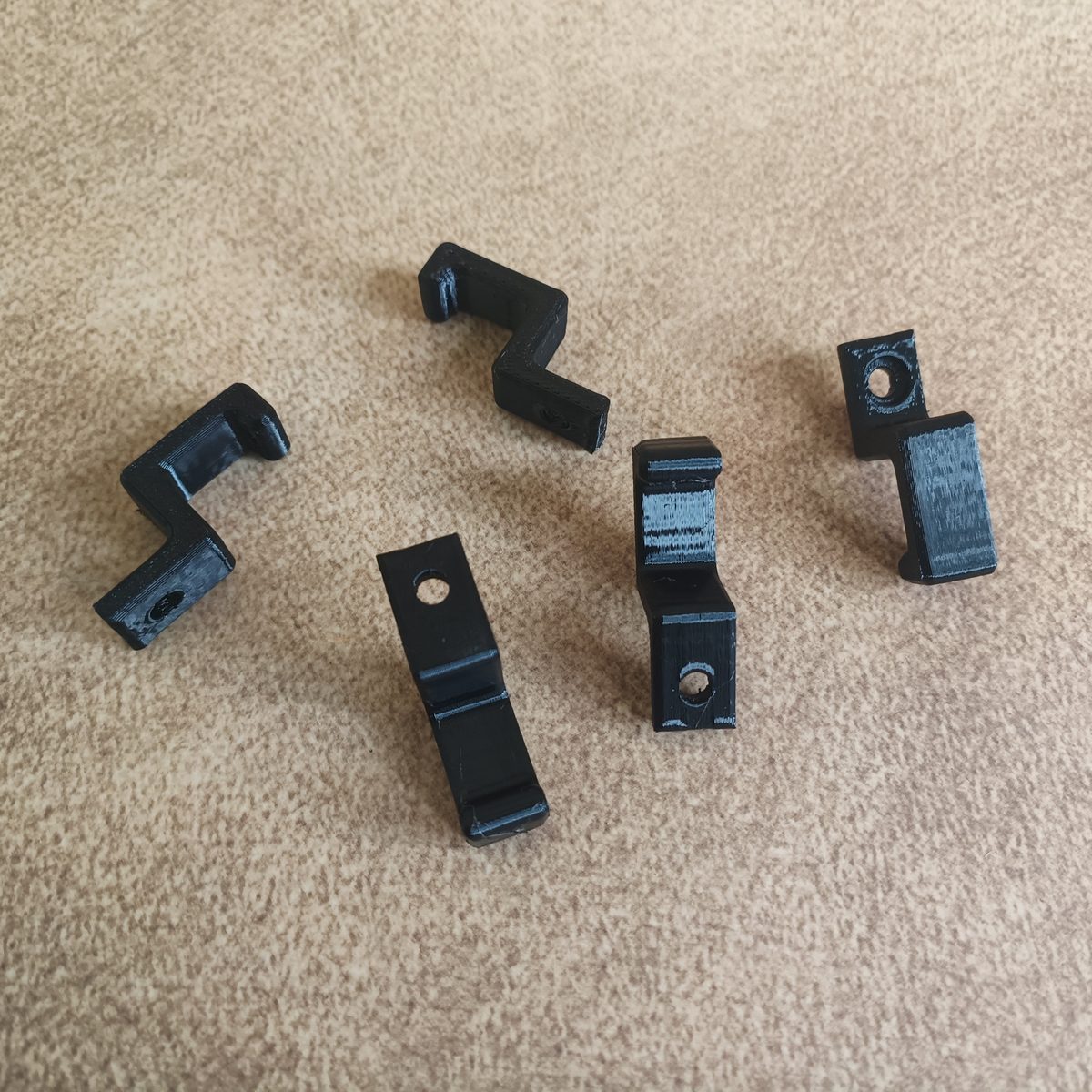
Under table hooks, set of five. Uses the dead space beneath a surface, rated to 1.5 kg each.
Side mounted hooks, pack of ten. For a vertical edge rather than a flat face.
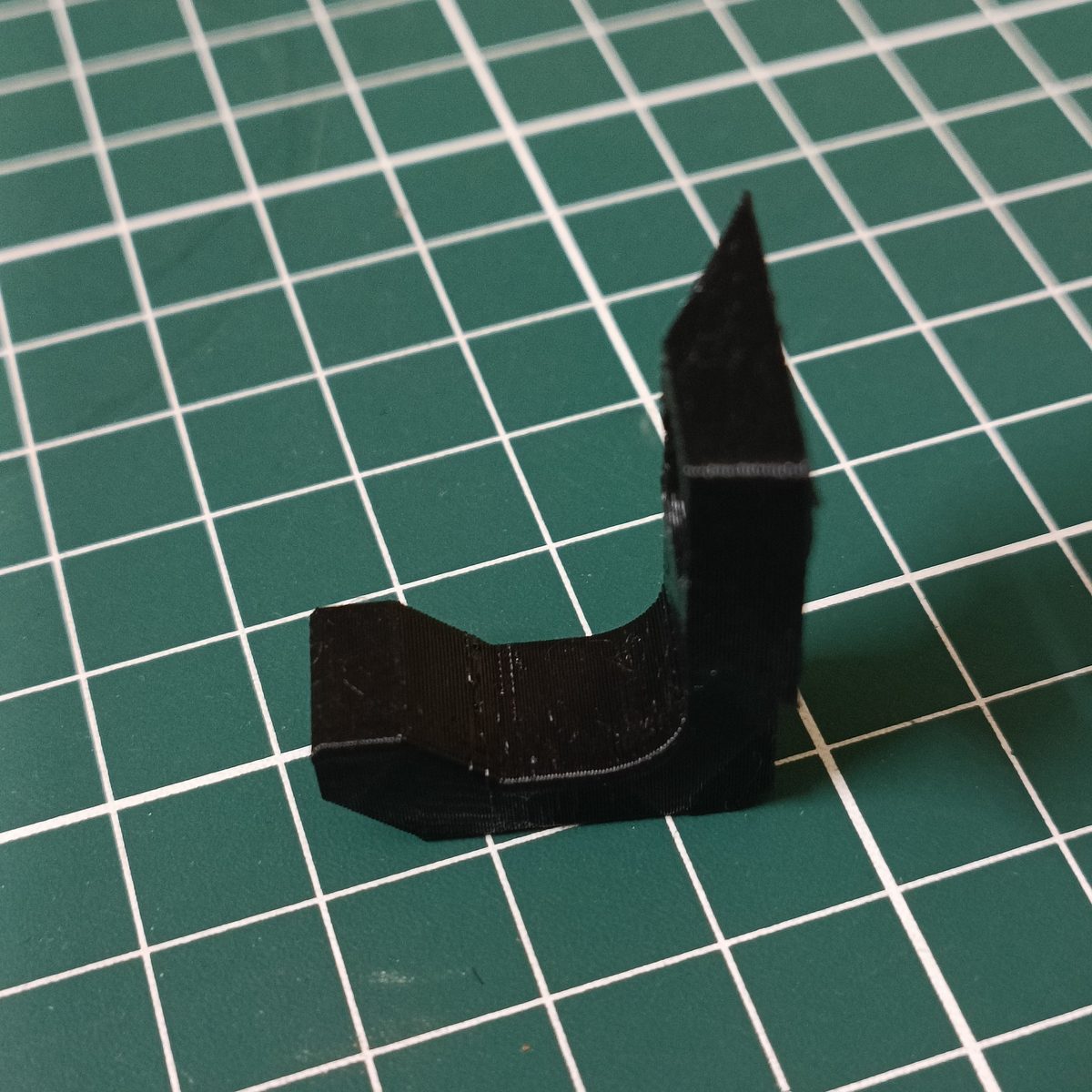
Twin arm wall hook. Two prongs upswept at 15 degrees, so a strap or ring cannot slide off.
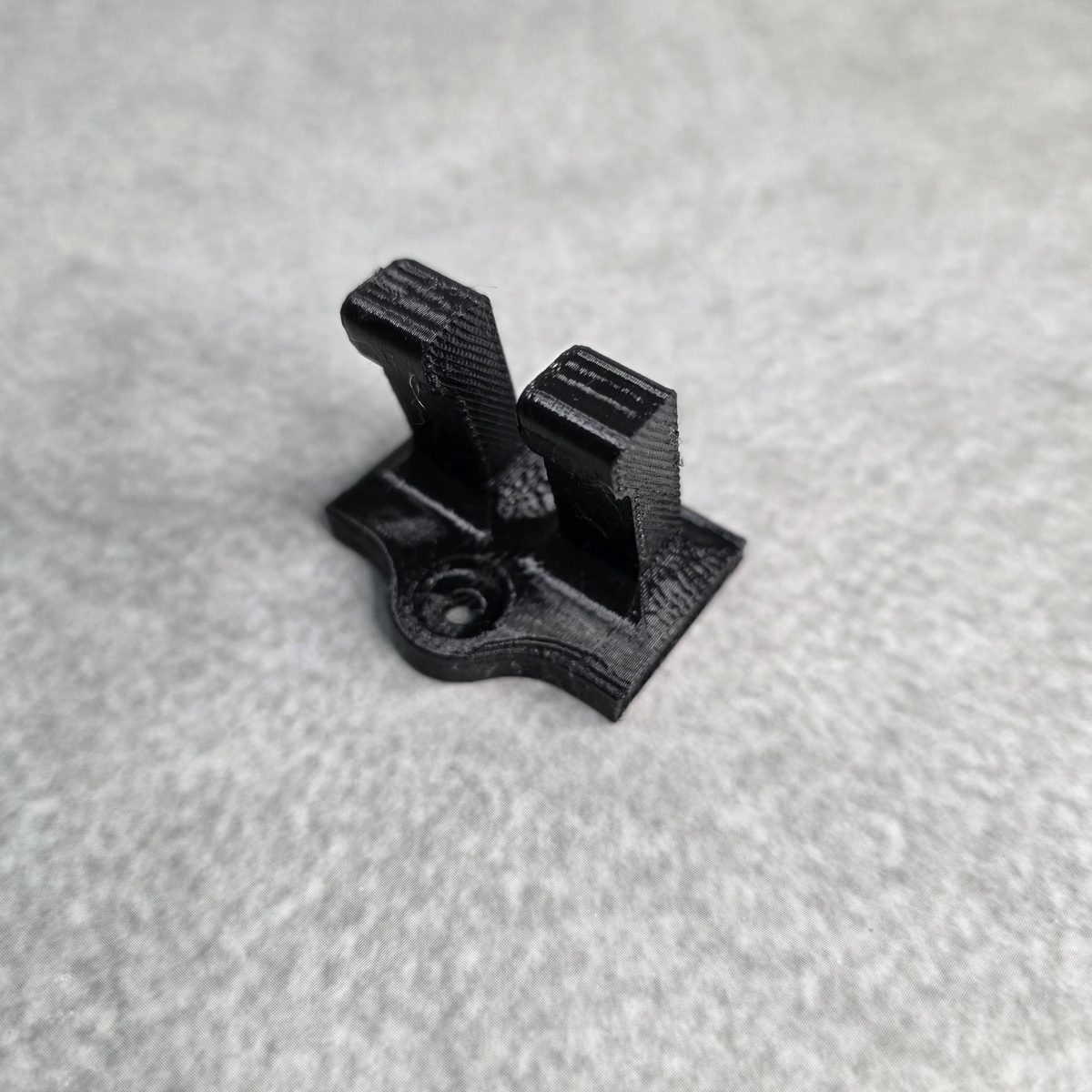
Where a hook is not the right answer at all, the stick-on mounting brackets and screw-on mounting brackets mount an object flat against the wall instead of hanging it off a prong.
If the thing you want to hang has an awkward shape, a monitor arm clamp in the way, or a desk edge with a profile nothing standard grips, that is worth having made to the measurement through our 3D printing service page. The wider range sits under hooks and hangers and office accessories.
The short answer
The space under a desk is not wasted, it is legroom, and ergonomics wants 24 to 30 inches of it. What is genuinely free is the perimeter: the front underside corners, the back near the cables, and the sides of the desktop.
Measure your desk edge before buying anything that clamps, keep each hook under about 1.5 kg, give every item its own hook, and leave the middle alone so your knees can keep using it.