
PLA vs PETG for Everyday Household Products
Most comparisons of these two materials are written for people choosing a filament to print with. This one is about the objects themselves: the hooks, trays, pots and organisers already sitting around a house, and which material each of them actually wants.
If you want the general argument for why PETG tends to win as a default printing material, we have made that case separately in why PETG is the best material to 3D print. What follows is the narrower question of matching a material to a specific object.
The four conditions that decide it
Across every household item, the choice comes down to whether the object faces any of these:
- Heat. Anything above roughly 50 C rules PLA out.
- Sunlight. Ultraviolet exposure degrades PLA noticeably faster than PETG, with measured lifespans for each material covered separately.
- Sustained load. Weight applied continuously, especially combined with warmth.
- Impact. Things that get knocked, dropped or flexed.
An object facing none of these is a genuine tie, and there are more of those in a house than people assume.
The numbers, side by side
Figures below are drawn from OzFDM's heat deflection chart measured to ISO 75 at 0.455 MPa, Filabase's material comparison, and MachinePicker's filament comparison for the impact figures. Published values shift between brands and test standards, so a specific spool's data sheet is always the final word.
- Heat deflection temperature: PLA around 50 to 56 C. PETG around 68 to 75 C. A margin of roughly 20 C.
- Softening point: PLA about 55 to 60 C. PETG about 75 to 80 C.
- Tensile strength: broadly comparable, with PLA around 44 MPa and PETG around 49 MPa on average.
- Impact resistance: not comparable at all. PLA is brittle, at roughly 3.5 kJ/m squared notched Izod, against about 8 for PETG.
- Moisture absorption: PLA medium to high, PETG very low.
- UV resistance: PLA poor, PETG fair.
- Layer adhesion: PETG bonds between layers better, which is why it is the default for anything holding water.
Read that list and one thing stands out: the two materials are close on raw strength and far apart on everything about surviving conditions. Tensile strength is the number people quote and almost the only one that does not matter here.
Where PLA is genuinely the right answer
PLA is not a compromise material for indoor decorative objects, and it has real advantages that get lost in the arguments.
It prints with finer detail and crisper edges, which matters on anything with texture or fine geometry. It comes in a much wider range of finishes, including matte, silk, marble effects and wood blends. It is more rigid, which suits objects meant to feel solid rather than flexible. And it is cheaper.
For a decorative vase, a display piece, a desk organiser, a picture frame or a shelf ornament, PLA is not the budget option. It is often the better looking one.
Room by room
Living room and bedroom. Almost everything here is a tie, so choose on appearance. Decorative pots, vases, trays, organisers and display pieces face no heat, no load and no weather. The exception is anything on a sunny windowsill, where PLA will fade first.
Kitchen. Split by proximity to heat. Organisers, fridge trays, egg holders and storage boxes are unheated and fine either way. Anything near a stove, a kettle or an oven door, or anything that might see hot water, wants the extra 20 C of margin. Nothing printed belongs in a dishwasher regardless of material.
Bathroom. This is where PETG's moisture resistance earns its place. Constant humidity, direct water contact and steam are the daily conditions. PLA's medium to high moisture absorption is a real disadvantage over years, and soap dishes and bottle holders sit wet more or less permanently.
Balcony, terrace and garden. The clearest case in the house. Sun plus heat plus weather is exactly the combination PLA handles worst. Pots, planters and outdoor fixtures in direct sun want PETG at minimum, and ASA if the part is permanent.
Garage and workspace. Impact and load dominate. Tool hooks, brackets and anything holding weight benefit from PETG's toughness, because the failure mode for PLA is a sudden brittle snap rather than a gradual sag.
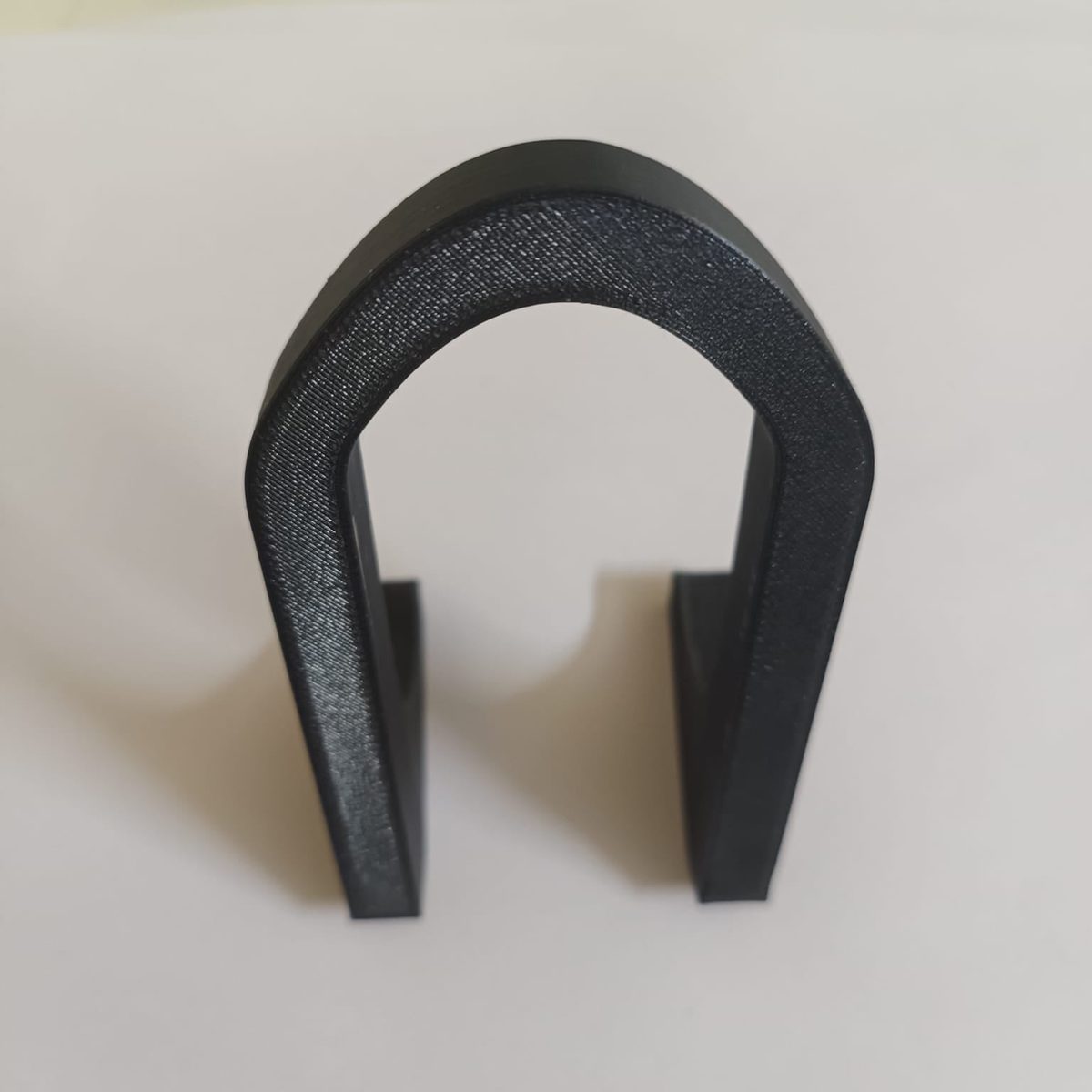
Load-bearing items deserve their own note
Hooks and brackets are the category where the choice stops being cosmetic, because they fail differently.
Two effects stack. First, impact: PLA's brittleness means a knocked hook can snap outright where a tougher material would flex. Second, creep, meaning slow deformation under sustained load, which accelerates as temperature rises. A hook holding a heavy bag in a warm room is facing both at once.
This is also why a stated load rating is worth more than a material name. A heavy duty U shaped hook rated to 15 kg tells you something specific about what it was designed and built to carry, which is more useful than knowing which polymer it came from. Geometry, wall count and print orientation matter as much as material for a part like this.
Where neither is the answer
Worth being clear about the cases that need a third option:
- Permanent outdoor exposure: ASA, for UV stability measured in years rather than months. Formlabs covers the heat-resistant options in more depth.
- Anything holding an open flame: not plastic at all, or a glass insert between the flame and the plastic.
- Prolonged contact with wet food: glass or steel, for reasons of surface rather than material.
- Anything going in a dishwasher: a cycle at 60 C or more is above both materials' comfortable limits.
A shortcut that works
Rather than memorising the specifications, ask three questions about the object:
- Will it ever get warm? Sun, a hot drink, a warm appliance, a parked car. If yes, PETG.
- Will it hold weight for months? If yes, PETG, and check for a stated load rating.
- Is it just going to sit there looking good indoors? If yes, PLA, and pick the finish you actually like.
Most household objects answer no, no, yes. That is why so much of what people print and buy is PLA and why it works out fine.
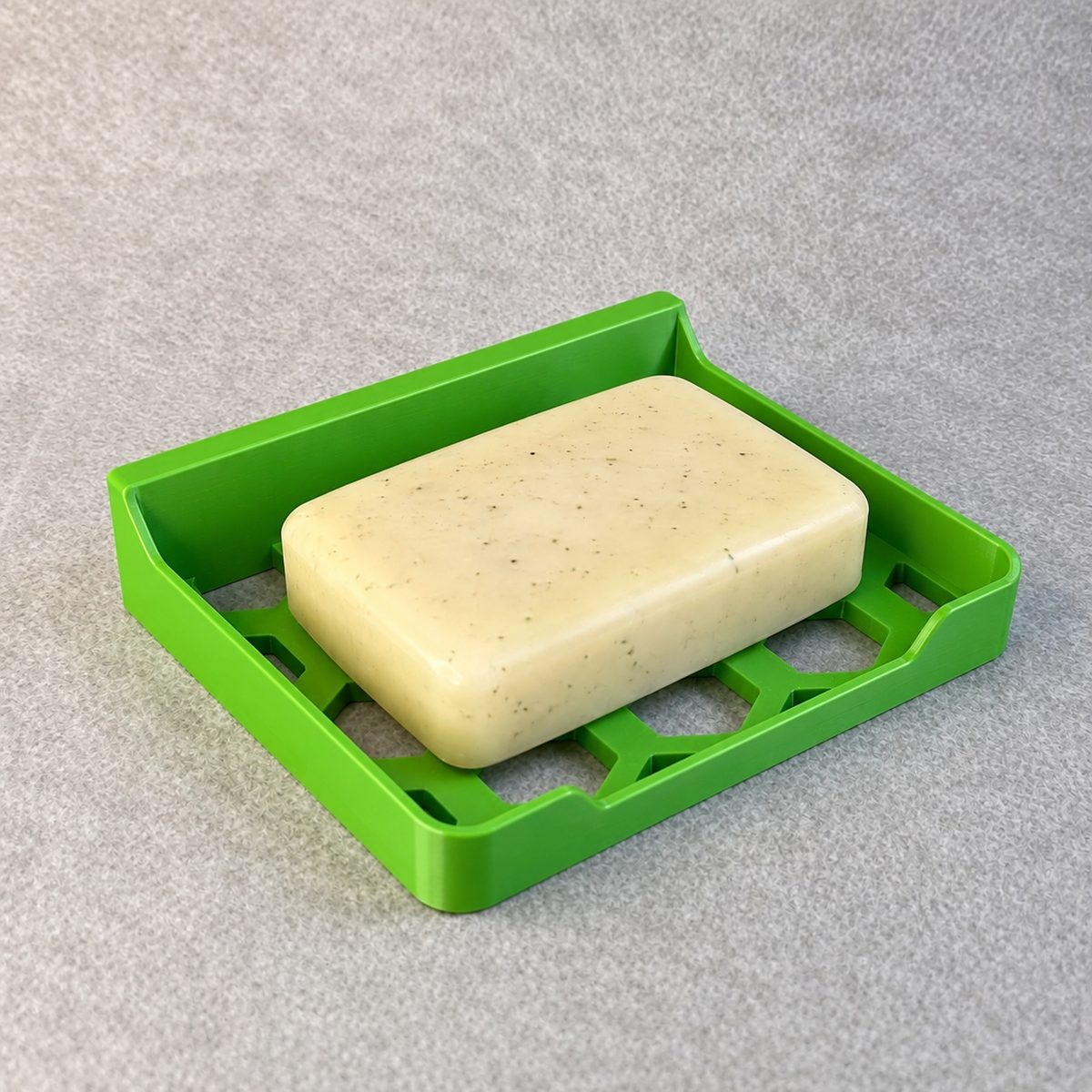
A multipurpose piece like a honeycomb utility tray makes the point neatly. On a desk it faces nothing at all. In a bathroom it faces humidity every day. Same object, and the material question only becomes interesting once you decide which room it lives in.
If you are having something made rather than buying it ready, the useful thing to state is not a material but a situation: where it will sit, what it will hold, and whether it sees sun or heat. That is what actually determines the right choice, and it can be specified along with the model through our 3D printing service page.
Where each material choice shows up in practice
The distinction is easiest to see against the things it decides.
Indoors, where PLA is stable for years: the desk pieces, three step stand, honeycomb cluster, round honeycomb rosette, geometric cat holder, the wood finish set of eight, wood finish set of five, round rimmed coaster, leaf shaped coaster, hexagonal glass cover, and everything that lives in a pocket or a bag.
Indoors but wet, where the question is water rather than heat: the 15 cm base plate, ripple plate for small pots and the mug drainage plate, all of which shed water rather than holding it.
Near sun or heat, where the choice genuinely matters: the pots, plain cylindrical, stacked rings, coiled cylindrical, vertical spiral, vertical groove, ribbed marble texture, layered ridge, double rim tapered, stacked geometric, which belong in the shaded half of a balcony rather than in open sun.
The point is not that one material is better. It is that almost everything in a home never gets near the temperature where the difference applies.
The short answer
PETG for heat, water, weight and sun. PLA for everything indoors that just has to look right, which is most of a house.
The mistake is not picking the wrong one. It is assuming the question is about strength, when on strength the two are close, and then ignoring the conditions where they are not close at all.