
How Long Do 3D Printed Products Last in Direct Sunlight?
There is no single number, and anyone offering one is skipping the question that decides it: which plastic, and how much sun does it actually see.
A printed wall hook inside a covered balcony and the same hook on an exposed terrace railing are not running the same experiment, even though both are technically outdoors.
What sunlight actually does to plastic
Ultraviolet radiation carries enough energy to break the chemical bonds holding a polymer chain together. This is called chain scission, and it is a chemical change, not a surface one.
As chains break, the average molecular weight of the material drops. Shorter chains mean less ability to absorb energy by flexing, which is why the visible result is almost always the same: the part loses gloss, changes colour, and turns brittle. It does not soften or sag. It stiffens and then cracks.
Spectrum Filaments frames outdoor exposure as four separate attacks, which is a useful way to think about it: UV radiation breaking chains, thermal cycling from daily heating and cooling, moisture and humidity, and sustained heat softening low-temperature plastics.
Sunlight is only the first of those. Most real-world failures are a combination.
Why ASA survives when ABS does not
The difference between the two materials that sound most similar is worth understanding, because it explains the whole ranking.
ABS contains a butadiene rubber phase, and that phase is highly sensitive to UV. ASA replaces it with a polyacrylate rubber phase, which is naturally far more stable under UV, as 3DJake explains. That single substitution is why ASA is the material used for automotive exterior trim and outdoor signage while ABS yellows and cracks.
Expected outdoor lifespan by material
These are working ranges for continuous direct sun, drawn from Filabase's comparison across their filament database:
- PLA: weeks to months. Average HDT around 56 C, UV resistance poor.
- ABS: roughly 6 to 18 months. Average HDT around 89 C, but UV resistance is poor despite the heat tolerance.
- PETG: 1 to 2 years or more. Average HDT around 72 C, UV resistance fair.
- ASA: 3 to 5 years or more. Average HDT around 91 C, UV resistance excellent.
3D Print Book's weathering comparison lines up with this, rating PETG as moderate with gradual yellowing and gloss loss over several years, and ASA as colour stable under prolonged exposure.
Note how differently the two properties rank. ABS beats PETG on heat and loses to it badly on sunlight. Heat resistance and UV resistance are separate specifications, and picking a material on one while ignoring the other is the most common mistake here.
The stages PLA goes through outdoors
Filabase breaks the decline into a timeline, which is more useful than a single lifespan figure because the part stays usable well past the first visible change:
- 1 to 4 weeks: loss of surface gloss, minor colour shift in lighter shades. Purely cosmetic.
- 1 to 3 months: visible whitening or yellowing, surface turns slightly chalky and rough.
- 3 to 6 months: significant embrittlement, layer lines become more prominent as the surface degrades, measurable loss of mechanical properties.
- 6 to 12 months: structural failure under load becomes likely, with parts cracking under stress that would have been trivial when new.
The practical reading is that a decorative item in the sun looks tired long before it breaks, while a load-bearing one stays looking fine and then fails.
What a controlled study actually measured
It is worth separating marketing timelines from measured results, because a peer-reviewed study reached notably calmer conclusions.
Research published on PubMed Central tested PLA, PETG, ABS and ASA samples from several manufacturers in their as-printed state and again after exposure to four degradation factors: humidity, elevated temperature, UV radiation, and winter weather. Tensile strength and Shore D hardness were measured and statistically evaluated.
After UV exposure, ultimate tensile strength decreased slightly but statistically significantly for only one manufacturer's PLA. Temperature cycling produced no statistically significant change in tensile strength or hardness at all, except for one ABS sample.
Two honest conclusions follow. First, laboratory exposure over a test period is not the same as a year on a terrace, so this does not overturn the field experience. Second, results vary by manufacturer even within the same material, which means a blanket statement about "PLA" is always an approximation.
Colour and finish change the answer
- Dark colours run hotter. They absorb more solar energy, so a black part can reach a temperature a white one never sees, stacking a heat problem on top of the UV one.
- Light and transparent shades show ageing sooner. Transparent and light PETG variants show visible UV ageing faster than dark ones.
- Glossy surfaces show gloss loss first, which makes matte finishes look better for longer even when the underlying degradation is identical.
- UV additives exist. Some filaments are UV stabilised, and for nylon in particular only the stabilised variants are recommended outdoors.
Which printed items are actually in the sun
Most printed household items never face this problem, and it is worth being clear about which ones do.
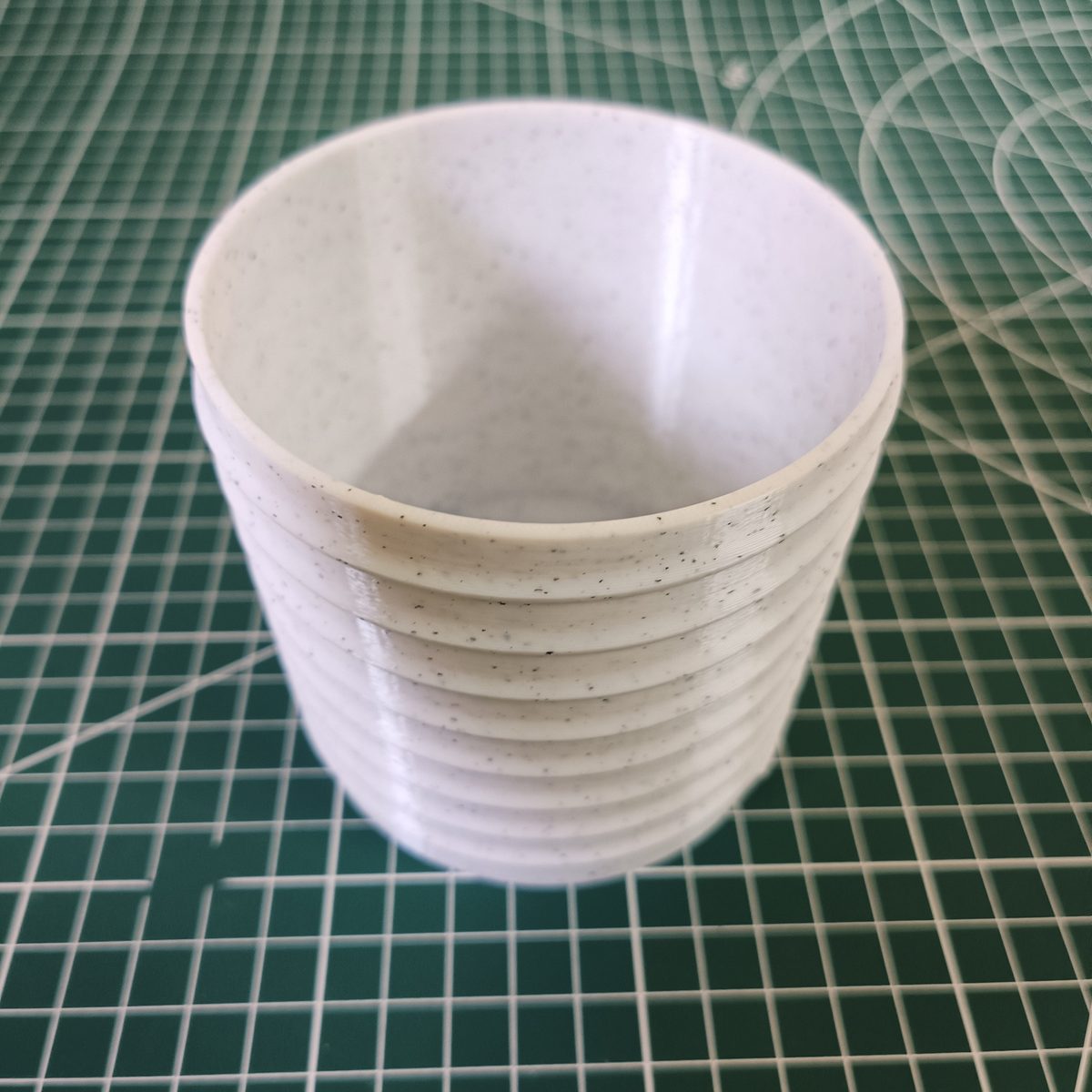
Genuinely exposed: anything on an open terrace, an unshaded balcony railing, or a garden bed. Pots and planters in that position are the main category, which is why placement matters more than material for most people. A coiled cylindrical pot on a shaded balcony and the same pot on an open terrace will age at completely different rates.
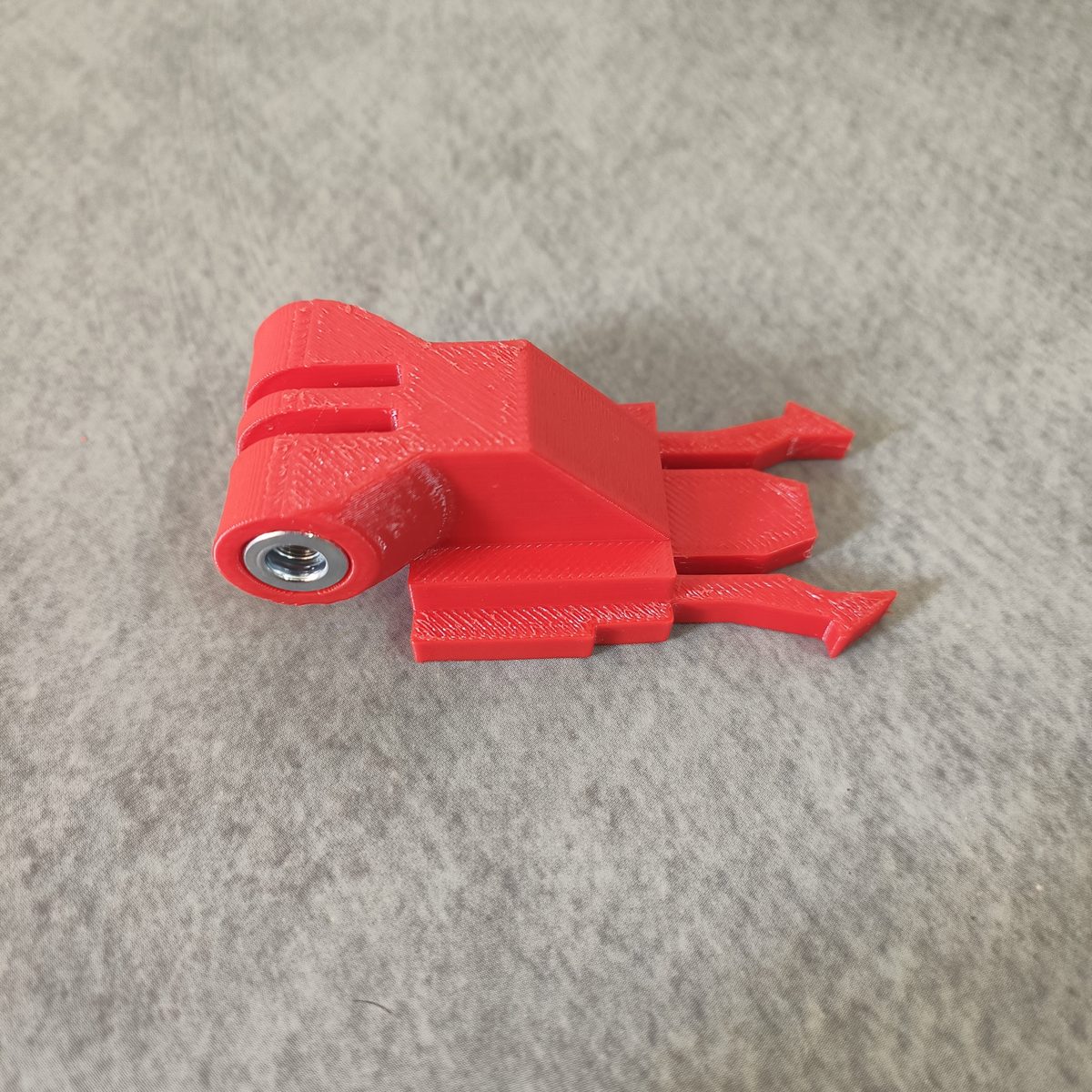
Intermittently exposed: items that go out and come back. A helmet camera mount sees strong sun while you are riding, then lives in a cupboard. Total exposure across a year is a fraction of what a fixed outdoor part accumulates, which is why riding accessories rarely show the problem.
Effectively unexposed: wall hooks indoors, brackets inside cupboards, desk items, and anything in a bathroom or kitchen. UV is not a factor in their lifespan at all.
Making an outdoor part last longer
- Shade beats material. An overhang, a wall or a plant canopy removes most of the exposure at no cost.
- Rotate fixed items such as pots occasionally, so one face does not take every hour of sun.
- Avoid load plus sun together. Embrittlement matters most where something is bearing weight, so a decorative piece tolerates ageing far better than a bracket does.
- Paint or coat for UV if the part is already made. An exterior-grade coating blocks the radiation before it reaches the polymer.
- Specify the material when it is genuinely outdoors, rather than accepting the default.
That last one is the only real decision. If you are having something made that will live permanently in the sun, a railing bracket, a terrace planter, an outdoor fixture, the material is a specification rather than a preference, and stating where the part will sit is more useful than naming a plastic. You can describe the position and the expected life along with the model through our 3D printing service page, and the choice can be made against the actual conditions.
For anything indoors, none of this applies, and the range under flower pots and gardening or household accessories will outlast your interest in rearranging the room.
Which products this actually affects
Sun exposure sorts the range into three groups, and most of it never sees direct sun at all.
At real risk, because they often go outdoors: the pots, plain cylindrical, stacked rings, coiled cylindrical, vertical spiral, vertical groove, ribbed marble texture, layered ridge, double rim tapered, stacked geometric, along with the 15 cm base plate and ripple plate. A shaded balcony is fine indefinitely; an open terrace in May is not.
Partly exposed, typically on a windowsill: the vase range, tall ribbed vase, curved white vase, textured modern vase, modern ribbed vase, double curve vase, draped bark vase, melting candle vase, pebble contour vase, egg vase, and the compact round holder, minimal tabletop stand, twisted rounded square.
Effectively unaffected, because they live in a pocket, a bag or indoors: the keychains, the rose earrings, leaf drop earrings, circular earrings, and the desk pieces.
The practical rule is that anything living indoors is stable for years, and the fading question only matters for the handful of items that live outside.
The short answer
In continuous direct sun, expect weeks to months from PLA, one to two years from PETG, and three to five years or more from ASA. Those are the working numbers.
But before choosing a material, check how much sun the thing actually gets. Moving a pot two feet under an overhang will do more for its lifespan than any upgrade you can buy, and it costs nothing.