
Key Holders for the Wall: Entryway Placement and No Drill Options
A key holder solves a problem that is not really about keys. It is about the fact that the first ten seconds after walking through a door are when your hands are full and your attention is elsewhere.
Whatever you do in those ten seconds becomes the habit. If there is no designated spot, keys land wherever there is space, which is a different surface every day, which is why they go missing.
The rule that actually works
The spot has to be reachable without changing what you are already doing. If putting keys away requires walking somewhere, setting bags down first, or turning around, the habit will not hold on the days you are tired, and those are precisely the days you lose the keys.
Which gives a short list of requirements:
- Within arm's reach of where you stop after closing the door.
- Reachable one-handed, since the other hand is usually carrying something.
- Visible on the way out, so you cannot leave without seeing them.
- Not on a surface that collects other things. A shelf that accumulates post and coins will bury keys within a week.
- Fixed. A bowl that moves is not a system.
A wall holder beats a bowl for one reason: hooks hold a fixed number of items in fixed positions, so a missing key is visible as a gap. A bowl just looks full.
What Vastu says, and where the sources disagree
Placement of keys is treated seriously in Vastu Shastra, and it is worth knowing that the guidance is not uniform. Two commonly cited positions differ substantially.
The lobby, facing west. One widely repeated version holds that the west direction in the lobby is best for keeping keys, with the key stand itself placed in the north or east corner of the room. Discussion on NoBroker reports the same guidance.
The master bedroom. Astrotalk's entrance guidance states that the best place for a key holder is the master bedroom, ideally in its north or east corner, while also saying main door keys should always live in a key stand rather than loose.
Those are different rooms, so anyone following Vastu here has a choice to make rather than a rule to follow. The north or east corner recommendation is the one point where the sources agree.
Where they also agree is on what to avoid:
- Not on the dining table.
- Not on or inside a shoe rack.
- Not on chairs or in children's rooms.
- Discard rusted, broken or unused keys, which are described as metal clutter causing energy blockages.
- A wooden key stand is preferred over metal, to balance the metal of the keys themselves.
The practical and the traditional advice converge more than they conflict. Both rule out the shoe rack and the dining table, which are exactly where keys end up when there is no holder, and both want a single fixed home rather than a moving one.
Height and position
- Around 130 to 150 cm from the floor puts hooks at comfortable hand height for most adults without reaching.
- On the handle side of the door, so your dominant hand reaches it naturally as you come in.
- Clear of the door's swing, checked with the door fully open rather than estimated.
- Not directly opposite the main door, which in Vastu terms is a position better left clear, and practically means the holder is in the sightline of anyone at the door.
- Lower for a home with children, if the point is that they hang up their own keys.
The deity image at the entrance
A key holder carrying a Ganesh image sits in a long tradition of marking the threshold, which is why so many Indian entrances carry something at the door rather than nothing.
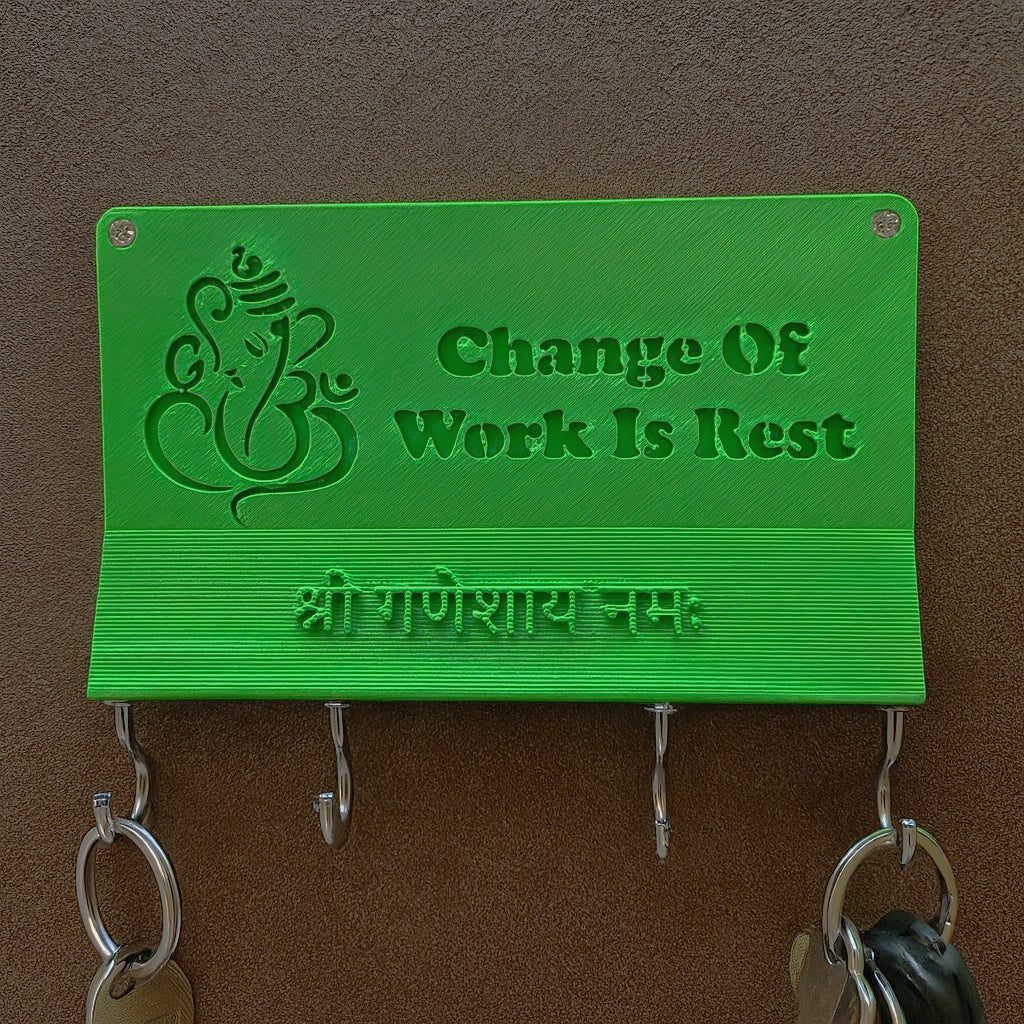
The Lord Ganesh key holder pairs that image with an inspiring life quote, and the quote can be customised at no extra cost, which makes it a reasonable housewarming gift as well as a practical fitting for your own entrance.
Worth noting the distinction here, because it matters to anyone following Vastu closely: a deity image mounted on a wall at the entrance stays in one place, in your home. That is a different situation from a deity carried loose in a pocket through every kind of environment, which some Vastu sources treat differently. If you follow that guidance, a wall-mounted holder is the form that fits it rather than conflicts with it.
Mounting it without drilling
A key holder is one of the genuinely easy no-drill cases, because the load is tiny. Several sets of house keys weigh a few hundred grams, which is comfortably inside what adhesive manages on a painted wall.
The conditions still apply. Clean the spot with isopropyl alcohol rather than a surface spray, press firmly for 30 seconds, and leave it an hour before hanging anything. If the wall is chalky or distempered, adhesive will not hold no matter how light the load, and a single screw is the answer.
One caution specific to key holders: the load is not static. Keys get grabbed, and a hurried grab applies far more force for an instant than the resting weight. That momentary tug is what pulls adhesive holders off walls, not the keys hanging there. If yours keeps failing, that is why.
Making the habit stick
- Put it up before you need it, not after losing keys again.
- Use it for keys only. The moment a lanyard, a mask and a bag strap join them, it becomes storage and stops being a system.
- One hook per set, so a gap is visible.
- Give spares their own hook rather than doubling them up with the daily set.
- Clear out dead keys periodically. Most people carry at least one key to a lock they no longer own.
The options, pictured
Keys can hang from a dedicated holder or from ordinary hooks, which is mostly a question of whether you want the wall to look like storage.
Ganesh key holder. Does the devotional entrance piece and the key wall in one object.
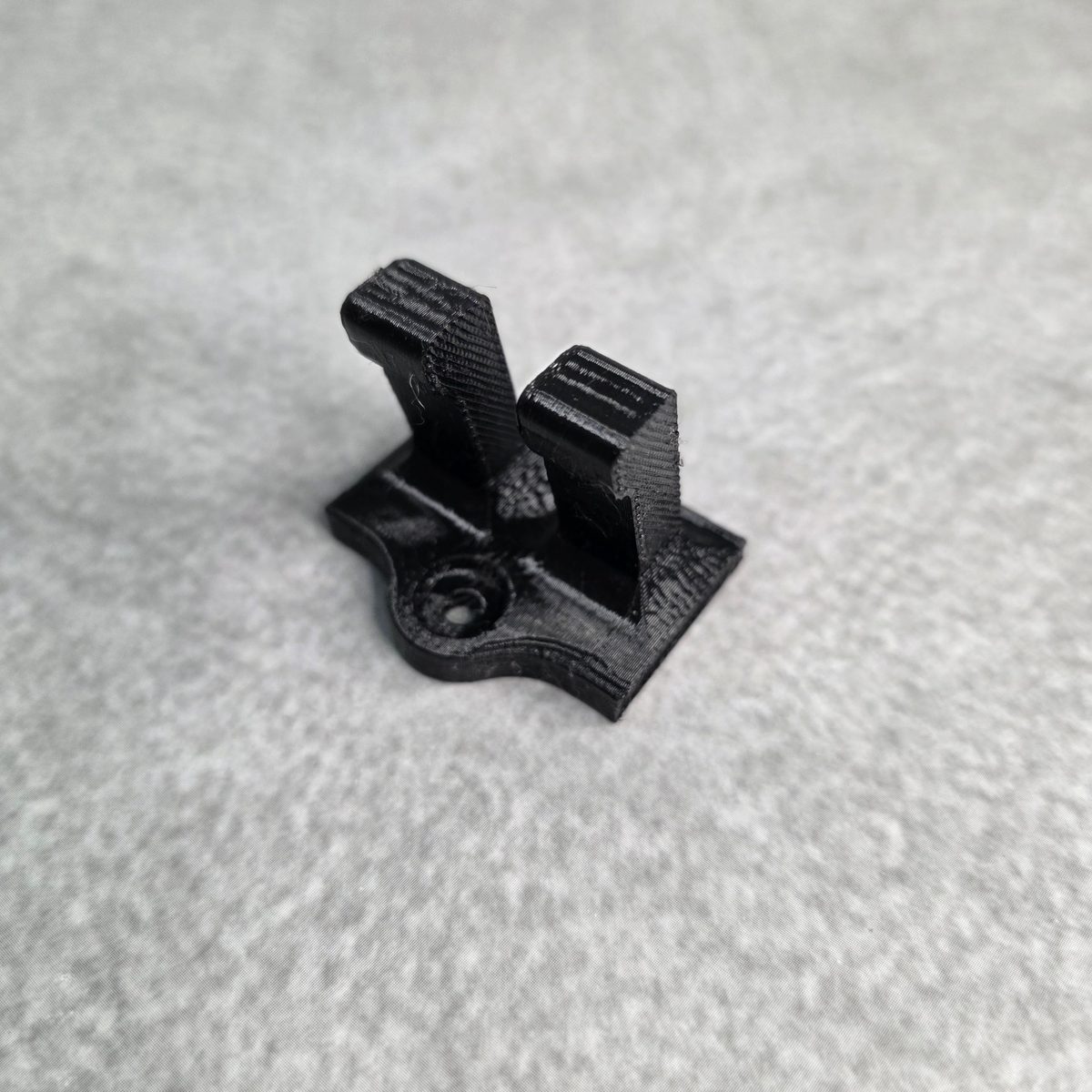
Twin arm wall hook. Upswept prongs, so a keyring cannot slide off.
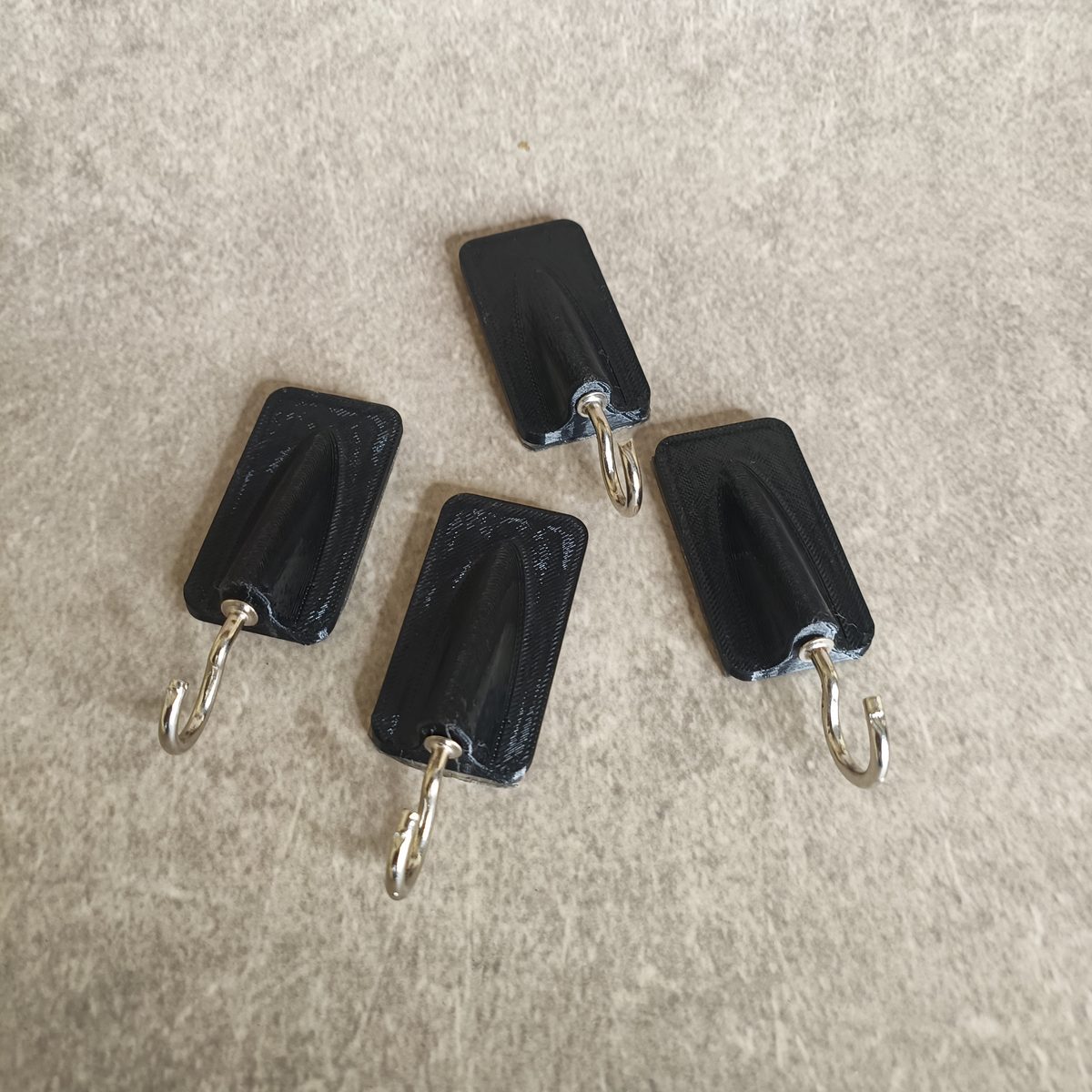
Set of four wall hooks. The plain option if you would rather it disappear.
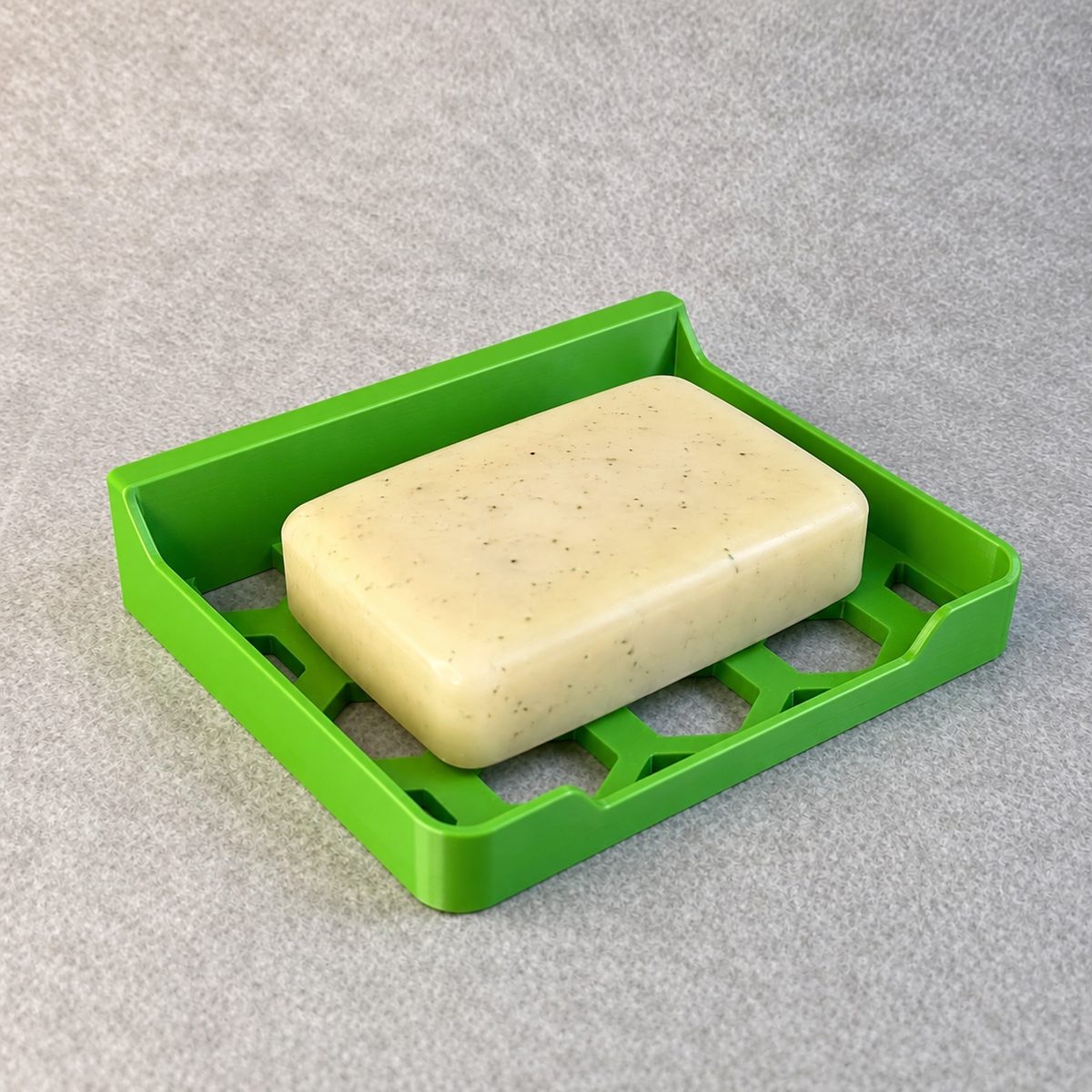
Honeycomb utility tray. For dropping keys rather than hanging them.
If you want a holder sized to a specific spot, a particular number of hooks, or carrying a name or a different image, that is worth having made rather than adapting something close. You can specify it through our 3D printing service page, and the related range sits under hooks and hangers and personalized products.
The options for a key wall
Keys can hang from a dedicated holder or from ordinary hooks, and the choice is mostly about whether you want the wall to look like storage.
Dedicated: the Ganesh key holder, which does the devotional entrance piece and the key wall in one object.
Ordinary hooks, if you would rather it disappear: set of four wall hooks, screw wall hooks, twin arm hook whose upswept prongs stop a ring sliding off, and side mounted hooks for an edge rather than a face.
A tray instead of a hook, if you would rather drop keys than hang them: the honeycomb utility tray or the tiny decorative bowl.
One caution worth repeating: a keyless car fob should not live by the front door, because relay theft works through the wall. Mechanical keys are fine there.
The short answer
Put it within arm's reach of where you stop when you come in, at about 130 to 150 cm, on your dominant hand's side, clear of the door swing. If you follow Vastu, the sources split between the lobby and the master bedroom but agree on a north or east corner, on using a stand rather than a loose surface, and on keeping keys off the shoe rack and dining table.
Then use it only for keys. The holder is not what fixes the problem. Having one place that never changes is.