
Hooks for Kitchen Tiles: Mounting on Glazed Surfaces
Glazed ceramic tile is close to a perfect surface for adhesive. It is hard, non-porous, dimensionally stable, and completely smooth at the scale the adhesive works at. There is no paint film to peel away, which is the failure that ruins stick-on hooks on ordinary walls.
Adhesive on tile typically holds around twice what the same adhesive manages on painted plaster. So when a hook falls off a kitchen tile, something specific has gone wrong, and in a kitchen it is nearly always the same thing.
The kitchen problem: grease
Cooking puts an aerosol of oil into the air. It settles on every surface in the room, including tiles several feet from the hob, and it builds up as a thin film long before anything looks dirty.
That film is the failure layer. The adhesive bonds perfectly well to the grease, and the grease has almost no grip on the tile. The hook holds at first, then the grease layer shears and the whole assembly slides down the wall, often days later.
This is exactly what makes kitchens different from bathrooms, where the same tile with the same hook behaves predictably. It also explains the most common complaint pattern: the hook held fine for a while and then let go for no apparent reason.
The cleaning step that actually matters
Ordinary kitchen cleaning does not solve this, because most kitchen sprays leave behind a residue designed to repel water. That residue repels adhesive just as effectively.
The sequence that works:
- Degrease first with dish soap and hot water, and scrub properly rather than wiping.
- Rinse off all the soap, since soap residue is itself a release layer.
- Wipe with isopropyl alcohol and let it flash off. This is the step that is not optional, and it is the one people skip.
- Do not use a general purpose surface spray as the final wipe. It undoes the alcohol.
- Warm the tile slightly with a hair dryer before applying, particularly in winter, since these adhesives need a surface above roughly 10 C to bond.
- Press firmly for a full 30 seconds, then leave it at least an hour before hanging anything.
Alcohol is the difference between a hook that lasts years and one that lasts a fortnight. Nothing else on this list matters as much.
Grout lines are not part of the surface
Grout is porous, slightly recessed, and often textured. For adhesive purposes it is a hole in an otherwise perfect surface.
- Keep the whole adhesive pad on one tile wherever possible.
- A pad spanning a grout line loses the contact area over the joint, and the recess means the pad is not even pressed flat across its width.
- Small tiles and mosaic patterns are poor candidates for this reason. A pad on a mosaic wall may be touching as little as half the area it appears to cover.
- Large format tiles are ideal, giving a wide uninterrupted field to choose from.
Where to put the hook
Placement on a tiled kitchen wall involves a few considerations that do not apply elsewhere.
Keep hooks away from the immediate splash zone behind the hob, where grease accumulates fastest and reapplication will be a recurring job. Avoid the area directly beside the sink where the tile is wet several times a day. And think about what the hook will be in the way of when you are working at the counter, because a hook at eye level above a worktop is in the path of your arm more often than you expect.
What is reasonable to hang
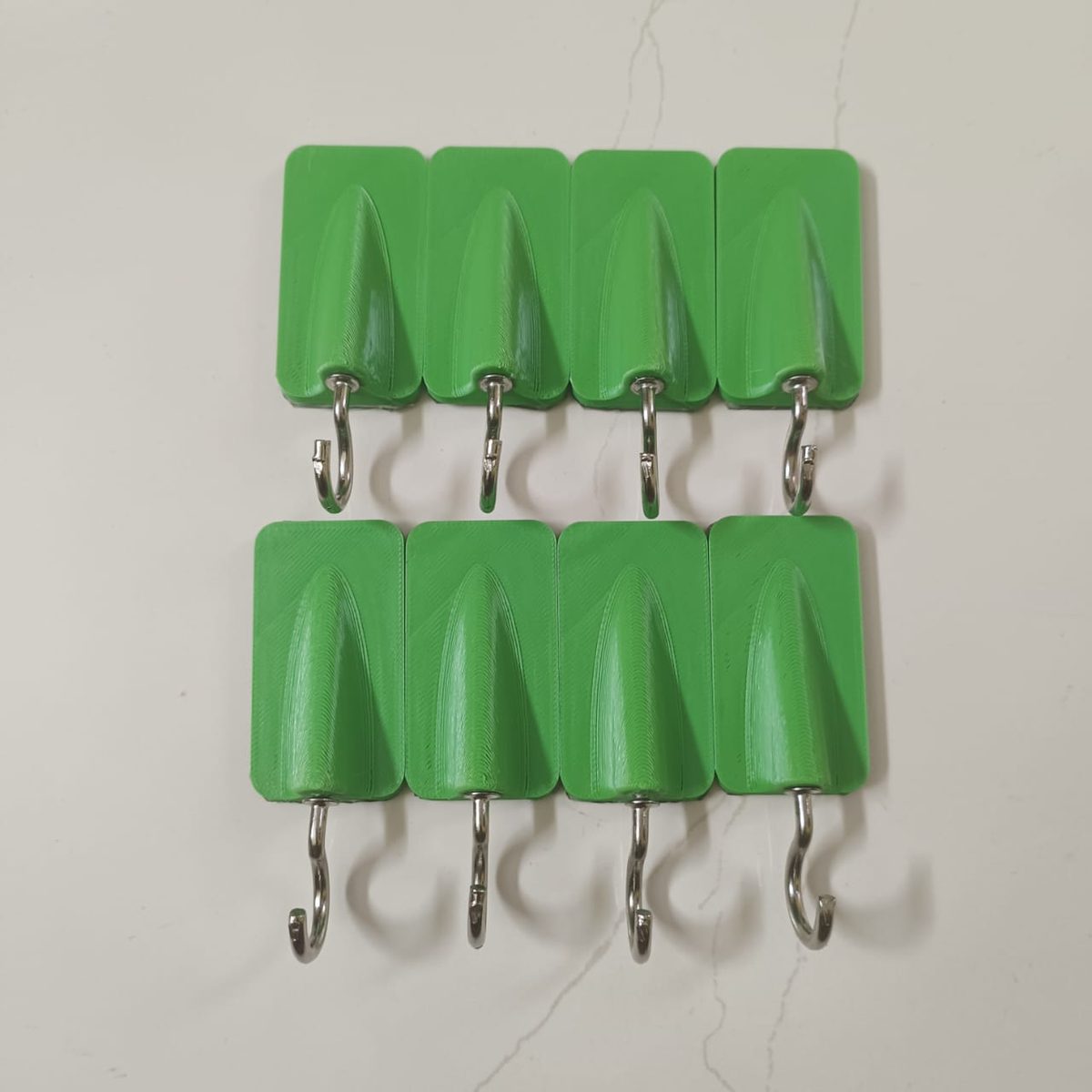
Tile supports more than paint does, but the numbers are still modest. Hooks made for this surface, such as heavy duty tile hooks with dual-sided adhesive tape, hold up to 3 kg each and come in a pack of eight so you can distribute a set along a wall.
Against that, most kitchen items are light:
- Ladles, spatulas and serving spoons: 50 to 150 g each.
- A kitchen towel, dry: 300 to 500 g, roughly double when wet.
- A measuring jug or small colander: 200 to 400 g.
- A cast iron pan: 2 to 4 kg, and at the top of that range it belongs on a screwed fixing.
Two hooks carrying half a load each is always better than one at its limit, and it also stops longer items swinging.
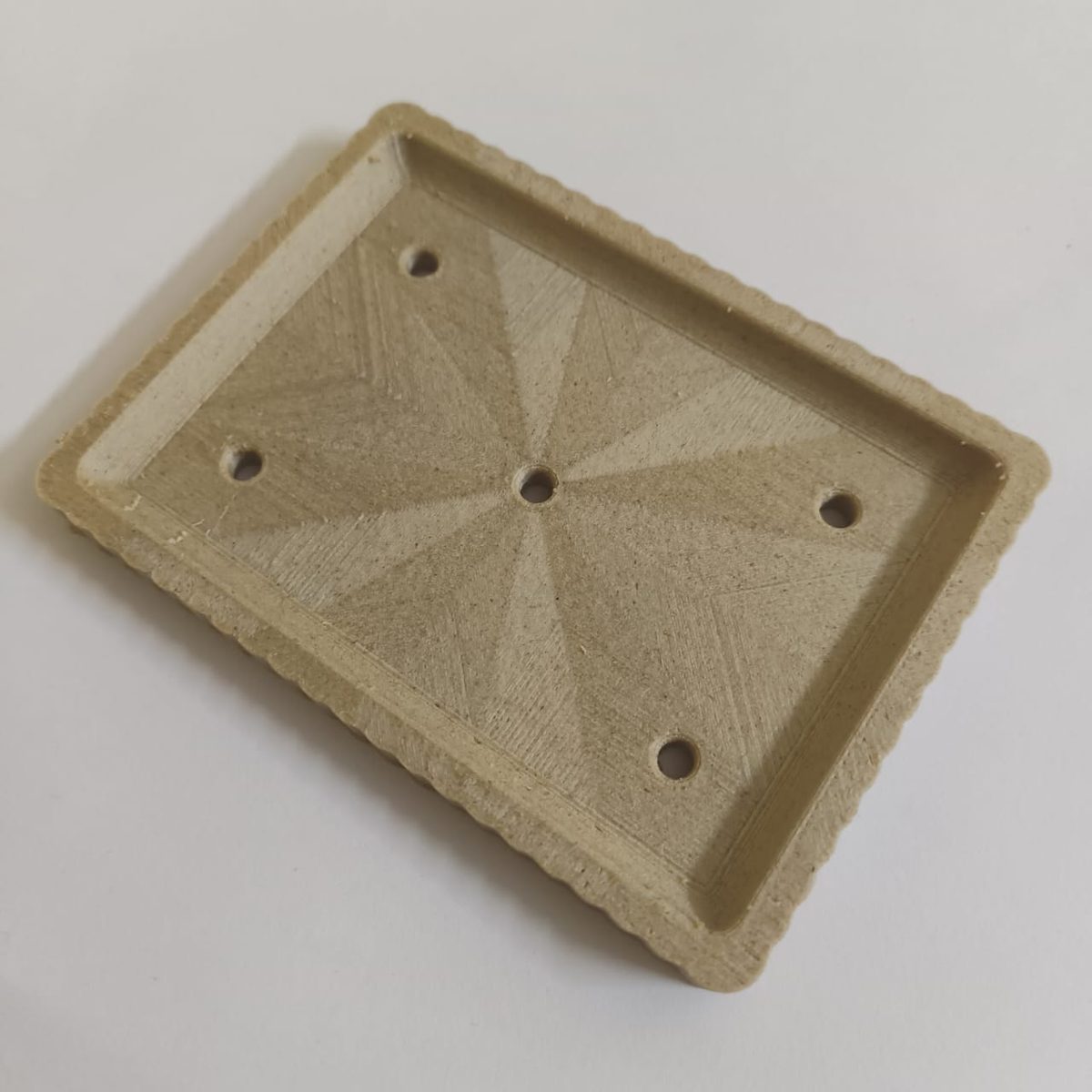
The same surface logic applies to other tile-mounted kitchen and bathroom accessories. A soap holder mounted on tile is subject to exactly the same preparation rules, with the added factor that it sits wet.
If you are considering drilling instead
Tile is the one surface where drilling carries a real cost. Velcro's guide to hanging on tile puts it plainly: drilling into tile can crack surfaces, chip edges and leave permanent holes, and even with a diamond tip bit and proper anchors there is still a risk of breaking the tile or damaging the grout line.
A cracked tile in the middle of a splashback is not a filler-and-paint repair. Matching a tile years after installation is often impossible.
If you do drill, the guidance from tile specialists is to stay at least 2 to 3 cm away from tile edges, grout lines and corners, since proximity to any of those sharply increases the chance of cracking. Carbide-tipped masonry bits handle ordinary ceramic, with diamond-tipped bits for harder tiles.
The choice of drilling into tile versus grout is a genuine trade-off rather than an obvious call, and it is worth researching for your specific tile before committing.
Taking a hook off without stripping the glaze
Pulling a stuck hook straight off a tile can take glaze with it, which is worse than a hole.
The method Velcro documents for heavy-duty mounting tape works generally: warm the tape with a hair dryer, never a heat gun, then peel. The adhesive stays on the wall. Warm that again, peel off a piece and roll it into a ball. Cool the remaining adhesive with ice in a plastic bag, then press the ball against it and pull away, repeating until it is all gone. Any remaining tackiness comes off with a citrus-based cleaner or a commercial adhesive remover.
It is slow, and it is far quicker than replacing a tile.
Every hook, pictured
They differ in how they attach and how much they are meant to take, which is the only sorting that matters.
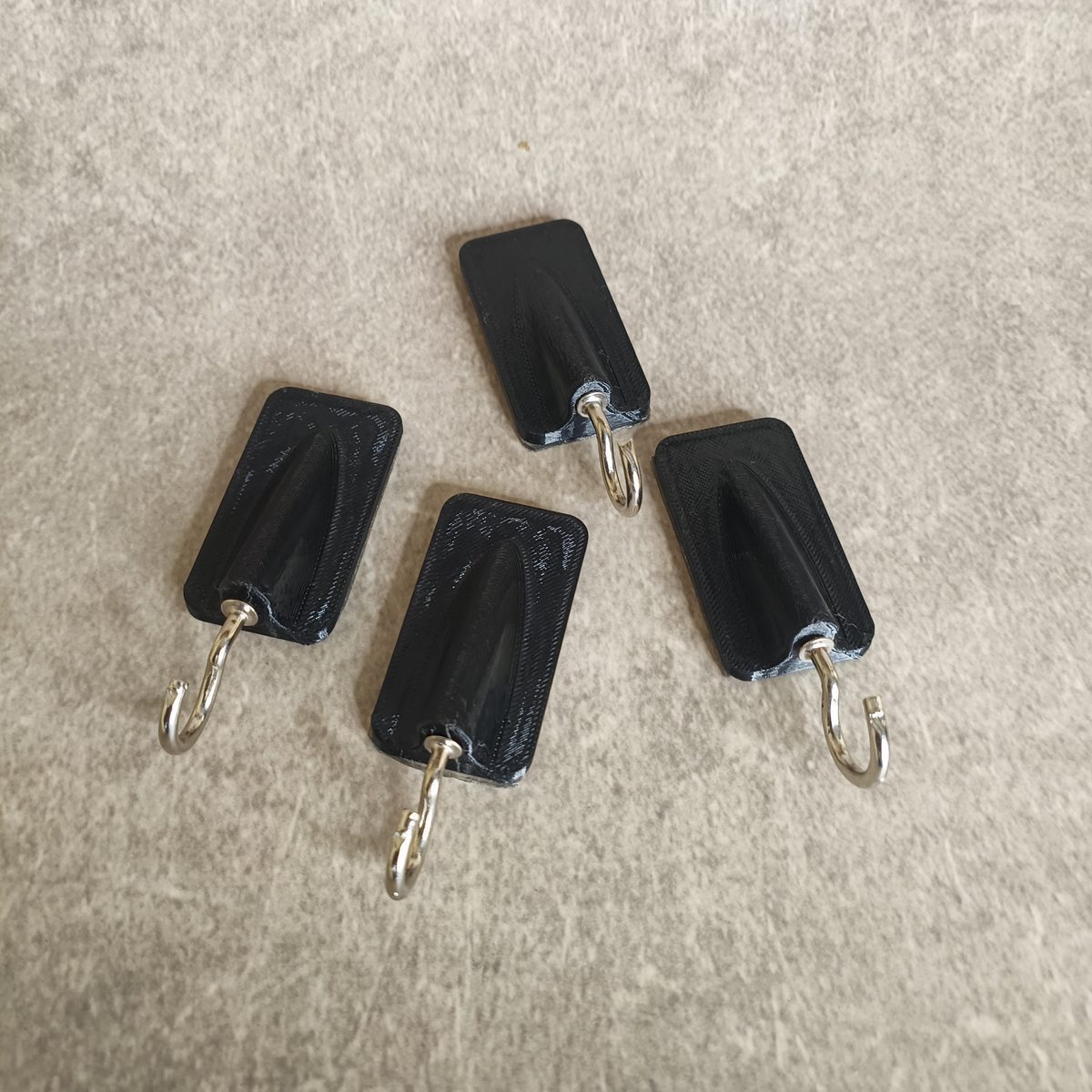
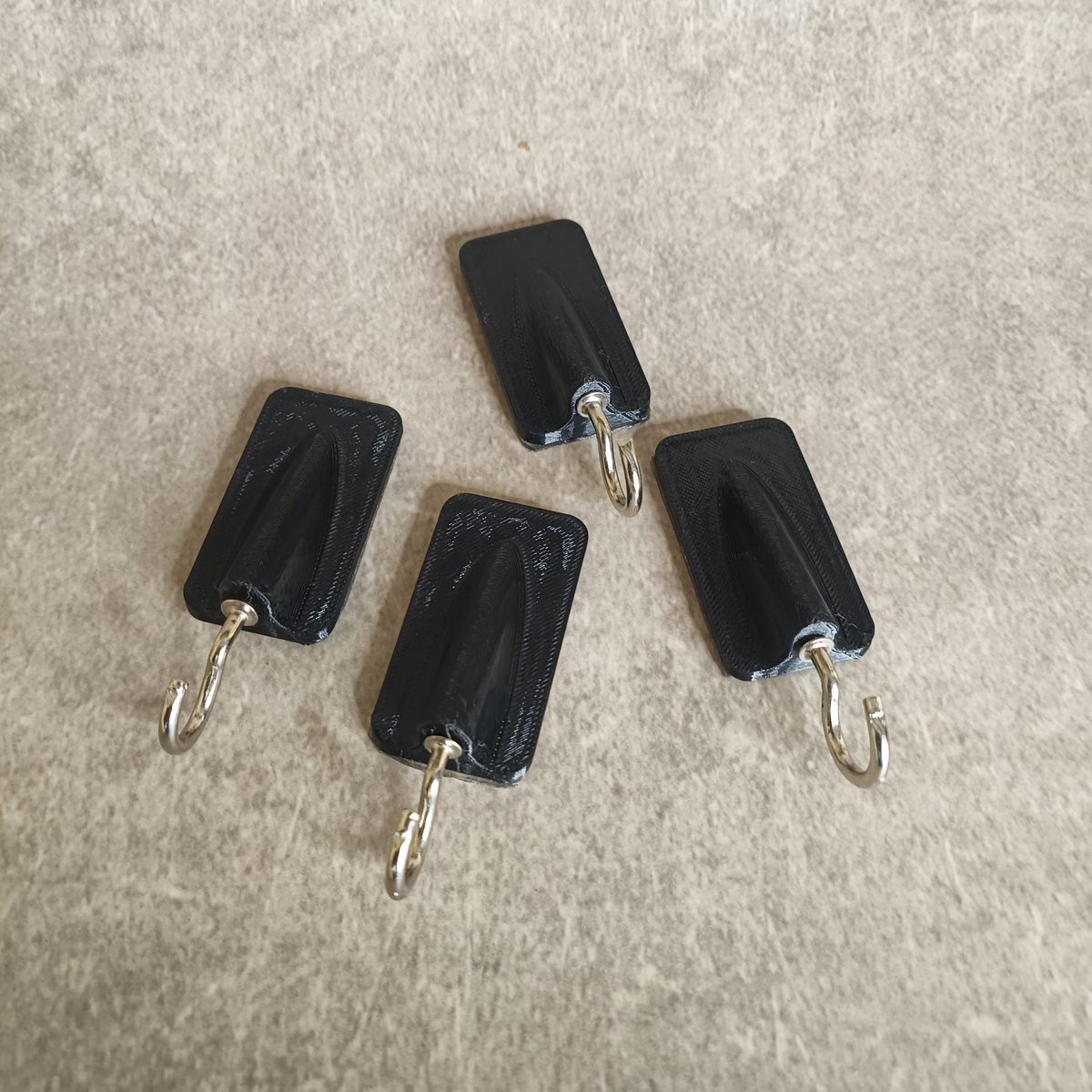
Set of four wall hooks. Adhesive, light duty, the general purpose choice.
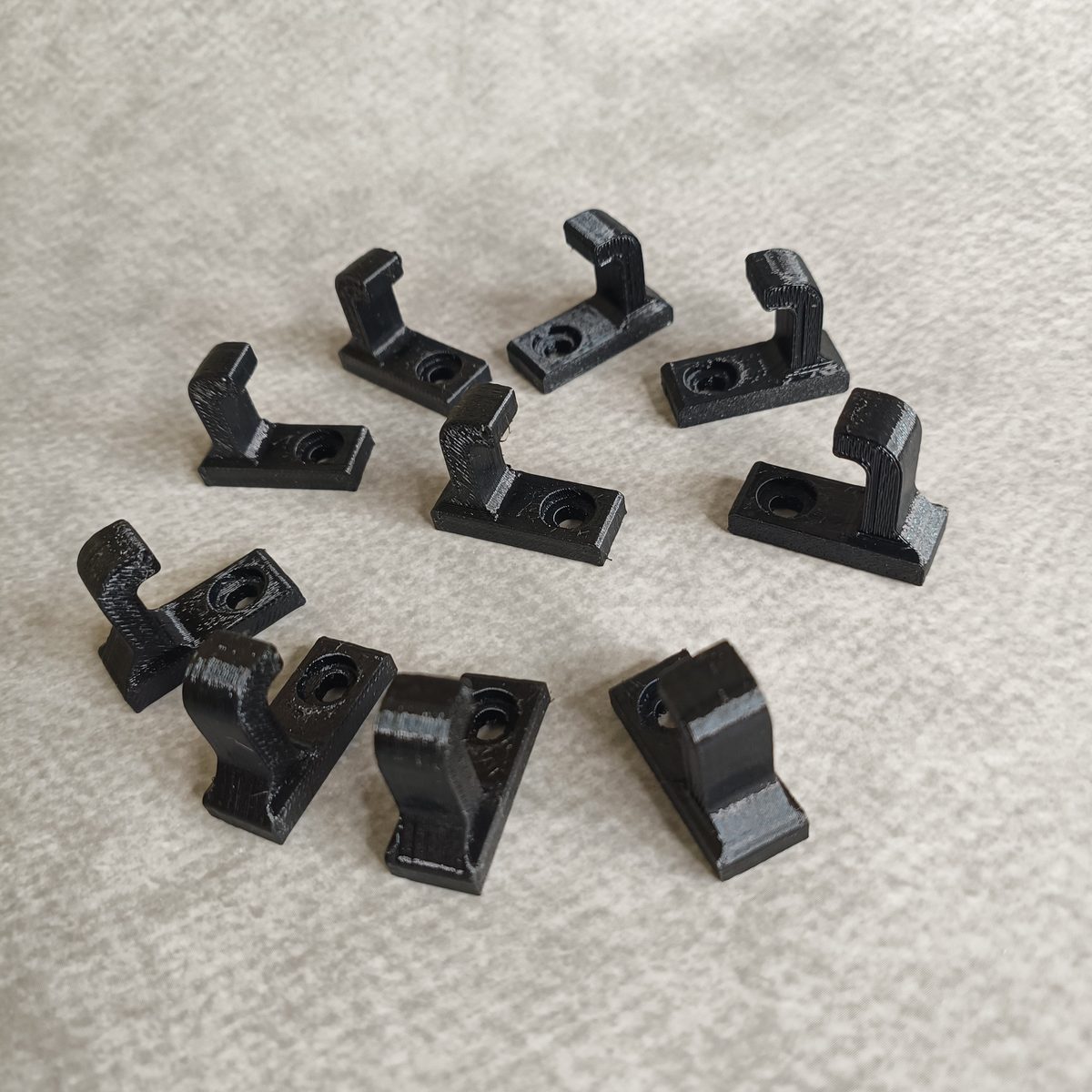
Screw wall hooks, pack of ten. Screwed rather than stuck, which is what anything with real weight needs.
Kitchen tile hooks, pack of eight. Made for tiled walls, which is exactly where you least want to drill.
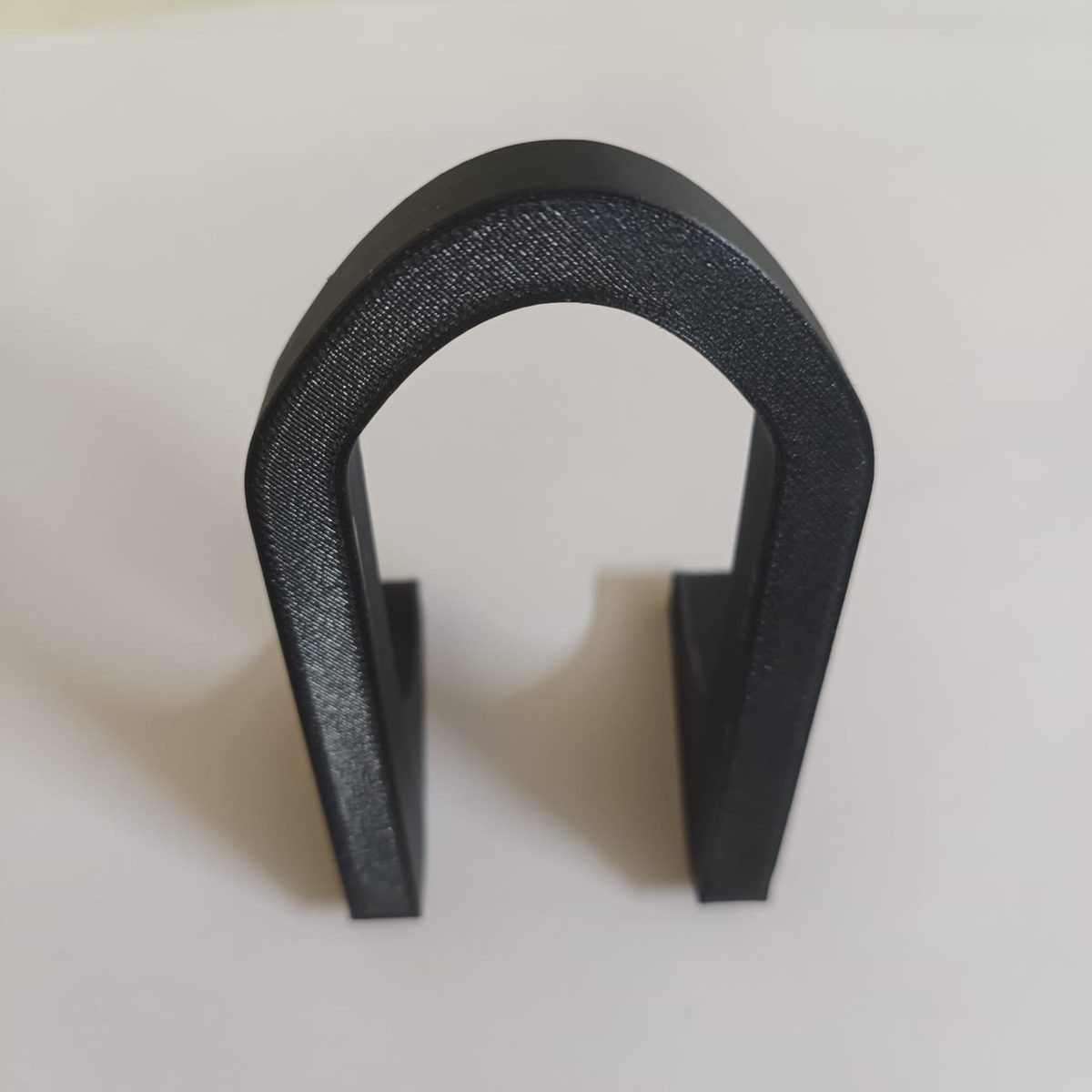
Heavy duty U shaped hook. The highest rated in the range, and the U shape means the load sits in the curve rather than on a prong tip.
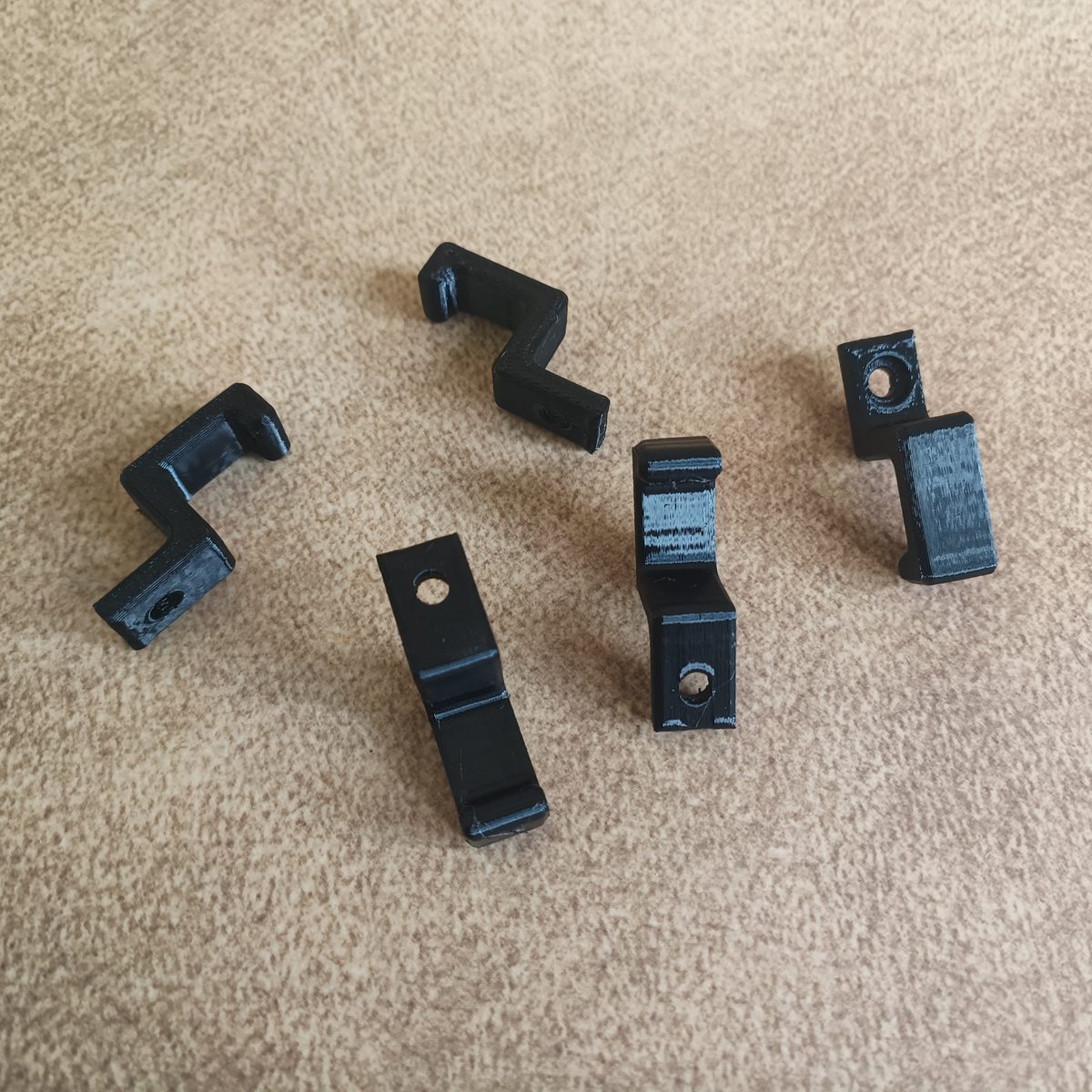
Under table hooks, set of five. Uses the dead space beneath a surface, rated to 1.5 kg each.
Side mounted hooks, pack of ten. For a vertical edge rather than a flat face.
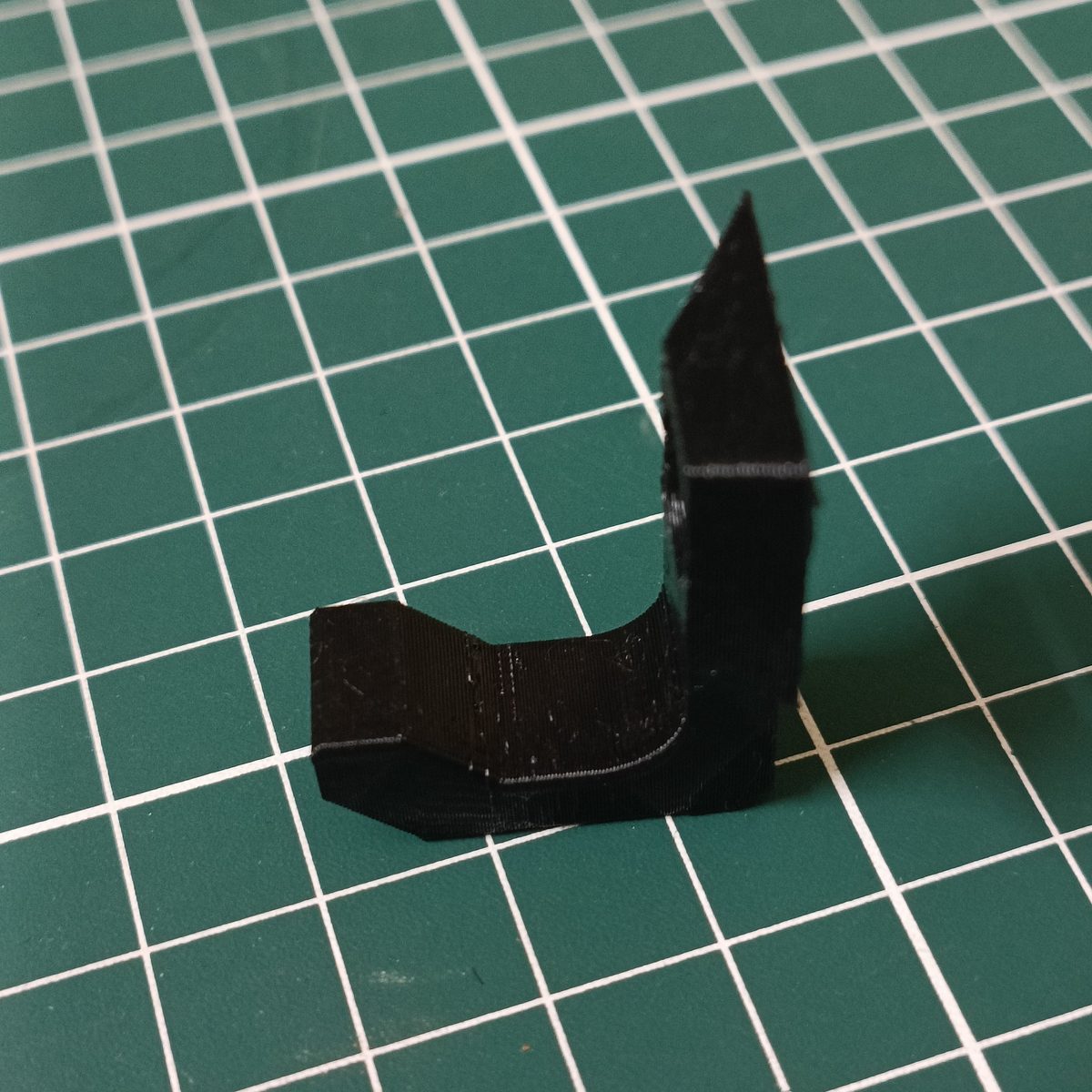
Twin arm wall hook. Two prongs upswept at 15 degrees, so a strap or ring cannot slide off.
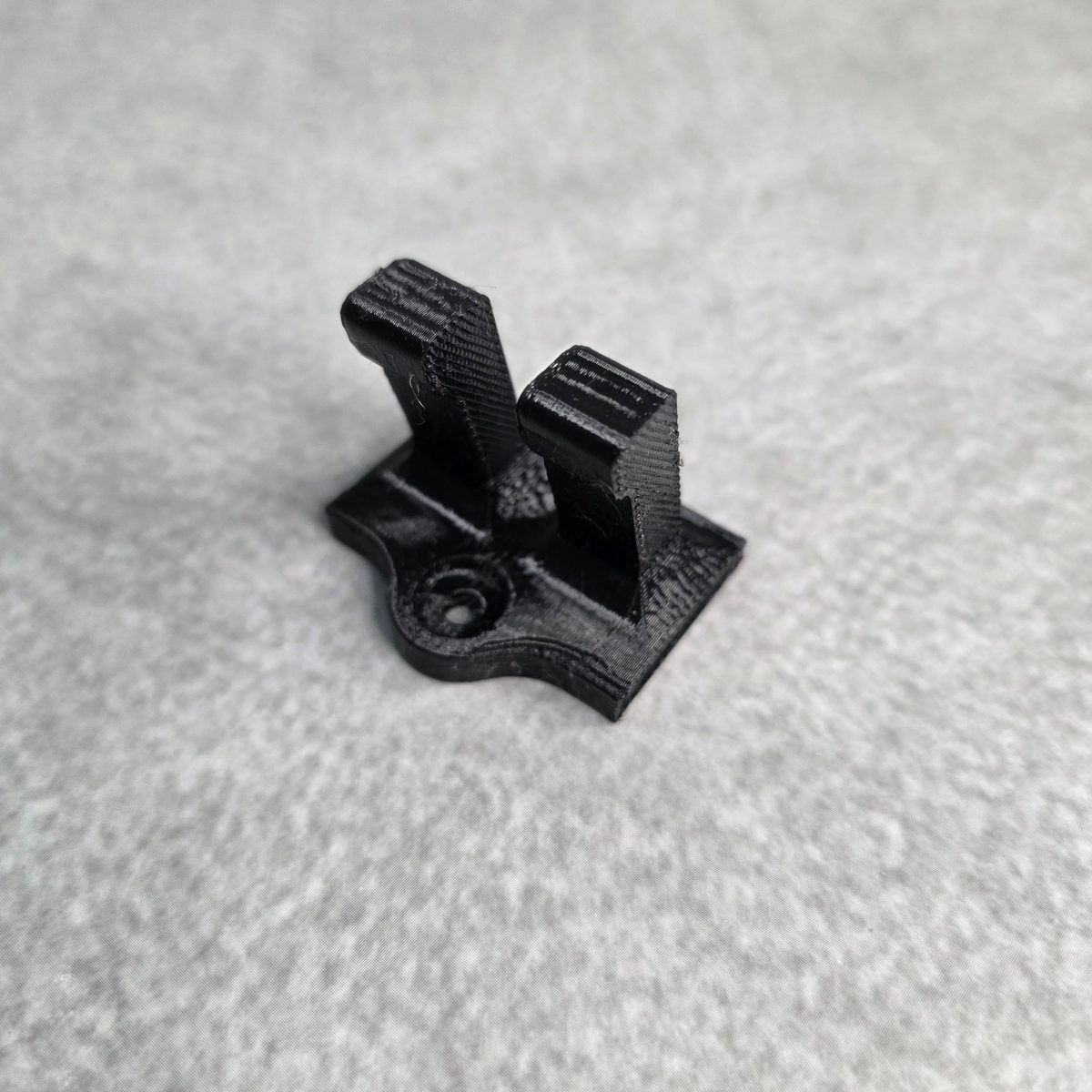
Where a hook is not the right answer at all, the stick-on mounting brackets and screw-on mounting brackets mount an object flat against the wall instead of hanging it off a prong.
Where this fits
The full range is under hooks and hangers and kitchen and household accessories. If you need a hook profiled to a specific rail, a handle shape or a utensil that nothing standard fits, that is worth having made to the measurement through our 3D printing service page.
The short answer
Kitchen tile is the best adhesive surface in your home, and cooking grease is the reason hooks still fall off it. Degrease, rinse, wipe with isopropyl alcohol, press for thirty seconds and wait an hour before loading.
Keep the pad on one tile rather than across a grout line, stay under about 3 kg per hook, and use two hooks rather than one wherever the item allows. Do that and drilling into an expensive splashback stops being a question you need to answer.