
Do 3D Printed Items Deform in a Parked Car?
This question usually arrives after the fact. Someone leaves a printed phone mount on a dashboard, comes back to a car that has been sitting in the sun, and finds the mount drooping at an angle it was never designed to hold.
It is a fair worry, and the answer is not a flat yes or no. It depends on which plastic the item is made from and, just as much, on where in the car it was sitting. Those are two separate numbers, and the whole answer comes from putting them next to each other.
How hot a parked car actually gets
The most cited measurements come from a study published in Pediatrics in 2005 by McLaren, Null and Quinn, recorded on PubMed and summarised by Stanford Medicine. They parked a dark sedan in full sun across 16 clear days and logged the interior every five minutes.
- Average rise: about 22 C over the outside temperature within an hour.
- Rate: roughly 1.8 C every five minutes.
- Front-loaded: 80 percent of the total rise happened in the first 30 minutes.
- Even on a cool day: starting at 22 C ambient, the cabin still reached about 47 C.
- Cracking the windows open: made no meaningful difference to either the rate or the peak.
- Earlier work at above 30 C ambient: cabins reaching 57 C to 68 C.
Now apply that to an Indian summer rather than a Californian one. A 35 C afternoon plus a 22 C rise puts cabin air at around 57 C. A 40 C afternoon puts it near 62 C. That is the air, in the shade of the roof, before any surface in direct sun is counted.
The dashboard is not the same place as the cabin
Cabin air temperature understates the problem badly, because the worst spot in the car is the one people most want to mount things on.
The dashboard sits directly under the windscreen, absorbing sunlight all day, and it is usually dark. Filament Price Tracker puts a summer dashboard easily at 70 C to 90 C, well above the air temperature a few inches above it.
So a car is not one thermal environment. It is at least three, and an object's fate depends on which one it is sitting in.
The temperature each plastic gives up at
The number that matters here is heat deflection temperature, or HDT: the point at which a material starts to deform under a defined load. It is more useful than a melting point, because nothing in a car gets anywhere near melting. Glass transition temperature, or Tg, marks where a material begins to soften; HDT adds a specified load to that.
OzFDM publishes an HDT chart measured to ISO 75 at 0.455 MPa, which makes the spread easy to read:
- PLA: 53 C. The default material on most desktop printers.
- PLA carbon fibre: 60 C HDT, 55 C continuous use. Barely an improvement for this purpose.
- PETG: 68 to 74 C.
- ASA: 88 C HDT, 85 C continuous use, and the best UV resistance of the common materials.
- ABS: 85 to 98 C.
- Polycarbonate: 123 C.
Published figures move a little between brands and test standards, which is why the data sheet for the exact spool is always the final word. Sovol's comparison, drawing on Prusa's material guide, gives broader working ranges of roughly 50 to 60 C for PLA, 70 to 90 C for PETG and 90 to 110 C for ASA.
Where the two sets of numbers collide
Put them together and the picture resolves quickly.
PLA at 53 C against cabin air at 57 to 62 C. The cabin alone is already past it on a hot Indian afternoon. On the dashboard at 70 C plus, it is not close.
PETG at 68 to 74 C against the same cabin. Comfortable in the cabin, marginal on a sunlit dashboard.
ASA at 88 C. Clears the cabin easily and has real headroom on the dashboard, which is why it is the usual recommendation for trim clips and mounts, with its UV resistance being a second reason.
OzFDM makes the same point directly: a 35 C day can put a cabin past 55 C before direct sun on the dashboard is even counted, which makes PLA a poor fit for anything living in a car.
What deforming actually looks like
The word people reach for is melting, and that is misleading. Nothing in a parked car liquefies. What happens is softening, and the object changes shape under whatever force is acting on it.
- Sagging under load. A phone mount holding a phone droops. An empty one on the same dashboard may be fine, which is why owners get contradictory results.
- Going out of round. Rings, hooks and circular features turn slightly oval.
- Relaxing back toward the print's internal stress. Parts can curl or warp as the plastic recovers stress frozen in during printing.
- Flat bases stop sitting flat, so the item rocks afterwards even once it has cooled.
- Moving parts seize or slacken. Clips lose their snap, hinges stiffen or go loose.
Critically, this is not reversible. The item cools back down hard, holding its new shape.
The load factor people miss
HDT is measured under load, and that detail explains most of the disagreement online.
An unstressed object can sit well above its published HDT and come out unchanged, because nothing was pushing it out of shape while it was soft. A part carrying weight, spring tension or a clamping force will deform at a noticeably lower temperature than the chart suggests.
This is the single most useful idea on this page: ask not only how hot the item gets, but what is pushing on it while it is hot.
Why a keychain is a different case from a dashboard mount
This is where the practical answer diverges from the scary version, and it matters because keychains are the printed item most people actually carry in a car.
A keychain is usually in a pocket, a bag, or hanging from the ignition or a bag strap. It is rarely on the dashboard, rarely in direct sun, and carries essentially no load beyond its own weight and the keys it hangs with. It is also small and thin, so it cools quickly once the car is moving.
A dashboard phone mount is the opposite on every count: the hottest surface in the car, direct sun, and continuous load from the weight of a phone, often on a cantilevered arm that multiplies the effect.
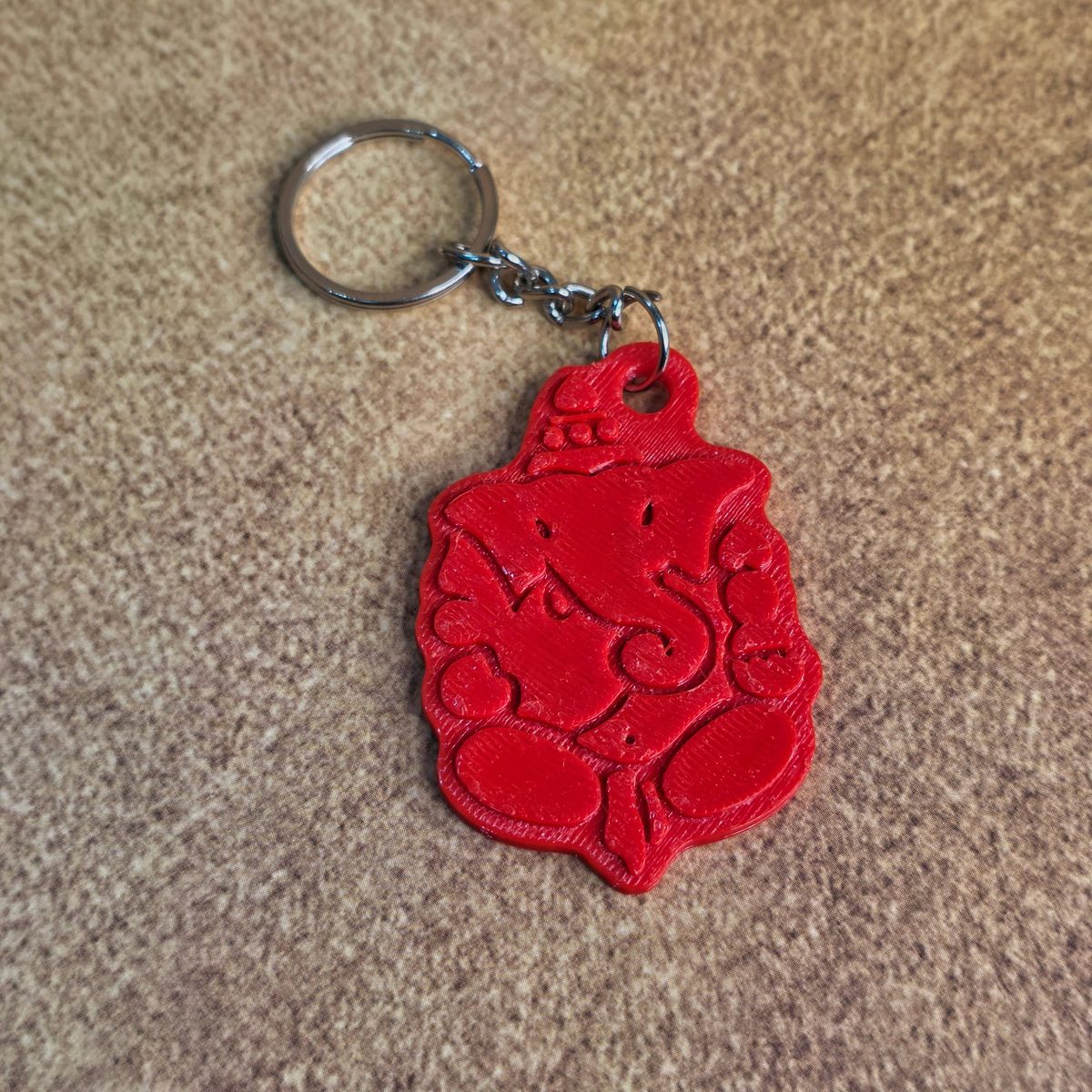
Devotional keychains are a good illustration, since a Ganesh keychain or a Hanuman keychain is usually hung rather than mounted, and hangs out of the sun in the footwell or from the keys themselves. That placement does more for its survival than any material choice.
Zones inside a car, from safest to worst
- Glovebox or a door pocket. Shaded, no direct sun, and the coolest place an object can sit. Effectively the safe zone.
- In your pocket or bag. The object leaves with you, so the question never arises.
- Hanging from the ignition, gear lever or a bag strap. Cabin air temperature, no direct sun, negligible load. Fine in practice for small items.
- Loose on a seat. Depends entirely on whether that seat catches sun through a window.
- Rear parcel shelf. Direct sun through a large sloped window, and one of the hottest spots after the dashboard.
- On the dashboard. The worst case, combining the highest temperature with direct sun and usually a load.
What to do if you want a printed item in your car anyway
- Move it off the dashboard before you change anything else. Placement beats material here.
- Use a sunshade when parking through the afternoon. It will not fix a material mismatch, but it lowers every number above.
- Choose a lighter colour for anything that must sit in sun. Dark surfaces absorb noticeably more.
- Remove the load. Take the phone out of the mount when you leave the car, so the mount is soft but unstressed rather than soft and pulled on.
- Match the material to the zone, not to the car generally. A hanging keychain and a dashboard bracket have genuinely different requirements.
That last point is the one worth acting on if you are having something made rather than buying off the shelf. A part that will live on a dashboard through an Indian summer is a specification, not a preference, and it is worth stating up front when you place the order. You can send the model or the dimensions along with where it will actually sit through our 3D printing service page, and the material choice can follow the use rather than the default.
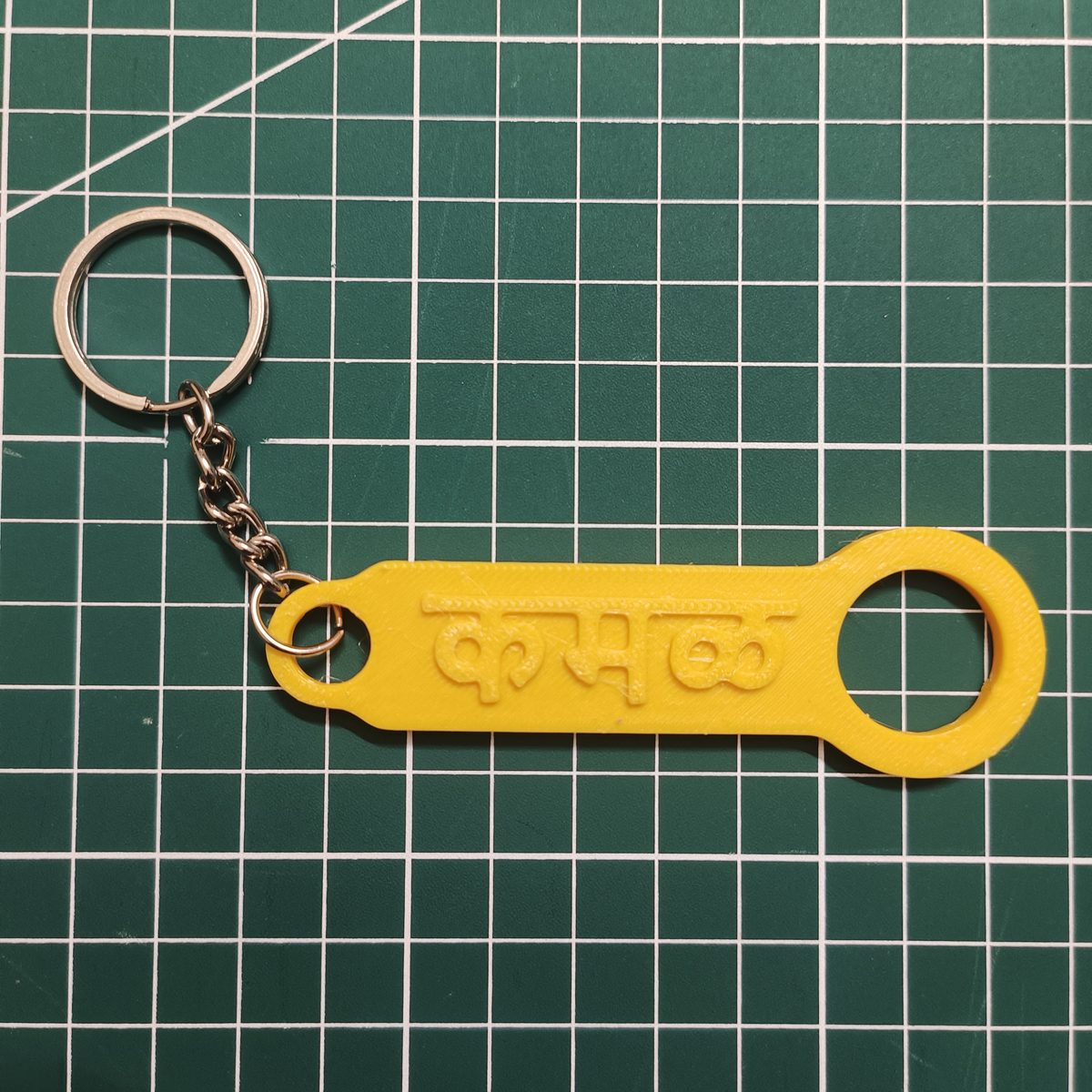
For items that travel with you rather than living in the car, the constraint largely disappears. A custom name keychain, a QR code keyring or anything else from the keychains and name tags range spends its life in a pocket or on a bag, which is nowhere near the conditions described here.
What actually rides in a car
Worth naming the items this question really concerns, because the honest answer differs sharply between them.
Things that live on keys or in a pocket spend very little time on a hot dashboard, and go in and out with you. The devotional keychains, the plain Ganesh keychain, dotted crown, outline face, brush stroked, lotus and modak, bold block, leaf crown, fan crown, stacked crown, Hanuman keychain, Aai Tethe Ghar keychain, symmetric Swami Samarth keychain, splined Swami Samarth keychain, and the name pieces, two-tone name keyring, custom name keychain, name and logo tag, wood finish name keychain, QR code keychain, all fall here. These are not the problem.
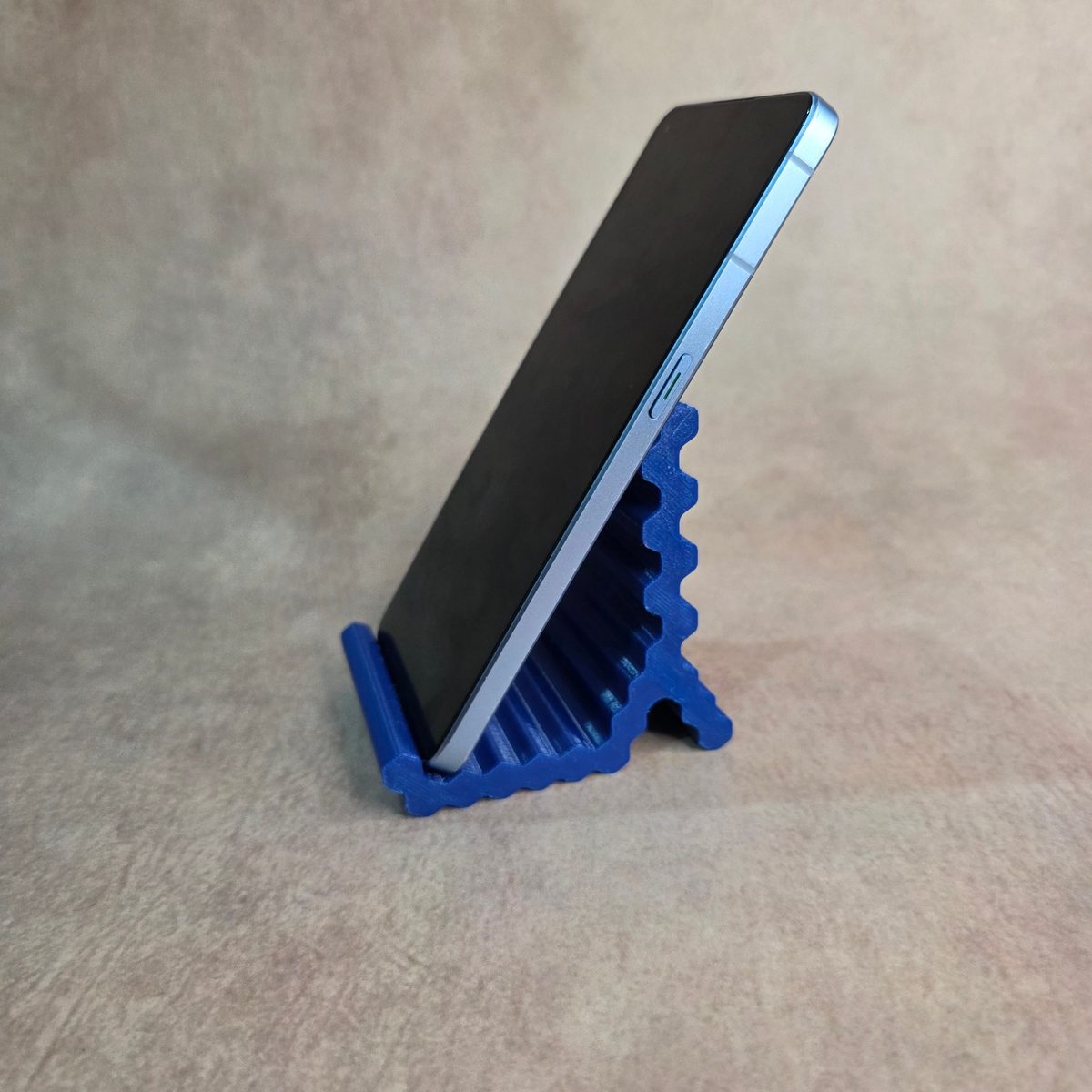
Things left mounted in the car are where the question bites, because they stay when you leave. A phone holder such as the hexagonal wave stand or the minimalist holder is designed for a desk rather than a dashboard, and a dashboard in an Indian summer is a genuinely different environment.
The practical split is simple: carry it, do not park it. A keychain that comes with you is unaffected by any of this.
The short answer
Yes, printed items can deform in a parked car, and PLA specifically will, because its heat deflection temperature of around 53 C sits below the 57 to 62 C a cabin reaches on a hot Indian afternoon and far below the 70 C to 90 C of a sunlit dashboard.
But the failures people photograph and post are almost always the same setup: PLA, on a dashboard, holding something. Change any one of those three and the outcome usually changes with it.
Judge the spot, not the car. A keychain hanging in a footwell and a phone mount baking on a dashboard are not facing the same test, even when they came off the same printer on the same day.