
Top 5 Motovlogging Accessories for Indian Riders
Most lists of motovlogging accessories are really camera lists. They rank sensors and stabilisation, add a microphone at the end, and stop there. The camera is a one-time decision you make in an afternoon, and it is rarely the thing that ruins a ride's footage. The mount stack holding it is.
A motovlog rig is a chain: helmet, mount, joint, screw, camera. It fails at whichever link you thought about least. This is a list of those links, in the order you hit them, with the numbers that matter for each one.
The parts a motovlog rig is made of
Four terms come up throughout, so here is what each one means before it is used.
- Three pin mount: the interlocking finger interface on the base of nearly every action camera, also called a three prong or finger mount. Two fingers on one part slot between three on the other, and a screw passes through all of them. It has stayed consistent across the GoPro HERO and MAX ranges, and DJI Osmo Action, Insta360 and SJCAM bodies use the same pattern.
- J mount: the J shaped hook that clips into an adhesive base stuck to the helmet, then presents a three pin head for the camera. It is the standard middleman in most GoPro style kits.
- M5 thumb screw: the knurled screw that closes a three pin joint by hand. M5 means a 5 mm diameter thread at 0.8 mm pitch. Stock versions ship with a shaft of roughly 20 mm.
- Extension joint: a straight spacer with a three pin head at each end, used to push the camera further from its base.
1. The helmet mount that puts the camera where you want it
Position is the first choice, and it changes the footage more than any setting in the camera menu.
- Chin: the most common motovlog position. Sits low and central, so the frame reads as a rider's eye view, and it adds little frontal area compared with a camera sitting above the shell.
- Top: the classic helmet cam look. Adds height and drag, and the view swings noticeably as you turn your head, because the camera is several inches above your eye line.
- Side: gives an off centre angle with a stronger read of lean and speed. The trade is an unbalanced feel and a camera that stands well proud of the shell.
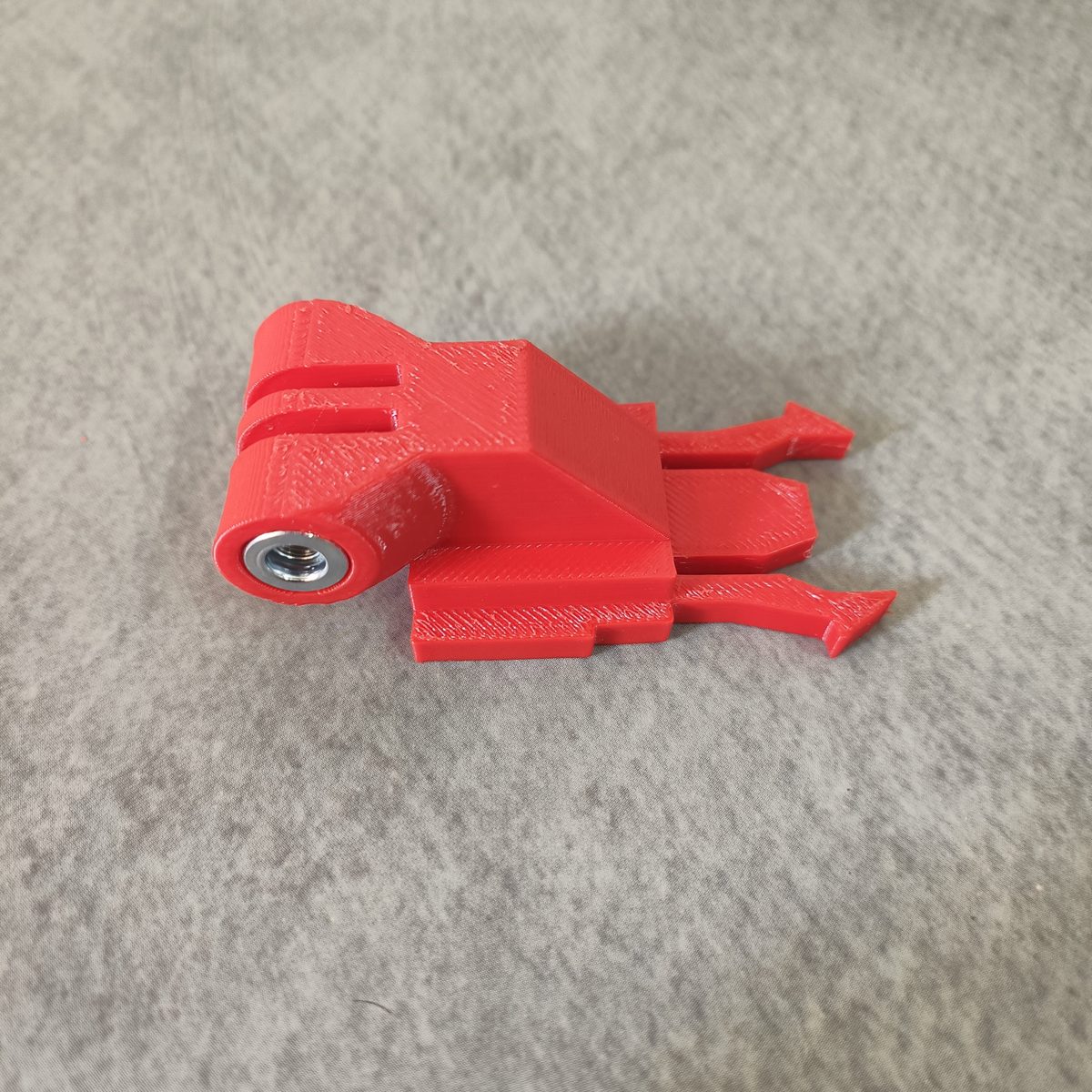
The stock route to any of these is a stack: adhesive base, then J mount, then camera. Every joint in that stack is one more place to work loose. Our helmet mount for action cameras is built to replace the J mount rather than hang off it. It drops straight into the J mount holder and presents the camera at angle, so a setup that would normally need an extender to reach the right position does not need one.
2. The extension joint that fixes the angle
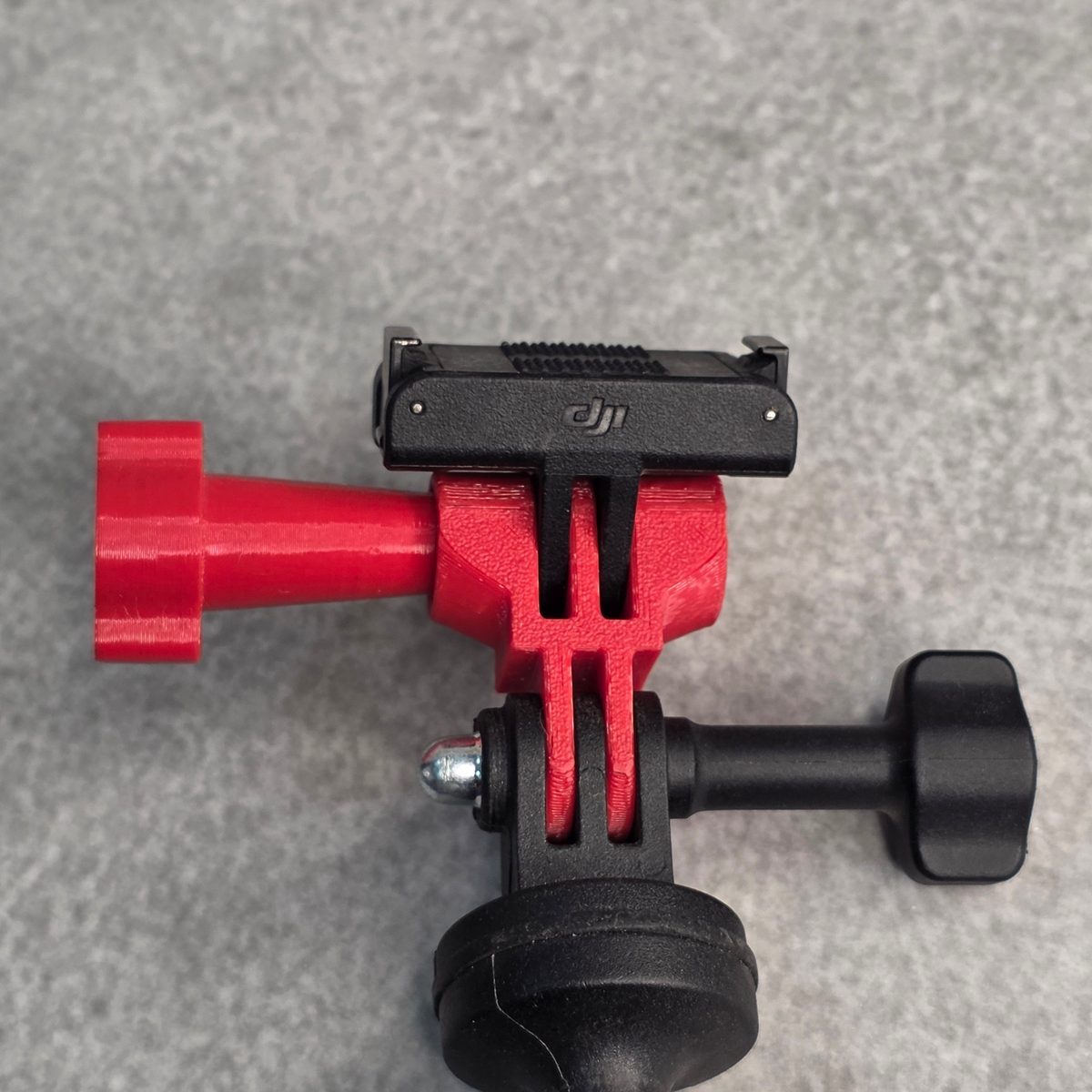
Once the adhesive base is stuck down, it is stuck down. If the visor edge cuts into the top of the frame, or the camera sits so close to the shell that the body fouls it, the fix is distance, not a new adhesive pad. That is what a straight extension joint is for.
Two versions are worth knowing apart, and the difference is the nut.
- Dome nut straight extension adapter: available in sizes from 3 mm to 50 mm, so you can dial in the exact gap instead of accepting whatever length a kit gave you. Pick this when you know the offset you need.
- Rivet nut straight extension joint: has a rivet nut set into the part, giving a metal thread to tighten against. Pick this for the joint you open and close often, because a metal thread takes repeated tightening without wearing.
Both use the standard three pin head at each end, so they drop into helmet mounts, handlebar mounts, chest mounts, stems and tripods without an adapter.
3. The screw that holds all of it together
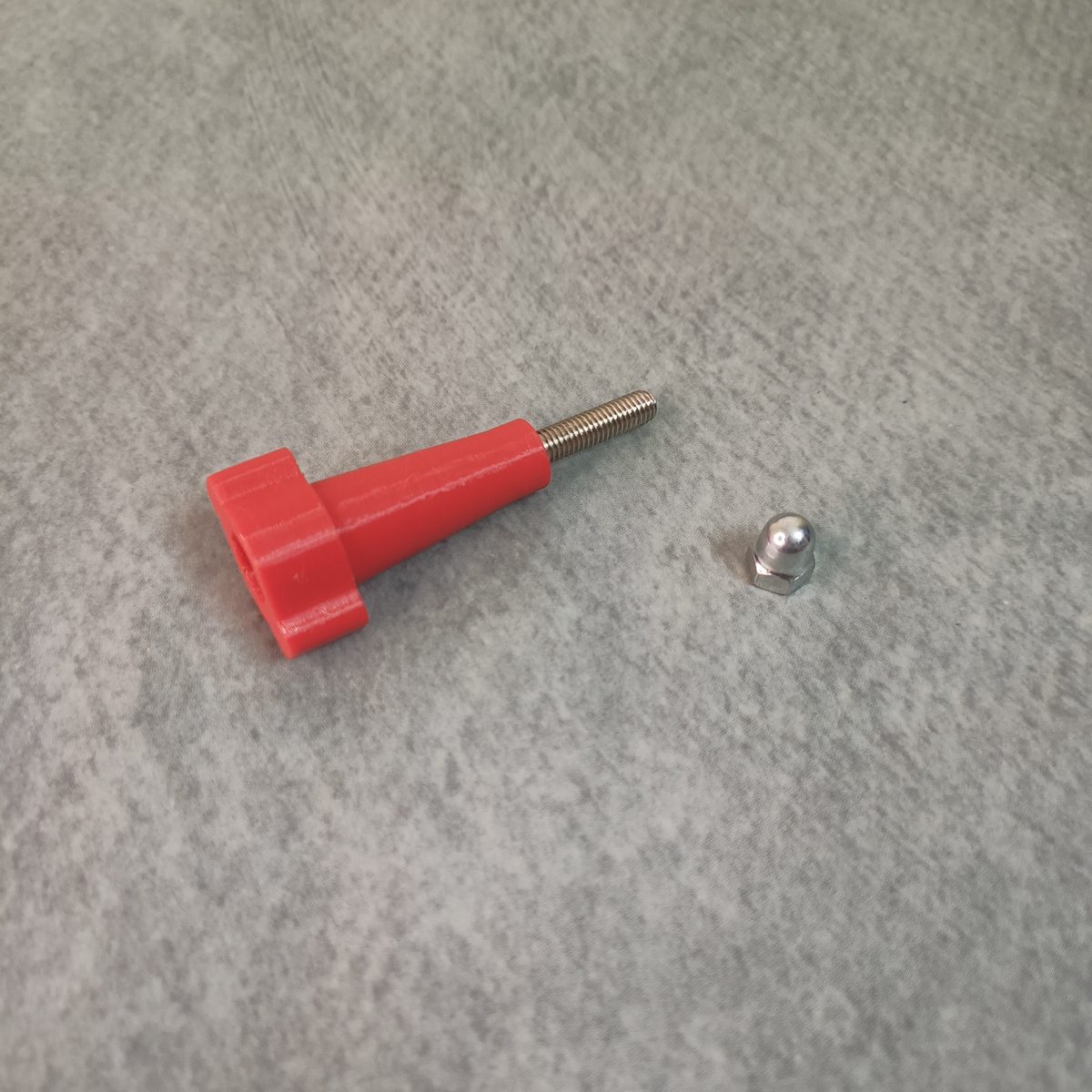
Here is the arithmetic that catches people out. A stock M5 thumb screw has about 20 mm of shaft. That is sized for one joint: two fingers into three. Add an extension joint and a replacement helmet mount, and the stack the screw has to cross gets thicker than the screw is long. The result is a screw biting on its last two or three threads, which is exactly the joint that rattles loose on a rough road.
Our long screws are built for stacked rigs rather than single joints.
- Long thumb screw: M5, roughly 60 mm overall with about 50 mm of metal screw and 25 mm exposed, on a wide 30 x 16 x 40 mm grip. The wide grip is the one to pick if you tighten bare handed and dislike the pinch of a small factory screw. Cap nut included.
- Long hex grip thumb screw: M5 with a 50 mm threaded length and a six sided grip, which gives flats to push against when the screw sits deep inside a mount. Comes with a dome nut.
- Long square grip thumb screw: M5 with a 50 mm threaded body and a square grip, the easiest of the three to turn in riding gloves. Available in six colours, which is the cheap way to tell your rig's screws apart from the spares in the bag. Ships with an M5 cap nut.
All three fit the standard M5 mounting system used across GoPro, DJI, Insta360 and SJCAM accessories, and all three are tool free by design. A joint you can reach and hand tighten at a chai stop is a joint you will actually check.
4. A body mount for the second angle
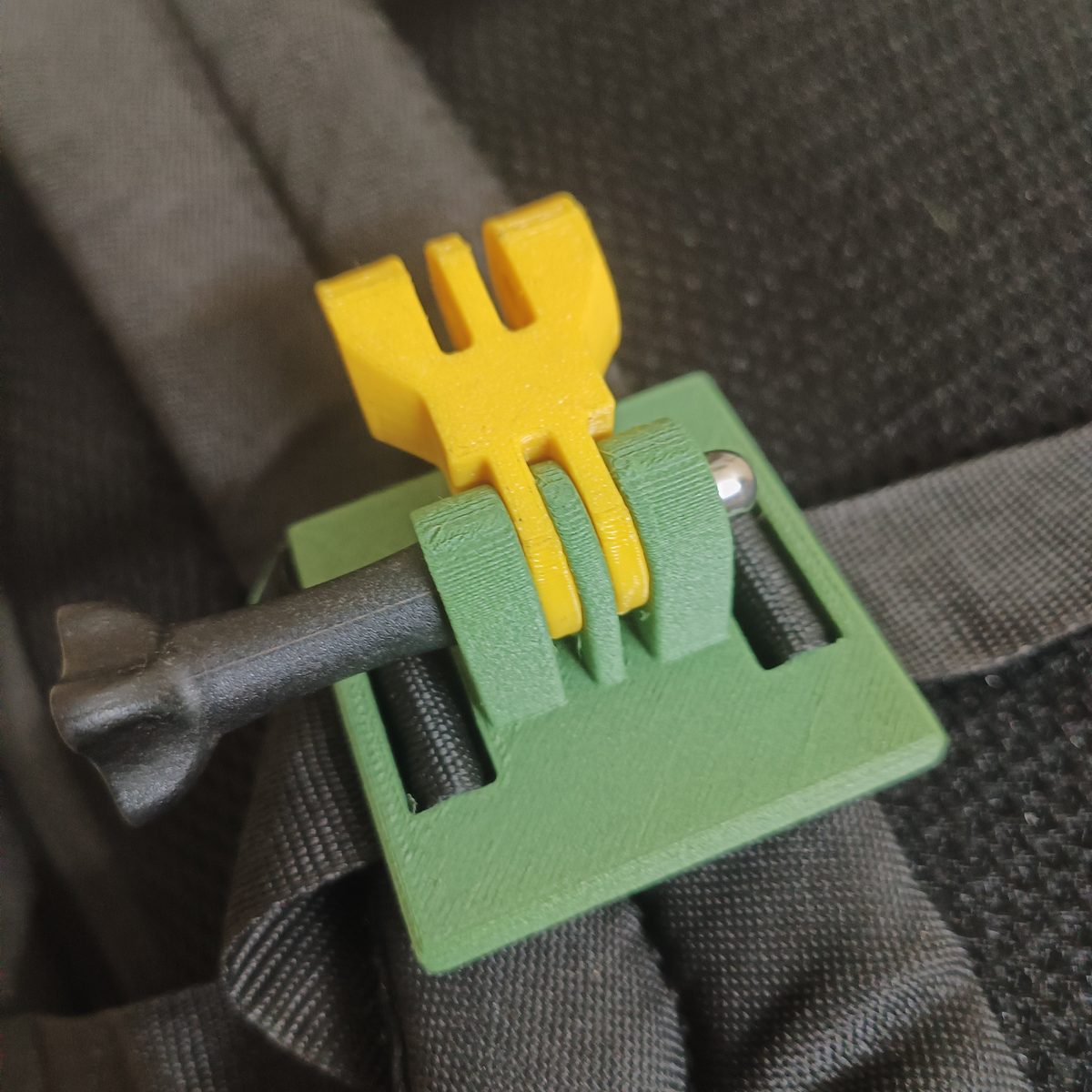
The cheapest second angle is not another camera position on the same helmet. It is a mount on you.
Our backpack strap mount clamps to the strap of a riding backpack or a chest harness and gives a first person angle from roughly shoulder height, low enough to keep your hands and the bike's controls in frame. It ships with the adjustable anti slip strap, bolt and nut, and uses a quick release buckle so the camera comes off without unthreading the whole assembly. It is also the angle to reach for when you would rather not put anything on the helmet at all, for reasons covered further down.
5. A hand grip for everything shot off the bike
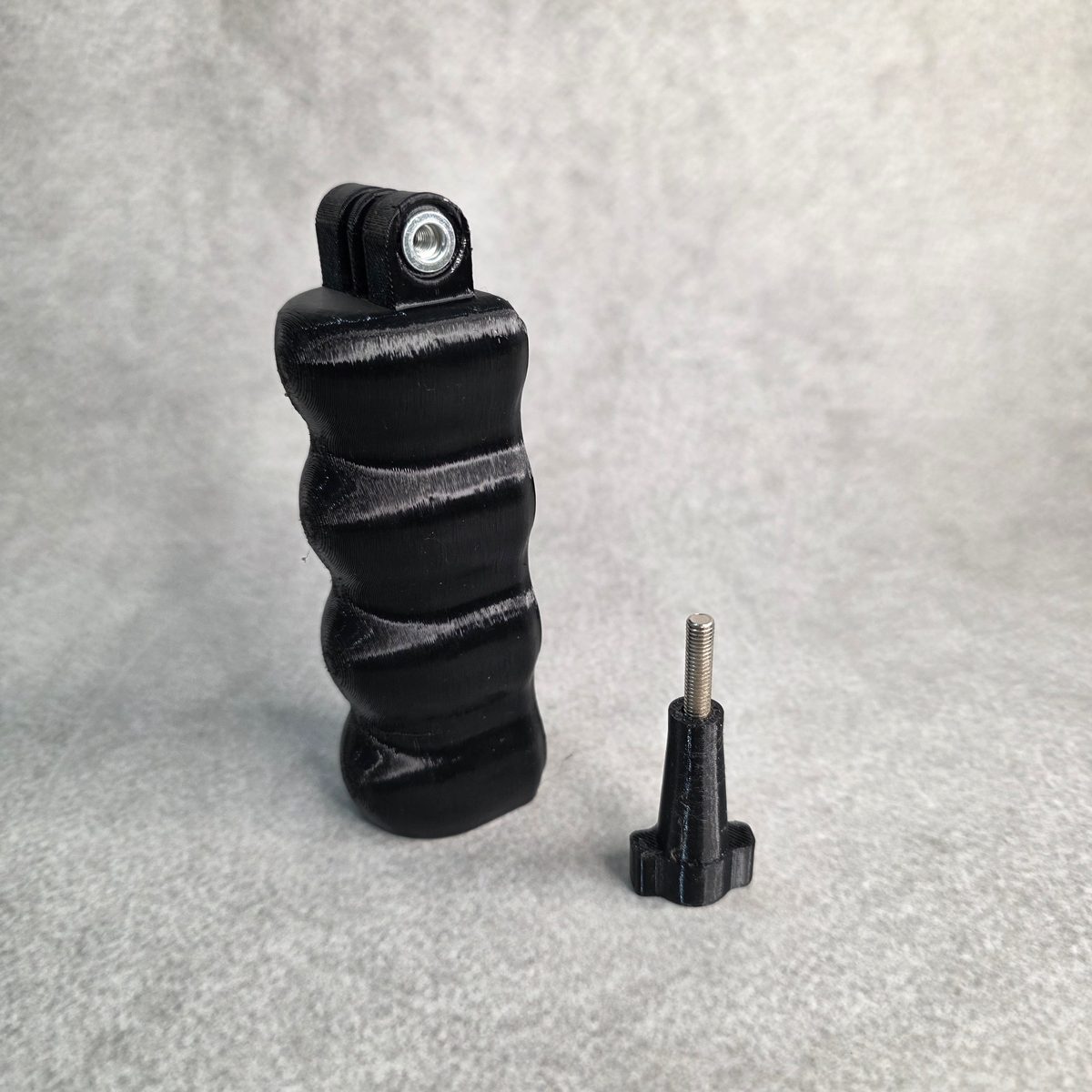
A ride video is not only riding. The intro at the parking spot, the walkaround, the piece to camera at the viewpoint: all of it is handheld, and a helmet mount is useless for all of it.
Our action camera hand grip is a single moulded piece, 40 x 40 x 130 mm, with the three pin head at the top and the mounting screw supplied. The relevant detail is what it does not have. There are no folding legs and no telescoping sections, so there is no sliding joint to creep, slip or rattle mid take, and nothing to reset between shots. At 130 mm it holds the camera clear of your hand for a front facing shot and still goes into a jacket pocket. A steel rivet nut is set into the head, so the thread you tighten against is metal rather than plastic. The body is contoured with finger recesses, which means it stays oriented in one hand without being gripped hard.
Where the law stands on helmet cameras in India
This part gets left out of gear guides written elsewhere, and for some Indian riders it should decide where the camera goes.
There is no central ban on helmet mounted cameras in India. There is state level enforcement. Kerala's Motor Vehicles Department issued an internal circular against helmet mounted cameras, with a penalty of Rs 1,000 and the rider's driving licence liable to suspension for three months, as reported by ZigWheels and BikeDekho. The department's stated reasoning was that mounting a camera on a helmet compromises its structural integrity in a crash. Notably, the same reporting records that mounting the camera on the motorcycle's fairing or on your riding gear was left open to riders, at their own risk.
The certification angle applies everywhere in the country. Two wheeler helmets sold in India must carry the ISI mark under IS 4151:2015, mandatory since 1 June 2021 under the helmet Quality Control Order, and the standard is administered by the Bureau of Indian Standards. A helmet you have drilled or cut is a modified helmet, and it no longer answers to the certification it was sold with. A detailed rider focused write up of the legal position is available at Bikeleague India, and state rules are worth checking against your own transport department, such as the Kerala MVD, before a trip.
Three practical conclusions follow, and they are the reason the list above is ordered the way it is:
- Never drill or cut a helmet to fit a mount. No footage is worth the shell. Mounts that work off an adhesive base or a strap leave the shell intact.
- Know that opinions on the chin position differ. It is the position most motovloggers prefer for the view it gives, while safety focused Indian coverage argues against putting hardware on the chin bar at all, on the grounds that it sits directly in front of your face in an impact. Both views are in the sources above. It is your call, made with the full picture.
- Keep a non helmet angle in your kit. A strap mount on your gear or a mount on the bike keeps you filming where a helmet camera would get you stopped.
The two things this list does not cover
It would be dishonest to call five mounts a complete motovlogging setup, so here is what is deliberately missing.
The camera. Any current action camera from GoPro, DJI, Insta360 or SJCAM shares the same three pin interface, which is what makes everything above universal. Budget for power before resolution: action camera batteries run roughly one to two hours, which does not cover a day ride.
The microphone. Wind is the real enemy of motovlog audio. Air moving across a microphone port at road speed overwhelms the input and clips, and no amount of editing recovers it. The standard fixes, per SJCAM's own audio guide, are to get the microphone inside the helmet near the chin bar but slightly off centre so your breath does not hit it directly, tuck it behind a cheek pad, turn on the camera's wind noise reduction, pull microphone gain down to around -6 dB to -12 dB to stop clipping, and record at 48 kHz. Riders who want this solved properly generally run a helmet intercom such as a Sena unit and sync its audio to the footage afterwards.
The one minute check before you ride
- Hand tighten every joint in the stack, not just the one at the camera. On a stacked rig that is usually two or three screws.
- Pull the camera gently away from the mount. Any play you can feel at standstill becomes a rattle at 60 kmph and a shake in the footage.
- Check the adhesive base, not only the mount. Heat and washing are what let a pad go, and the pad is the part you cannot retighten.
- Carry one spare screw and nut. A lost thumb screw ends a shoot, and it is the single cheapest item in the whole rig.
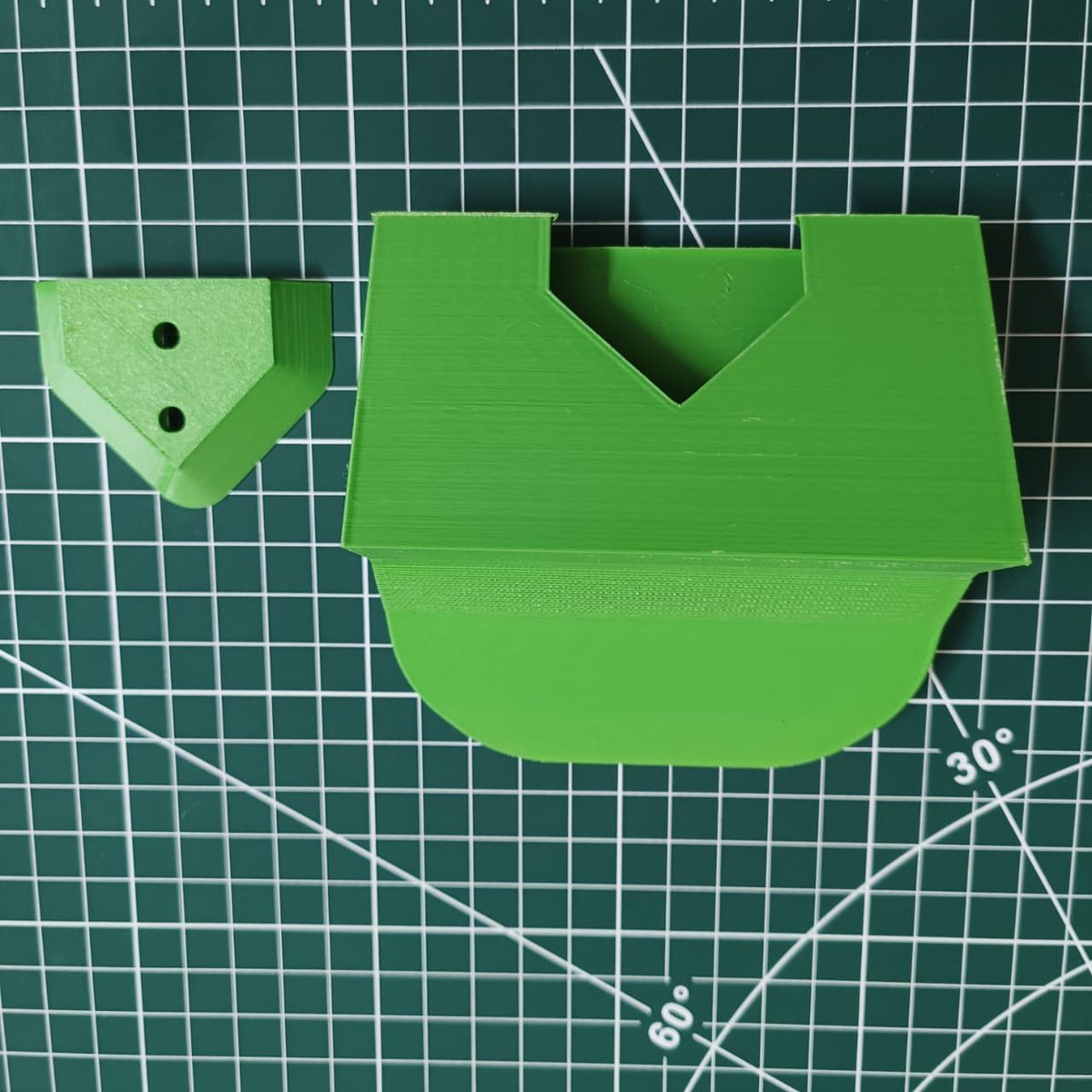
Between rides, the helmet itself is worth getting off the floor and the seat. Our helmet wall mount is a two piece design rated to hold helmets up to 5 kg, fixed with one or two screws, with a removable outer piece that hides the fixings.
When the bracket you need does not exist
Every list like this runs out at the same place. You have a specific crash guard diameter or a specific mirror stem, and no catalogue part clamps to it. That is where riders start stacking three adapters to fake a bracket, which brings back every loose joint described above.
A one off bracket, printed to the dimension you measured, is a better answer than a tower of adapters. If you have a model file, or even a sketch with measurements, you can get it printed by us and end up with a single part that does the whole job. Material choice is worth a thought for anything that lives on a bike parked in Indian sun, and our notes on why PETG beats PLA for most real parts and on how to pick a filament cover the trade offs.
The five mounts above are all in the bike spare parts and motovlogging accessories collection, with the camera side of the rig in camera accessories.
Common questions
Will these mounts fit my camera? If the camera has the standard three pin interface, yes. That covers GoPro HERO and MAX models, DJI Osmo Action, Insta360 and SJCAM, and the mobile holders built on the same pattern.
Do I need a long thumb screw if I only use one mount? No. A stock screw is sized for a single joint. The long versions matter once you add an extension joint or a replacement helmet mount, or when the screw head sits too deep to reach comfortably.
Is a chin mount legal in India? There is no central ban, but Kerala enforces against helmet mounted cameras by circular, and a drilled or cut helmet stops matching the IS 4151:2015 certification it was sold under. Check your state's rules, and never modify the shell.
What is the difference between the dome nut and rivet nut extensions? The rivet nut version has a metal thread set into the part, which suits a joint you open often. The dome nut version comes in sizes from 3 mm to 50 mm, which suits dialling in an exact offset.