
Is PLA Safe for Plants? Roots, Soil and What Happens Over Time
PLA, or polylactic acid, is the plastic almost every 3D printed planter is made from. It is polymerised from lactic acid, which is fermented from plant sugar such as corn starch or sugarcane.
People arrive at this question carrying one of two fears, and they point in opposite directions. The first is that the plastic will leach something into the soil and harm the plant. The second is that because PLA is sold as biodegradable, the pot will slowly rot away with wet soil sitting inside it.
Both are worth answering properly, because one of them is largely unfounded and the other is close to backwards.
What comes out of PLA and into the soil
The substances that migrate out of PLA are lactic acid, lactide (the monomer the polymer is built from), and lactoyllactic acid. The 1995 safety assessment published in Food and Chemical Toxicology, recorded on PubMed, concluded that these migrating species convert to lactic acid and represent no significant risk.
Lactic acid is not exotic in a garden context. It is a product of ordinary fermentation and it appears in soil through normal microbial activity.
Biology Insights reaches the same conclusion for planters specifically, describing PLA as generally regarded as inert and noting that migrating species convert into lactic acid, which poses no significant risk to the plant or the soil.
The caveat is the same one that applies to any printed object. Pure PLA is clear to milky, and every colour is pigment added to that base. A plain matte or marble-effect pot is a simpler proposition than something glittery or metallic, which carries extra solids chosen for appearance.
Why biodegradable does not mean your pot will dissolve
This is where most of the anxiety comes from, and the science points firmly the other way.
PLA only breaks down when hydrolysis gets going, and hydrolysis needs sustained heat. The industrial composting standard ASTM D6400 tests at 58 degrees Celsius plus or minus 2, held continuously, alongside controlled humidity and aeration. Certification bodies such as BPI verify against that regime.
Take that heat away and the process stalls. The numbers are stark:
- Industrial compost, sustained 55 to 60 C: full breakdown in roughly 45 to 180 days.
- Home compost, around 25 C: reported at under 15 percent mineralisation after 119 days.
- Soil at ambient temperature: persists for years, with some assessments putting it far longer.
- Below 40 C: the hydrolysis rate is considered insufficient for meaningful polymer breakdown.
There is also a molecular threshold. Hydrolysis has to chop the polymer down to a molecular weight of roughly 10,000 g/mol before soil microorganisms can metabolise the fragments at all. Above that, the pieces are simply too large for microbial uptake.
A pot of potting mix on a shelf does not come close to any of this. Practically speaking, a printed pot indoors is a stable plastic object, not a slowly composting one. A thread on the Bambu Lab forum includes an owner reporting PLA items kept indoors for ten to twelve years that are, as far as they can tell, unchanged.
What actually happens to a printed pot over time
So if it is not dissolving and it is not poisoning anything, what does change? This is the honest timeline, and it depends almost entirely on where the pot sits.
Indoors, away from direct sun. Very little. Colour holds, the walls stay rigid, and the main visible change over years is dust and water marks. This is the easy case.
Indoors on a bright windowsill. Slow fading on the sun-facing side. Structurally fine for a long time, but a dark colour will lighten unevenly and you will eventually notice which side faced the glass.
Outdoors in direct sun, first weeks to months. Visible photodegradation begins. PLA is poor at resisting ultraviolet light, and the first signs are colour fading and bleaching.
Outdoors, continuing exposure. The polymer chains break down and the material turns brittle. A pot you could flex slightly when new becomes one that cracks rather than bends, usually starting at the rim or around the drainage hole where stress concentrates.
The Treatstock guide to printed plant pots makes the related point that PLA does slowly break down when exposed to both water and soil together, which is an argument against burying printed parts directly in a garden bed, not against using a pot on a shelf.
The two conditions that actually end a printed pot
Ultraviolet light. PLA has poor UV resistance. PETG does better and is a reasonable choice for partial outdoor exposure. ASA is the material genuinely built for permanent sun. If you want the wider comparison, we have written separately on picking the right filament and on why PETG often beats PLA.
Heat. PLA softens at roughly 55 degrees Celsius. That number matters much more in India than it does in most of the literature written about this topic.
- PLA softening point: about 55 C.
- A dark pot in direct afternoon sun on a balcony: comfortably reaches that range on the surface.
- A closed balcony or glazed window ledge: traps heat well above ambient air temperature.
- Consequence: a softened pot does not melt dramatically. It sags, goes slightly oval, and the base stops sitting flat.
The practical reading is that shade matters more than season. A pot under a balcony overhang lasts far longer than an identical one sitting two feet further out.
Water, layer lines and seeping walls
A printed pot is built from stacked extrusions, and the bond between layers is never quite as watertight as a moulded wall. Two things follow.
Pots can weep slightly through the wall rather than only through the drainage hole, particularly when the wall is thin or the print had minor under-extrusion. This is usually cosmetic, showing up as a damp ring on a shelf rather than a puddle.
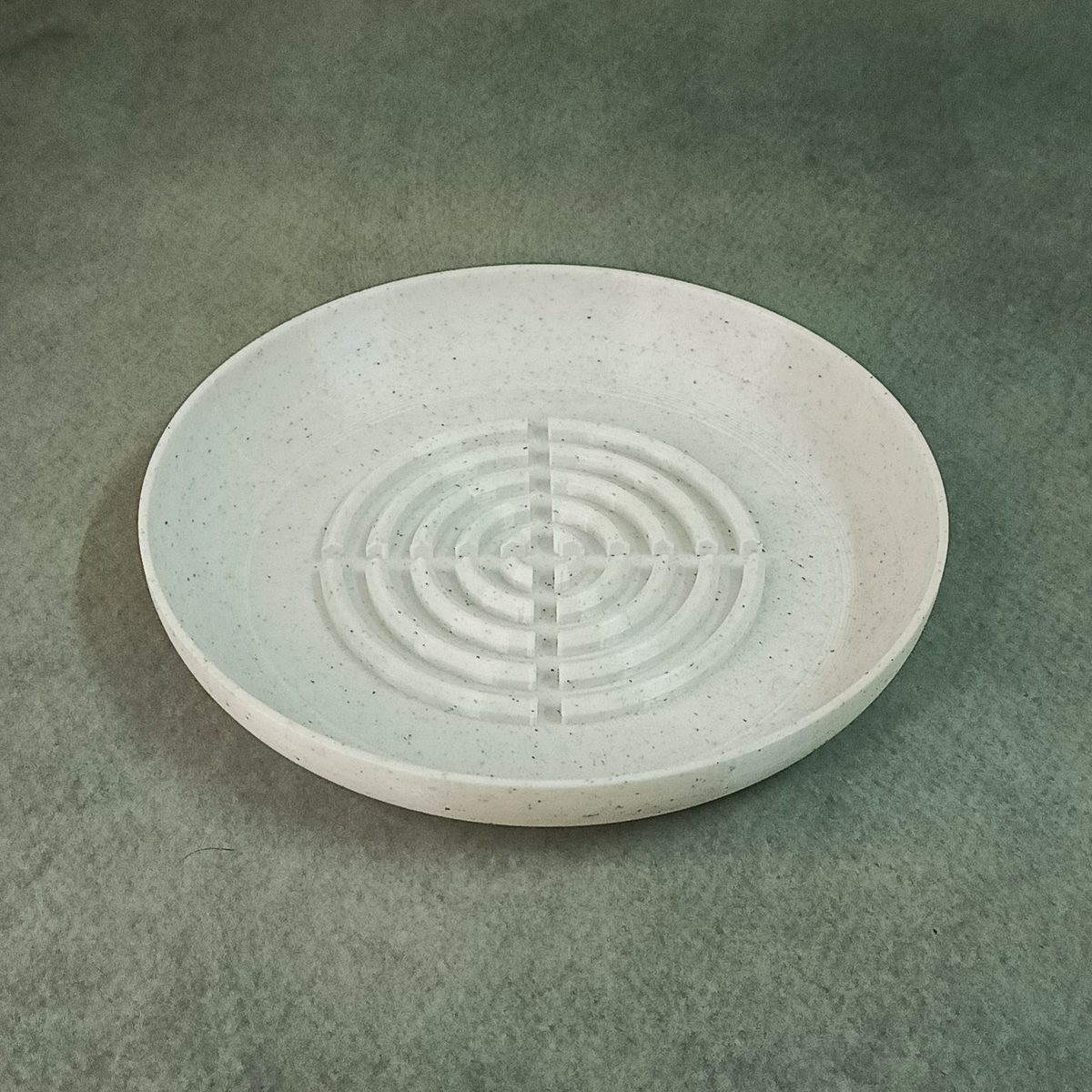
The fix is not a coating in most cases. It is a tray underneath, which you want anyway for the plant's sake. A round draining tray under a larger pot or a smaller base plate under a compact one catches both the drainage and any wall seepage, and keeps the pot off a wet surface where it would otherwise sit in its own runoff.
Drainage is the part that actually affects plant health
Nothing on this page harms a plant as reliably as standing water does. Root rot kills far more houseplants than any question about plastic chemistry.
- A drainage hole is not optional for anything other than a plant grown deliberately in water. The marble texture pot is drilled for exactly this reason.
- A tray is not the same as drainage. A tray catches water. It does not stop the pot sitting in it, so empty it rather than leaving the pot standing.
- Printed pots dry differently from terracotta. Terracotta is porous and wicks moisture out through the wall. Plastic does not, so the same watering schedule that suits a clay pot will keep a printed one wetter for longer.
- Reduce watering frequency when moving a plant from terracotta into a printed or glazed pot, rather than keeping the old routine.
The approach that sidesteps most of this
The method experienced plant keepers use with any decorative pot applies neatly here. Keep the plant in its plain nursery pot, and use the printed piece as an outer sleeve.
Soil never touches the printed walls, watering and repotting happen by lifting the inner pot out, and the decorative piece stays clean indefinitely. It also means one printed pot can serve several plants as they rotate through it.
If you prefer planting directly into it, that works too. Just make sure the drainage hole is clear and the pot is not in permanent direct sun.
Where printed pots genuinely win
Against ceramic and terracotta, the advantages are practical rather than sentimental:
- Weight. Significant on a balcony railing, a wall shelf or a hanging arrangement.
- They do not shatter. A knocked printed pot skids. A knocked ceramic one is swept up.
- Geometry that moulding cannot do. Faceted, coiled, ribbed and contoured forms come off the printer at the same cost as a plain cylinder.
- Size on demand. Pots exist in the sizes factories find worth tooling, which is why the gap on your shelf never quite matches anything on sale.
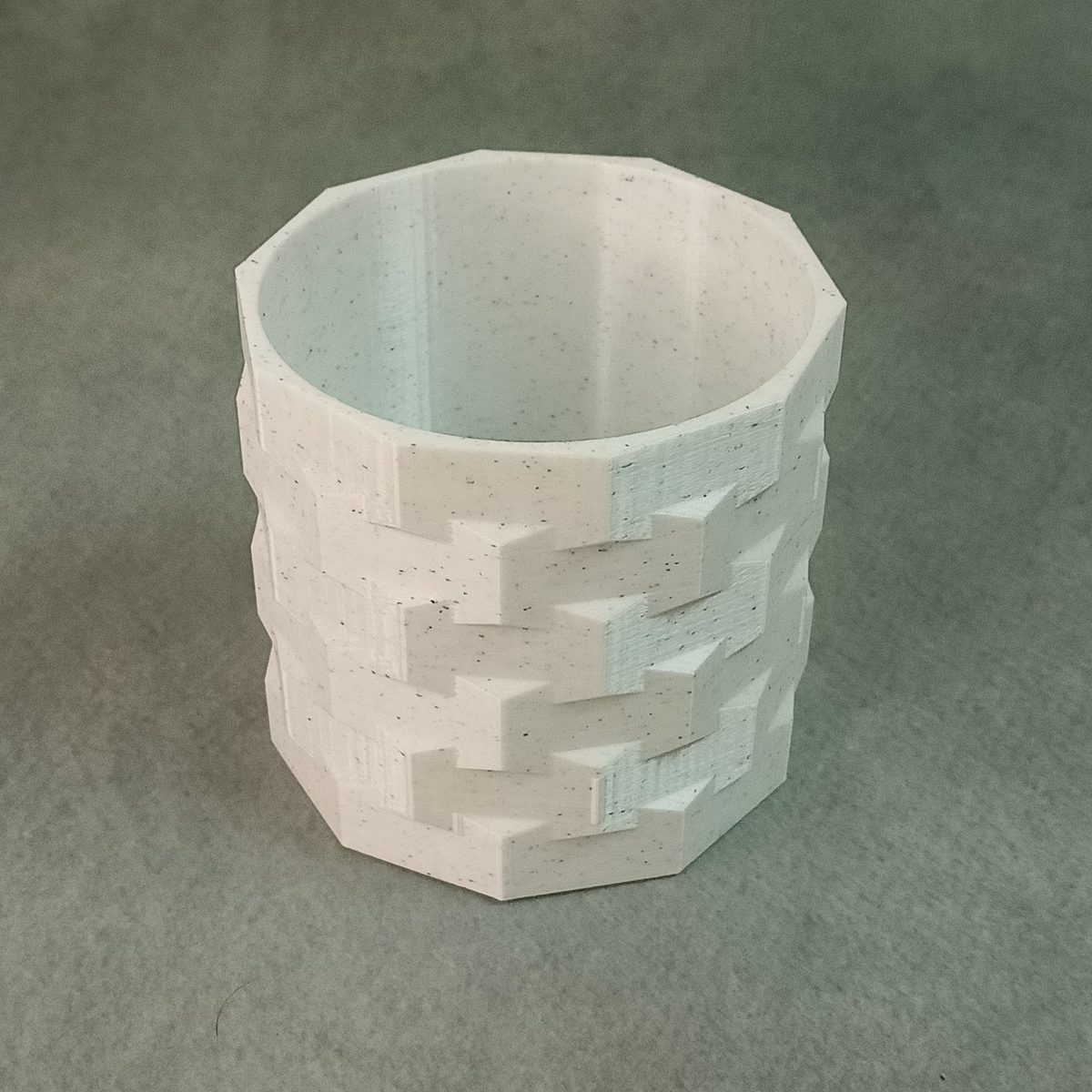
That last point is the one people underestimate. If you have a window ledge of an awkward depth, a railing that needs a specific footprint, or a row of plants you want in matching pots at a size nobody stocks, that is a case for having them made to your measurement rather than settling for a near fit. You can send dimensions or a model through our 3D printing service page. The rest of the range sits under flower pots and gardening, and a soil scoop makes filling them considerably less messy than a serving spoon does.
What this means across the pots
The conclusion applies uniformly, since these are all the same class of material.
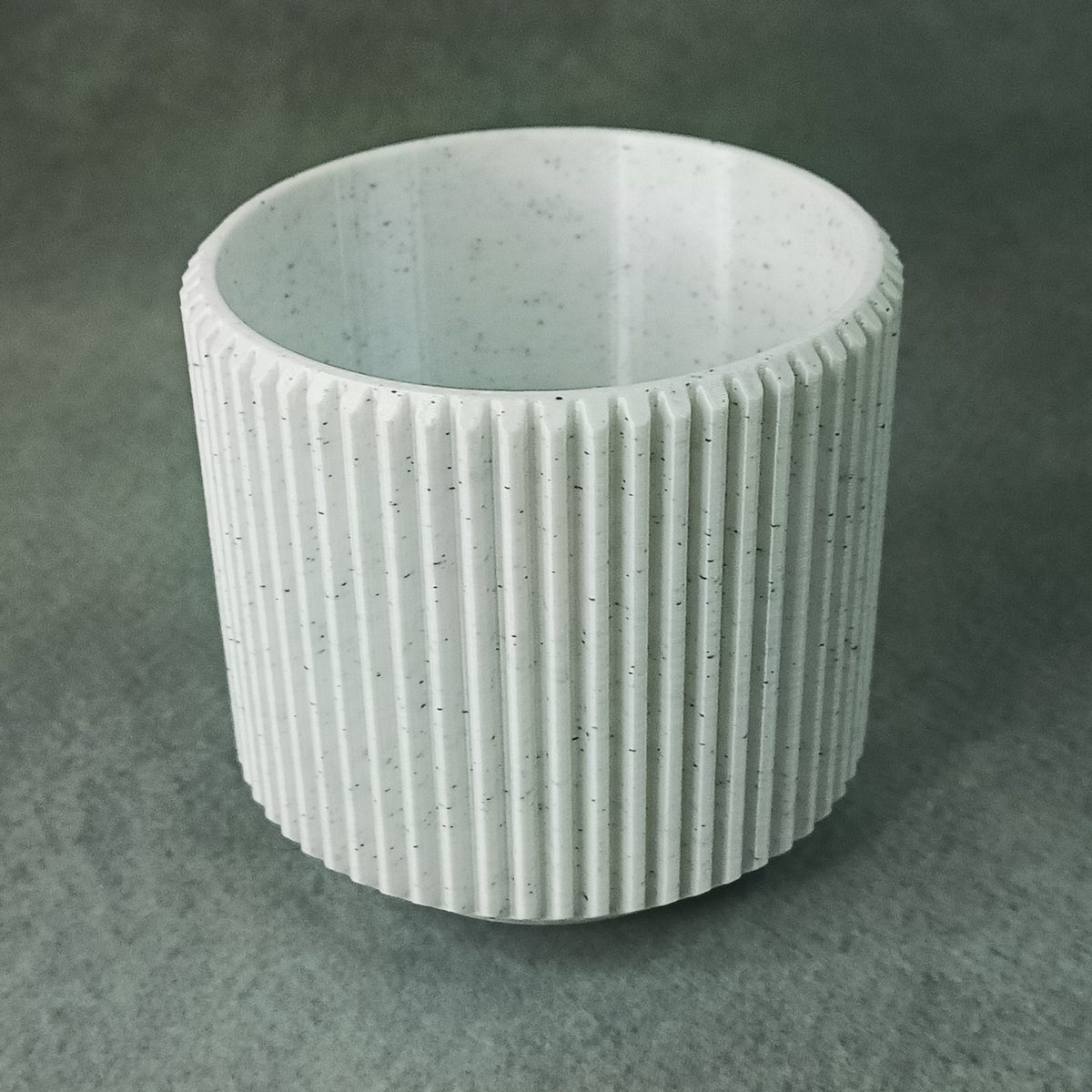
The pots, plain cylindrical, stacked rings, coiled cylindrical, vertical spiral, vertical groove, ribbed marble texture, layered ridge, double rim tapered, stacked geometric, are all fine for indoor planting given a drainage hole and a tray. The limit is sunlight, not the soil.
The 15 cm base plate and ripple plate matter for the same reason: a pot standing in its own drained water is the one condition that reliably kills a plant in a non-porous container.
So where should a printed pot go
The plastic is not the risk. On the evidence, PLA is inert enough in soil contact that the plant is not what you should be worrying about, and the biodegradability that worries people needs sustained industrial heat that a pot on a shelf will never see.
What limits a printed pot is sunlight and heat, in that order. Indoors, or outside in shade, it will outlast most people's interest in the plant it holds. In direct Indian afternoon sun it will fade first, go brittle second, and sag if the surface gets hot enough.
Put them where you can see them rather than where the sun can. That single decision matters more than every other question on this page combined.