
Is PLA Food Safe? What It Means for Cookie Cutters and Kitchen Items
PLA, short for polylactic acid, is the plastic most desktop 3D printers run by default. It is made by fermenting plant sugar, usually corn starch, into lactic acid and then chaining those molecules into a polymer. If you have bought a compostable cup or a salad box with a clear lid, you have already eaten next to PLA.
So the question people type into Google, "is PLA food safe", has a frustrating answer: the material and the object are two different questions, and almost every argument online happens because two people are answering different ones.
What the research says about the plastic itself
The foundational work here is a 1995 safety assessment published in Food and Chemical Toxicology, which tested what actually leaves PLA and migrates into food. You can read the record of it on PubMed.
The substances that migrate out of PLA are lactic acid, lactide (the monomer it is built from), and lactoyllactic acid. The study's own conclusion, quoted in Wevolver's summary of the food-grade printing question, is that the limited migration observed "represents no significant risk since migrating species are expected to convert to lactic acid, a safe food substance". Lactic acid is what makes curd sour.
A 2026 review in Comprehensive Reviews in Food Science and Food Safety revisited PLA food packaging migration with modern toxicity profiling and is indexed on PubMed if you want the current literature rather than the 1995 baseline.
So the raw polymer is not the problem. Everything that follows is about what happens between that polymer and the object sitting in your kitchen.
The three things that actually decide it
Every credible source lands on the same three risks, and they are worth naming plainly before going into each:
- What else is in the filament. Colorants, fillers and additives that are not food-contact grade.
- What the plastic touched on the way out. The nozzle and the rest of the hot end.
- The surface the printer produces. Layer lines are grooves, and grooves hold things.
Colorants and additives
Pure PLA is clear to milky. Every colour you have ever bought is pigment added to that base, and pigment is not covered by any food-contact assessment of the polymer.
UltiMaker's guide puts it directly: many PLA filaments on the market contain additives or colorants that may not be safe for food contact, so a filament has to be specifically labelled for it. Anything glittery, metallic, glow-in-the-dark or wood-filled is carrying extra solids that were chosen to look good, not to sit against food.
If a manufacturer uses a genuinely toxic colorant they are obliged to declare it on the safety data sheet. In practice most keep their colour recipes confidential and use non-toxic pigments, which is reassuring but is not the same as a food-contact certificate.
The brass nozzle argument, and why it is not settled
This is the claim you will see repeated most often, usually without the counter-evidence.
The case against brass: standard brass alloys contain roughly 1 to 3 percent lead as an alloying element to make the metal machinable. Filament is pushed through that brass at around 200 degrees Celsius. Formlabs recommends avoiding brass nozzles that contain lead and using a dedicated stainless steel nozzle for all food-contact items. Craftcloud makes the same point, adding that a part is not food safe by default even when the raw material is FDA compliant.
The case that it is overstated: a 2023 paper presented at the Intermountain Engineering, Technology and Computing conference, "Study on the Sanitization Efficacy for Safe Use of 3D-Printed Parts for Food and Medical Applications" (DOI record), weighed new nozzles against nozzles that had run up to 1000 prints and reported negligible loss of mass. Converted to a quantity of lead, the researchers reported it was below what their instruments could detect, and mass spectrometry of the printed material found no lead or other heavy metal contamination. Their own comparison was that handling a brass key would expose you to more.
Both of those can be true at once. Lead is present in the alloy, and the amount that actually ends up in your cookie cutter may be unmeasurably small. If you are printing for yourself and the choice costs a few hundred rupees, a stainless steel nozzle removes the argument entirely. Note that the same 2023 researchers still recommended coating prints that will sit against consumable liquids.
Layer lines are the real weak point
A printed part is built from stacked extrusions, and the seam between every pair of layers is a groove running around the object. On a typical 0.2 mm layer height that is five grooves per millimetre of height.
Those grooves trap moisture and food residue, and they are too fine to scrub. Formlabs frames the main challenge with FDM parts as avoiding bacterial buildup, and says that to be genuinely food safe over the long term the surface has to be made smooth, with a food-safe coating still recommended afterwards.
This is the point where brief contact and stored contact separate, and it matters more than anything else on this page.
Heat is the limit you will hit first
Long before bacteria becomes your problem, temperature will be. PLA has a glass transition temperature, the point at which it stops being rigid and starts to soften, of roughly 55 to 60 degrees Celsius.
- PLA softening range: about 55 to 60 C.
- Domestic dishwasher cycle: roughly 60 to 75 C, which is above that range.
- Boiling water: 100 C, far above it.
- Hot tea or coffee as served: commonly 70 to 85 C.
- A closed car in a Mumbai summer: routinely past 60 C on the dashboard.
The practical consequences are simple. Printed PLA kitchen items are hand-wash only, in cool or lukewarm water. They cannot be sterilised by boiling, which is exactly the cleaning method you would want for something with grooves in it. And a coating does not rescue this, because a softening substrate cracks or delaminates whatever is sitting on top of it.
PETG is somewhat more heat tolerant, though still not dishwasher territory. If you want the full comparison of the common filaments, we have written about how to pick the right filament and made the case for PETG over PLA separately.
Brief contact versus stored contact
Here is the dividing line that resolves most of the confusion. It is about how long food sits against the plastic, and whether it gets cooked afterwards.
Brief contact, then heat. A cookie cutter touches raw dough for a second or two. The dough then goes into an oven at 180 C, which handles anything the cutter might have left behind. The cutter is washed and dried and goes back in a drawer. The layer-line argument barely applies, because nothing is sitting in those grooves getting warm and damp for hours.
Stored contact. A container holding cut fruit in a fridge for two days is a completely different proposition. Moisture sits in every groove, nothing gets cooked, and you cannot sterilise the container afterwards without deforming it.
Liquid contact. A printed cup is the worst case: warm, wet, prolonged, and impossible to clean properly. This is the one category where even the researchers who dismissed the lead concern still asked for a sealed surface.
Where common printed kitchen items fall
Applying that line to the things people actually print and buy:
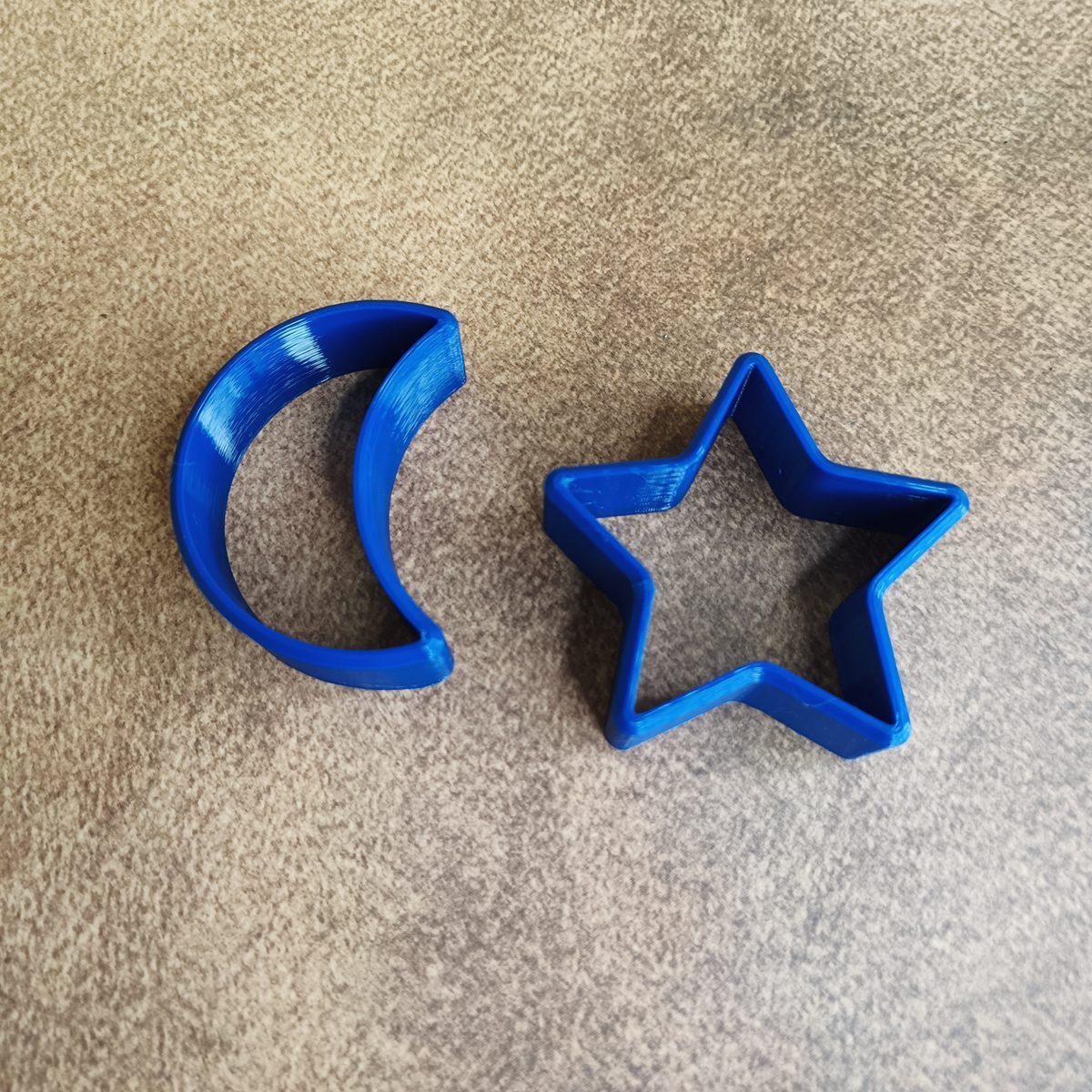
- Cookie cutters: brief contact followed by baking. The star and moon cookie cutter is used for seconds per press, washed, and stored dry.
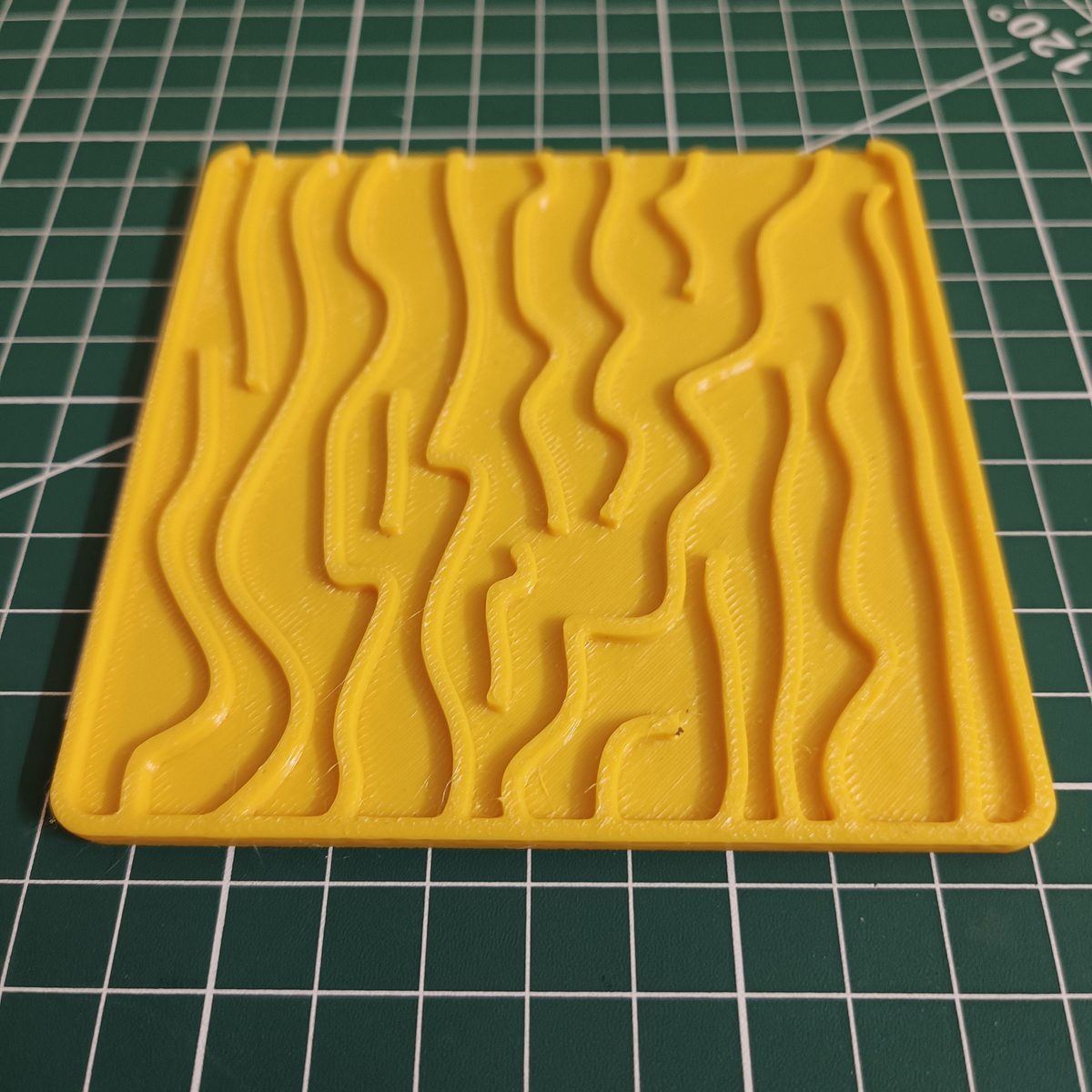
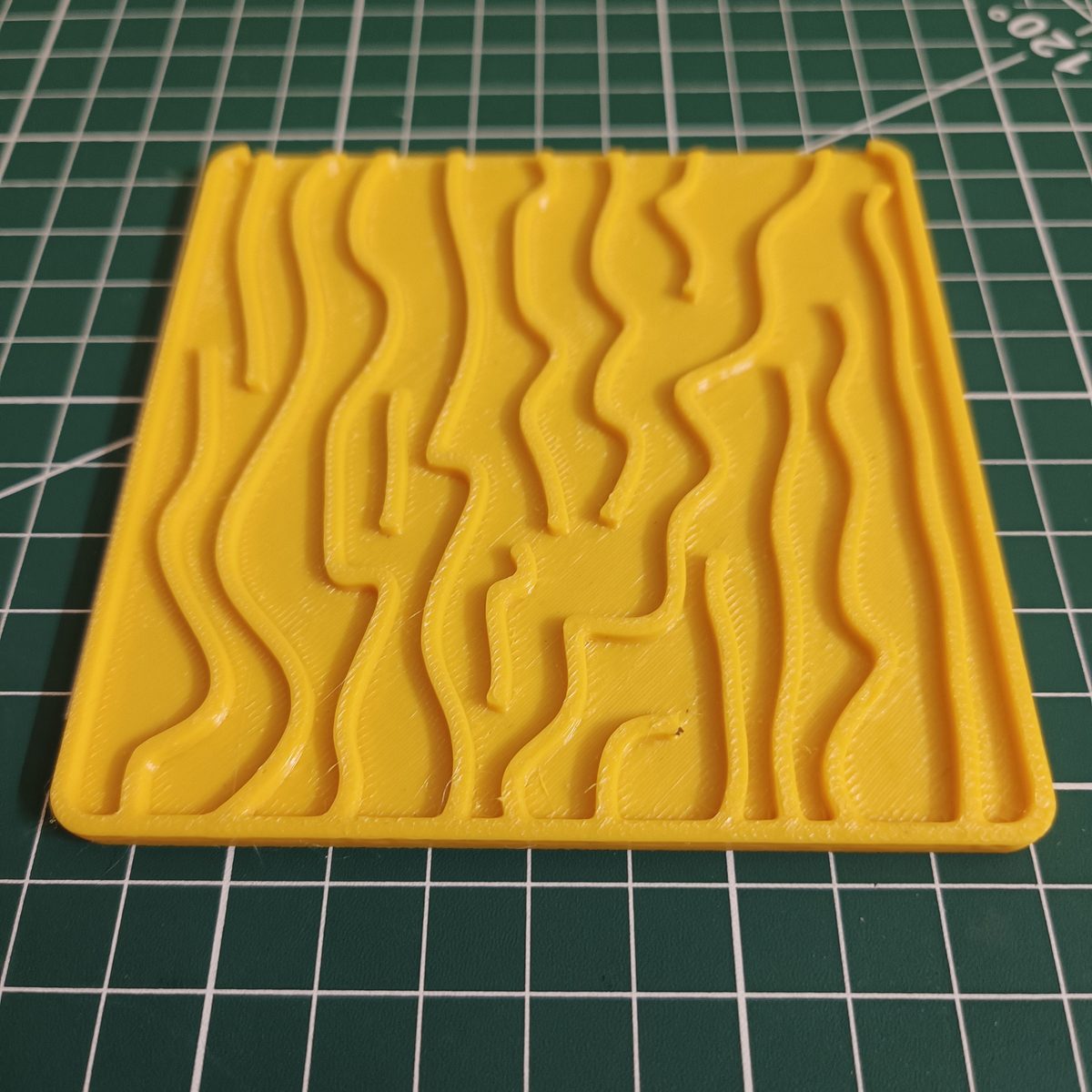
- Drainage and drying accessories: the item touches the outside of already-washed crockery, not food. A mug drainage plate never contacts anything you eat.
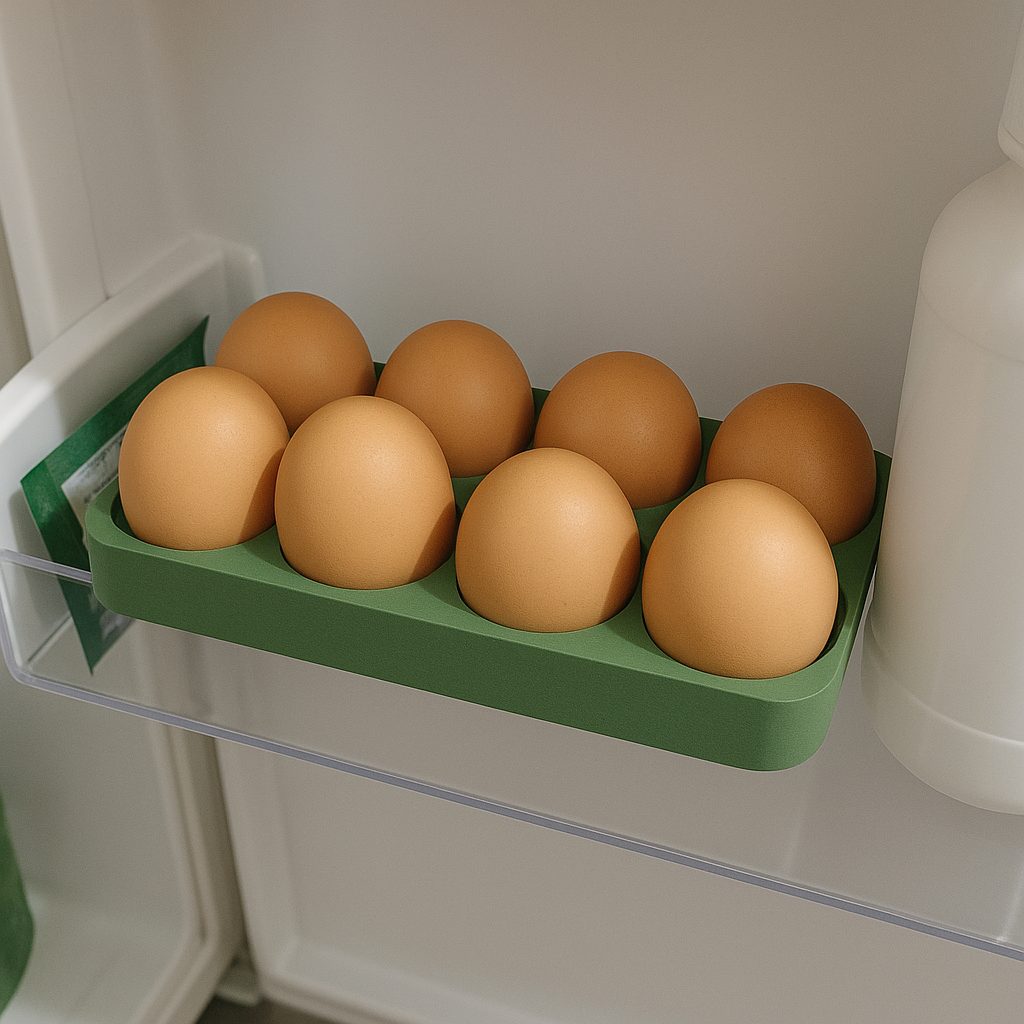
- Shelled and packaged food holders: an egg tray holds eggs in their shells. The shell is the food-contact surface, not the tray.
- Organisers for sealed or dry goods: fridge door organisers and stackable boxes work well holding sachets, packets and jars rather than loose wet food.
- Open containers for wet or cut food: this is where printed plastic stops being the right answer. Use glass or steel.
- Cups, mugs and anything hot: no. Heat alone rules it out before hygiene does.
How to wash printed kitchen items
- Hand wash only, in cool or lukewarm water with ordinary dish soap.
- Use a soft brush along the direction of the layer lines rather than across them.
- Dry fully before storing. Trapped moisture in grooves is the actual mechanism behind every bacteria warning.
- Never use the dishwasher, boiling water, or a microwave.
- Retire items that have gone rough, cracked or scratched. Damage adds surface area you cannot clean.
Whether coatings are worth the trouble
The standard advice for making a print properly food safe is to seal it with a food-grade epoxy, which fills the layer lines and leaves a continuous surface. The relevant regulation is the United States FDA's 21 CFR 175.300, covering resinous and polymeric coatings for food-contact surfaces, and a compliant epoxy has to be fully cured before it counts.
It genuinely works. It is also a multi-day job per item, it has to be reapplied when it chips, and it does nothing about the heat ceiling underneath. For a cookie cutter that gets a two second press, it is effort spent on a risk that was never really there. For a cup, you are sealing a vessel that will still deform when you pour hot tea into it.
Which is usually the honest conclusion: if an item needs a coating to be safe, it is often an item that should have been made from something else.
What this means when you are buying rather than printing
If you are not running the printer, you cannot inspect the nozzle or the filament data sheet, so the sensible filter is the item itself. Ask what the object touches, for how long, and how hot it gets. Cutters, organisers, drying racks and holders for shelled or packaged food sit comfortably on the safe side of that line. Open containers for wet food and anything that holds a hot liquid do not, whoever made them.
That reasoning is also why our kitchen and household range leans towards organisation, drying and holding rather than storing food against plastic.
And if you have a specific kitchen problem that no off-the-shelf item solves, an awkward shelf gap or a drawer insert cut to a size nobody sells, that is exactly the kind of thing worth having made to your measurements instead of compromising on a near-fit. You can send the dimensions or a model through our 3D printing service page and get the part sized to the space rather than the other way round.
Where the question actually applies
Across the kitchen range only one item has direct, repeated food contact.
Star and moon cookie cutter. Brief contact with dough, then washed. This is the one the three risks above are actually about.
Mug drainage plate. Touches the outside of a clean mug, so none of the three risks apply.
Compact egg tray. Touches shell rather than contents.
The short version
PLA the polymer is safe enough that it is already used in food packaging, and the 1995 migration work plus the current literature both support that. A PLA object off a desktop printer is a different claim, and it rests on the colorants in the filament, the metal the plastic passed through, and a surface full of grooves you cannot scrub clean.
Judge the item, not the plastic. Seconds of contact followed by an oven is fine. Days of contact in a fridge is not. Anything hot was never in the running, because the material softens before your tea has cooled.