
Do 3D Printed Coasters Survive Hot Cups?
This is one of the few 3D printing worries that is not overblown. People genuinely do warp printed coasters with hot drinks, and the reports are specific rather than theoretical.
A maker posting in a filament group described printing coasters, testing them, and finding that a hot cup of coffee was starting to warp the PLA. A thread on r/3Dprinting asking about heat resistant sealants for PLA coasters exists for the same reason.
But plenty of people use printed coasters daily and never see a problem. Both experiences are real, and the difference comes down to a chain of temperatures that is worth following properly.
The temperature chain from kettle to table
The number that matters is not how hot the drink is. It is how hot the bottom of the vessel gets, because that is the only part touching the coaster.
Those are different numbers, and the gap between them depends on the cup:
- A thick ceramic mug holds heat in its own mass and spreads it. The base warms up substantially and stays warm for a long time.
- A thin glass transmits heat quickly but holds little of it. It can feel hotter to the touch sooner while carrying less total energy into the surface below.
- A steel tumbler, the standard way chai gets served across India, conducts heat extremely well. The base gets genuinely hot.
- A double-walled or insulated cup is designed specifically to keep heat away from the outer surface, so its base stays close to room temperature.
- Any vessel with a recessed foot ring touches the coaster only at a narrow ring, with an air gap in the middle, which cuts the contact area sharply.
That last point explains a lot of the contradictory experience. Most ceramic mugs have a foot ring. Many steel tumblers and glasses sit flat, contacting the whole base.
Where PLA sits against those temperatures
Formlabs puts standard PLA at a heat deflection temperature of around 50 C at 0.45 MPa. Glass transition, the point where it begins to soften, sits around 60 C.
Freshly boiled water is at 100 C. Tea brewed with it and poured straight into a steel tumbler carries a large fraction of that into the base. It does not take an unusual situation to put a flat-bottomed vessel's base above 50 C.
Siraya Tech's coaster guide states it directly: PLA softens around 60 C and can warp under very hot mugs.
The failure mode is not melting. The coaster softens slightly while a weight sits on it, and takes a shallow impression of the cup. Once cool it holds that dent permanently. People usually notice it as a coaster that has stopped sitting flat and now rocks.
Materials, ranked for this specific job
Heat deflection temperature is the number to compare, and the spread across common materials is wide.
- PLA: HDT around 50 C, softening near 60 C. The material most printed coasters are made from, and the one that generates the complaints.
- PETG: typically rated around 80 C. A large practical margin over PLA for very little extra cost, which is why it is the sensible default here.
- ABS: HDT around 90 C at 0.45 MPa, per Formlabs, though it brings its own printing difficulties.
- Speciality high-temperature grades: a discussion on the Prusa forum cites colorFabb nGen at around 85 C and HT grades reaching 100 C, plus cellulose lactides such as Extrudr Greentec and Fillamentum NonOilen that stand 100 C, and up to 140 C after annealing.
Annealing is worth knowing about as a concept: reheating a finished PLA part to further crystallise its structure raises its resistance to slow deformation under load. It is a post-processing step rather than something a buyer controls, and it can cause slight dimensional change.
Why a coating does not fix it
The instinct when a coaster warps is to seal or coat it, and it is worth understanding why that does not work.
A coating changes the surface. Softening is a bulk property of the plastic underneath. As one reply in the Prusa forum discussion puts it, even coated, the internal structure is likely to deform. A heat resistant surface treatment sitting on a substrate that gives way at 55 C simply deforms along with it.
The fix for heat is material, or it is distance.
What the design can actually do
Geometry changes the outcome more than people expect, because it changes how much heat gets into the coaster and how fast it leaves again.
- Reduced contact area. A textured or ribbed top surface touches the cup at high points only, with air between them. Less contact means less conduction.
- Open patterns. Lattice and cut-out designs let air move underneath, so heat that does arrive dissipates instead of accumulating.
- Thickness. More material spreads heat through a larger mass, so no single region reaches softening temperature as quickly.
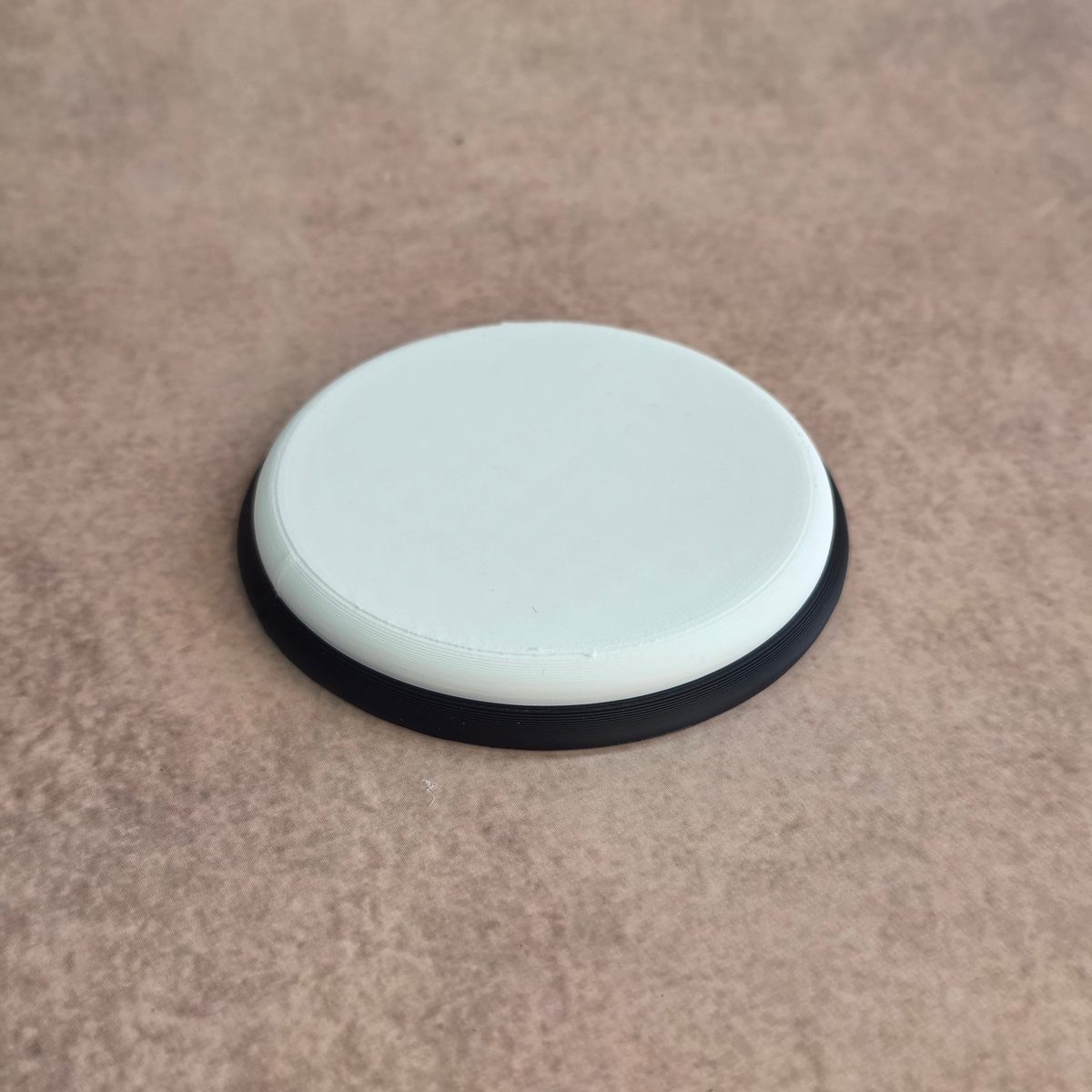
- A raised rim. This is about liquid rather than heat, but it is the feature that does most of the day to day work. The round rimmed coaster is about 76 mm across with the top face set inside a raised outer rim, so condensation and drips collect in the recess instead of running onto the table.
The wood blend option
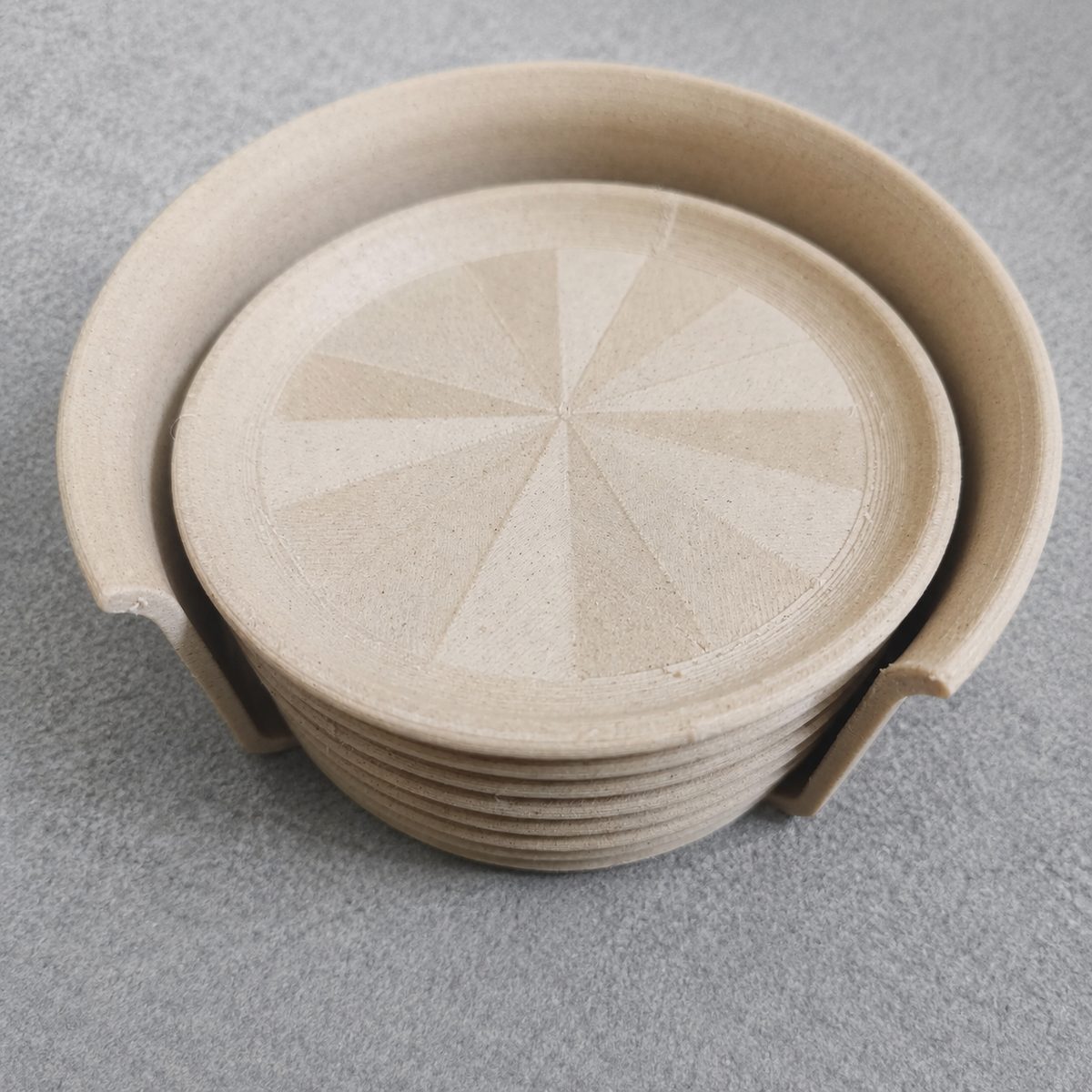
Wood-filled filament is a real alternative here and behaves differently from plain plastic. The wood coaster set of 8 is made from a blend of wood and plastic, which gives it the look, touch and smell of natural wood, and it comes with a rack so the set stays together rather than scattering across the house.
The wood particles change the surface character and the way the coaster feels under a cup. The plastic component still sets the heat limit, so the same guidance applies, but for anyone who dislikes the look of plain printed plastic under a mug it is a genuinely different object rather than a colour option.
What a coaster is actually protecting against
Worth stepping back, because heat is not the main threat to most tables.
The damage a coaster prevents day to day is water. Condensation running off a cold glass leaves rings and, on wood, lifts the finish. Drips off a tea cup do the same. That happens with every cold drink, all year, and it is the reason coasters exist at all.
Heat damage to furniture is a real but narrower problem, and largely limited to genuinely hot vessels on finished wood. So for a household mostly putting down water glasses, cold drinks and mugs with foot rings, a printed coaster in any material does its job indefinitely.
Practical guidance
- Let boiling drinks stand for a minute before putting them down. The base cools fastest in the first minute, and this alone prevents most cases.
- Watch flat-bottomed steel and glass more than ceramic mugs with foot rings.
- Do not stack a hot cup on a coaster on a stack of coasters. Trapped heat with nowhere to go is the worst case.
- Keep printed coasters out of a dishwasher. A cycle at 60 C or more will do in minutes what a hundred cups of tea would not.
- Wipe rather than soak, and dry before returning them to a rack.
The coasters, compared
Three different answers to the same problem, and the third is not really a coaster at all.
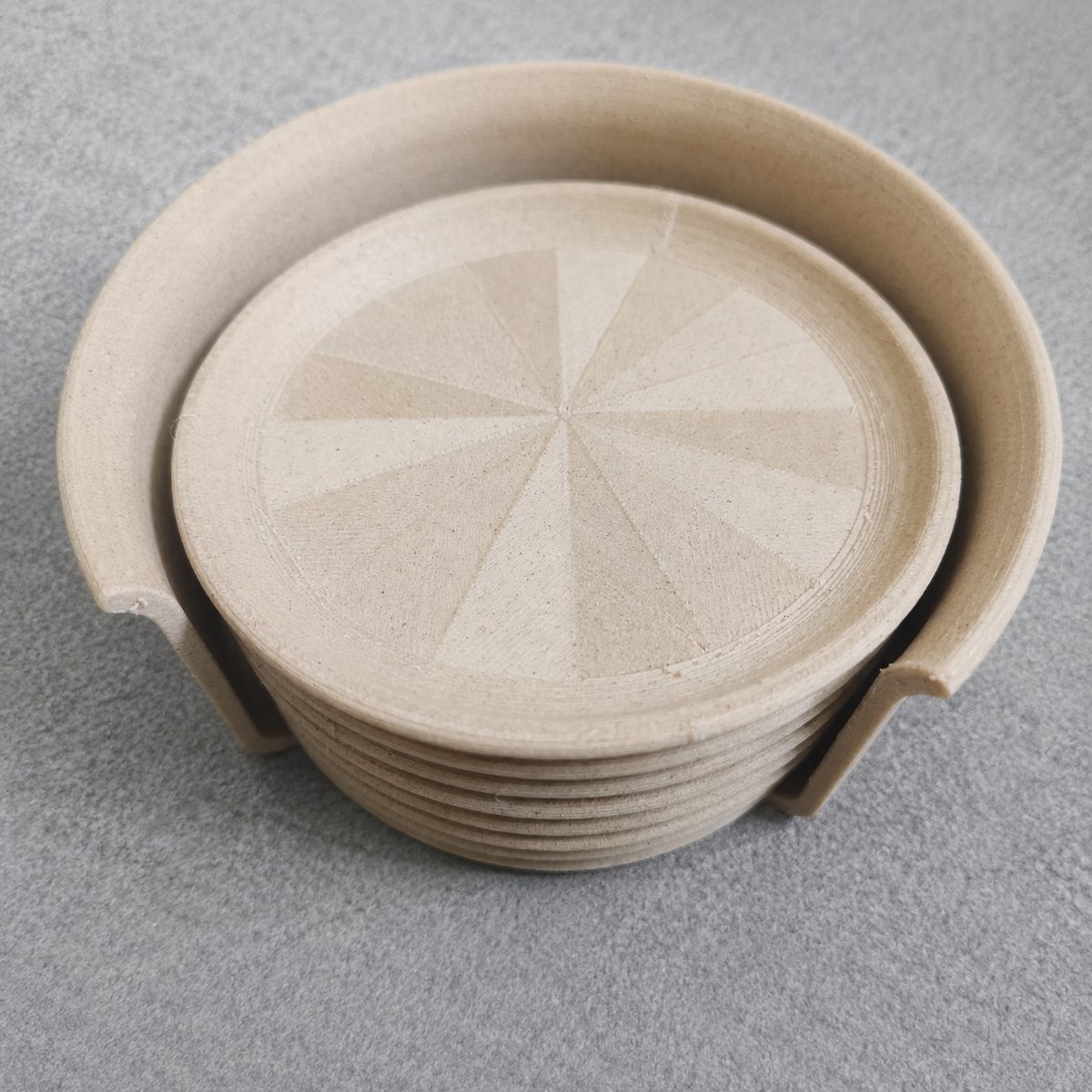
Set of eight with rack. This is a wood and plastic blend, with the rack keeping the set together instead of scattered across the room.
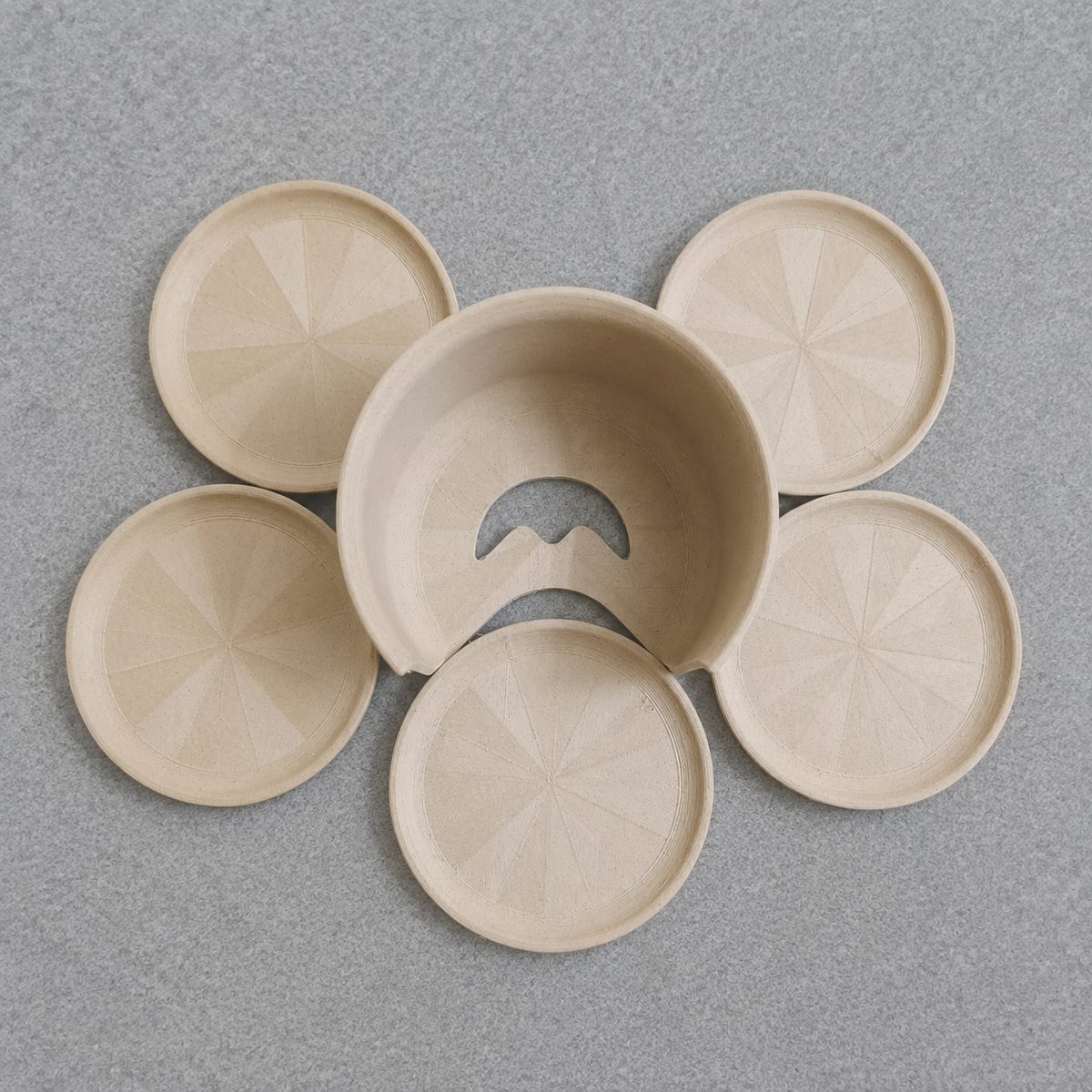
Set of five with rack. This is the same blend in a smaller set, which suits a household that does not need eight out at once.
Hexagonal glass cover. This is a different object entirely, sitting on top of a glass rather than under it.
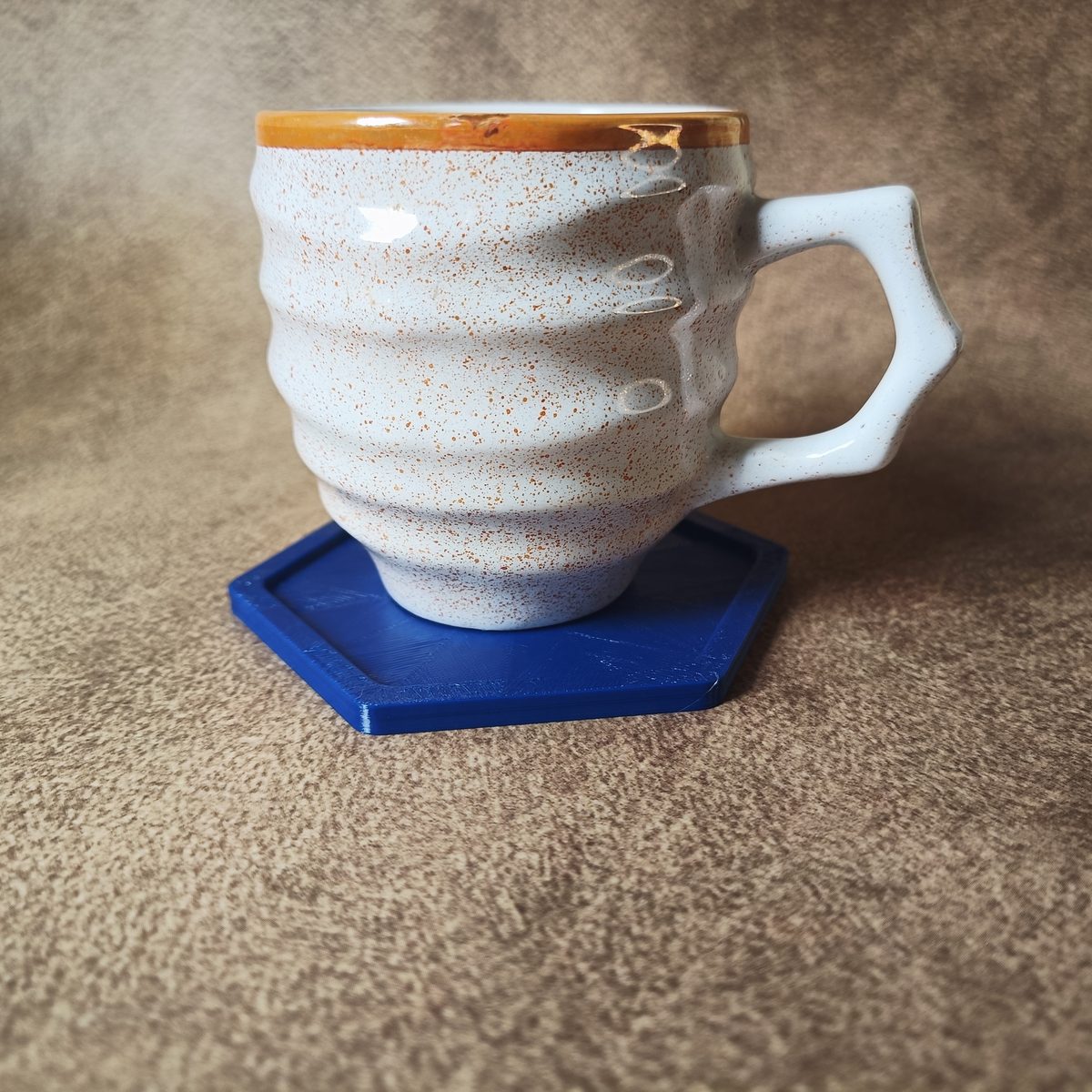
If you specifically want coasters for very hot drinks served in steel, that is a material specification worth stating rather than assuming, and it is a reasonable thing to ask for when a set is made to order. You can describe the use along with any design you want through our 3D printing service page. The existing designs sit under coasters.
The rest of the coaster range
Beyond the sets, the round rimmed coaster catches condensation run-off in its rim, and the leaf shaped coaster is a shaped single rather than part of a matched set.
The short answer
Yes, printed coasters survive hot cups in most homes, and no, PLA is not a good match for boiling tea in a flat-bottomed steel tumbler. Both statements are true at once, which is why the internet disagrees with itself on this.
Look at the cup rather than the coaster. A ceramic mug with a foot ring puts very little heat into anything below it. A steel tumbler filled straight from the kettle puts in a lot. If your household runs on the second one, the material matters, and a minute of standing time costs nothing.